After not enough sleep, we found our way to the dining room for breakfast. One of my favourite things when we’re away is trying the local breakfasts. This morning I decided to try chicken curry, rice, hash brown and deep fried kiwi fruit, followed by salad and a pastry. Because I can. After that, I felt like I had the legs to keep going all day.
Our guide for the next few days is Henry. He met us in the lobby, gave us our T- money cards, and then whisked us off on our tour of all the unpronounceable places in Seoul.
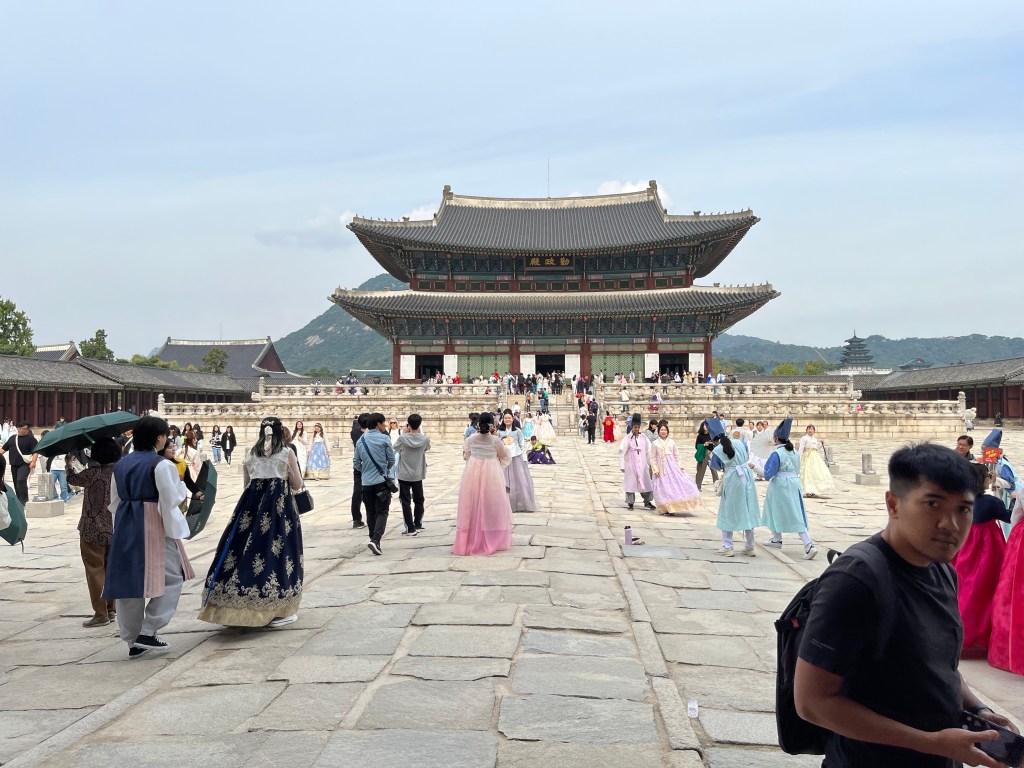
We started with Gyeongbok palace, aka the Northern Palace. We arrived in time to see the changing of the guard ceremony – along with a vast number of other tourists. It is a lot more colourful than the one in London; Henry explained that there is one colour for each of the four city gates plus a fifth colour for the king. Feng Shuey is quite big around here, and everything has to be in balance.
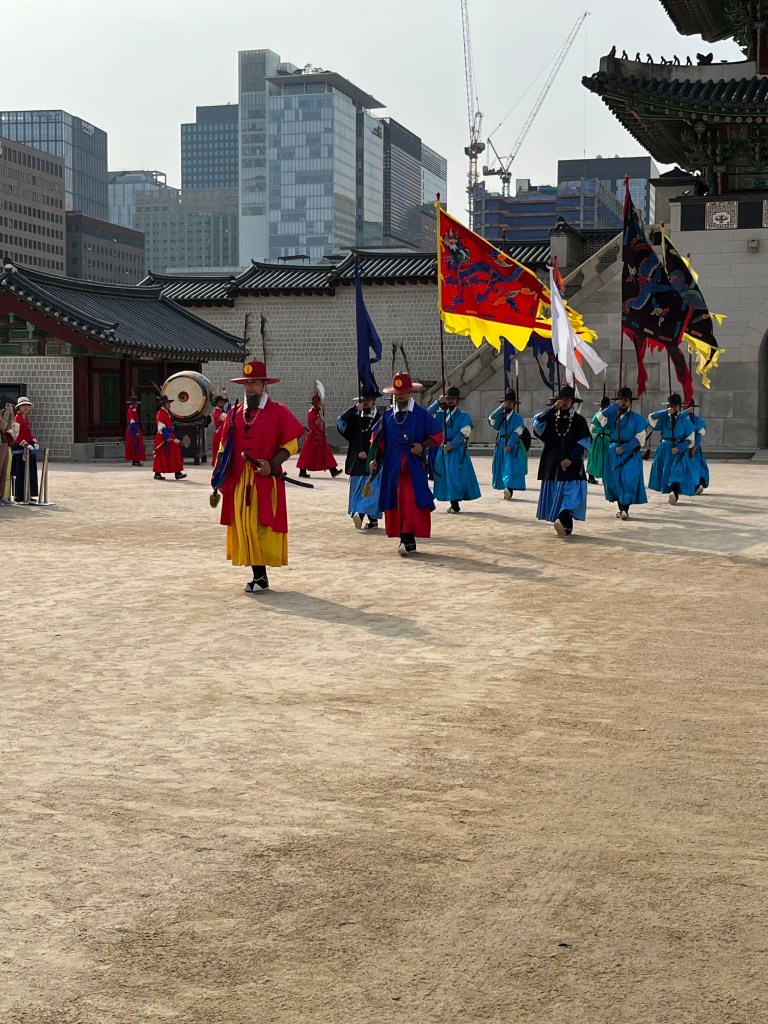
What he didn’t explain is why they have guards around a royal palace when there’s no longer a king.
After the ceremony, we went over to the National Palace Museum, where Henry gave us a 10 minute summary of the last 600 years of Korean history. The Joseon dynasty established Seoul as Korea’s capital and built Gyeongbok palace along with the four other palaces in the city. It burned down in the 1500s, was rebuilt in the 1800s and then destroyed during the Japanese occupation. A restoration programme was started in the 1990s, but only the main buildings of the original 500 have been restored.
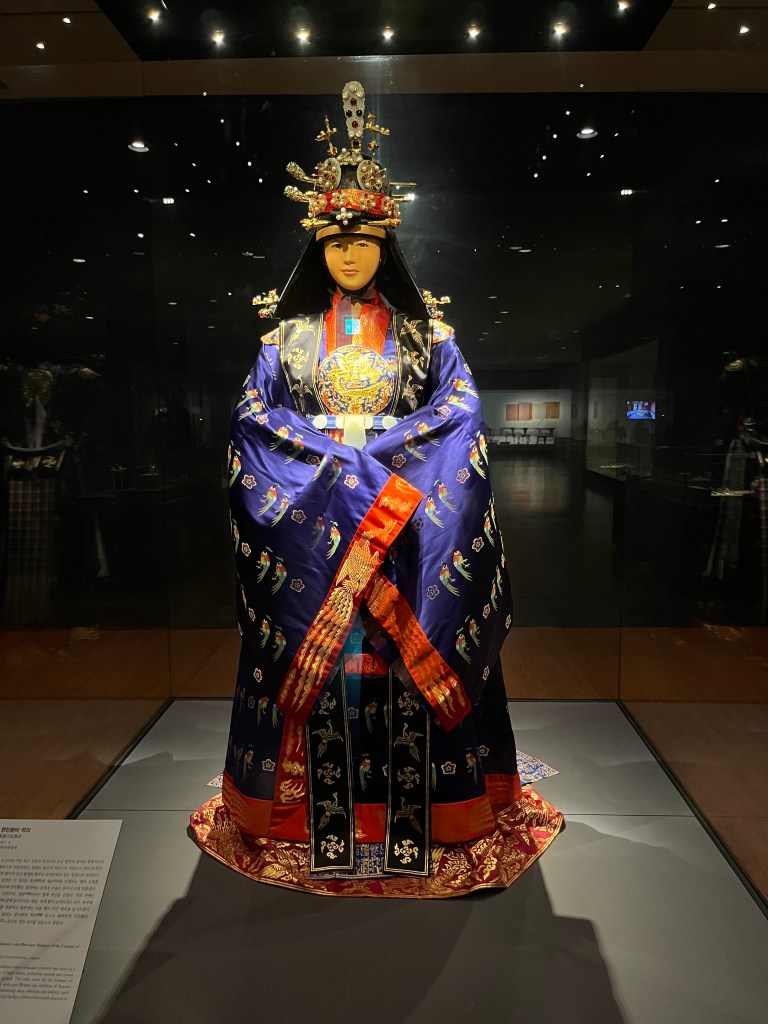
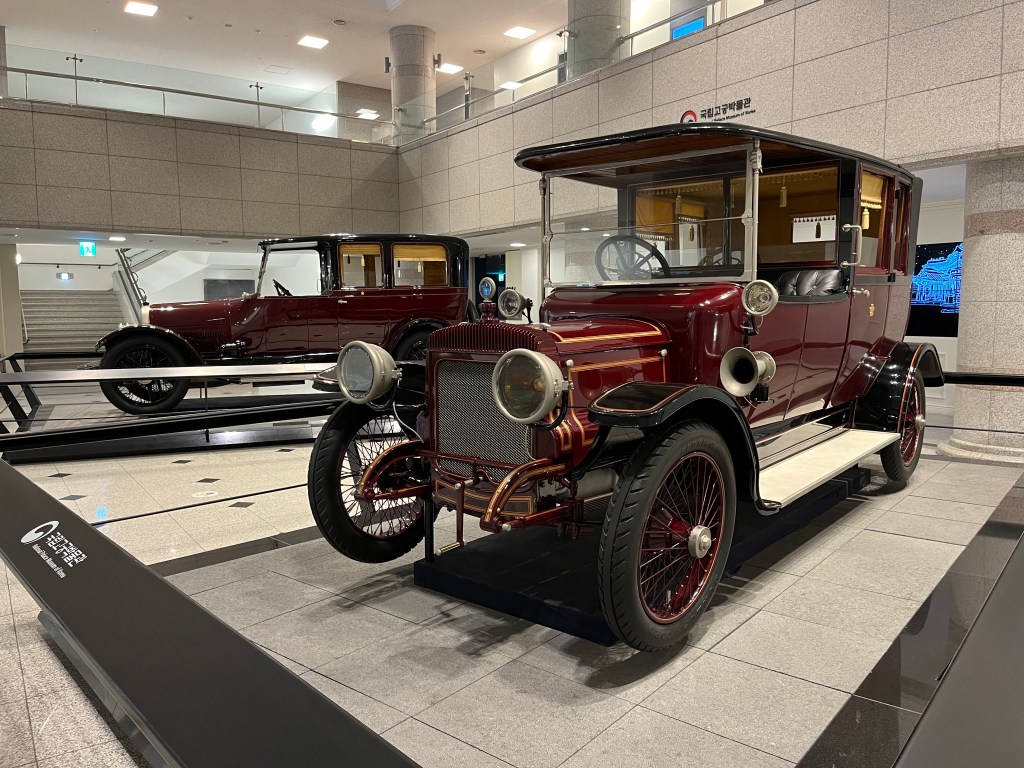
The museum houses all sorts of artefacts from the Joseon period, including costumes, maps, very detailed drawings and the last King and Queen’s cars, built by Ford and Daimler.
After a stop for coffee, we then went to see the palace itself. It is in five sections, each of which is entered by a gate. There’s a path all the way from the first gate to the King’s residence beyond the fifth gate. Only the king is allowed to walk down the centre of the path, mere mortals have to use the outer section, which is built with very uneven stones to make users look down to avoid falling over, thus being subservient.
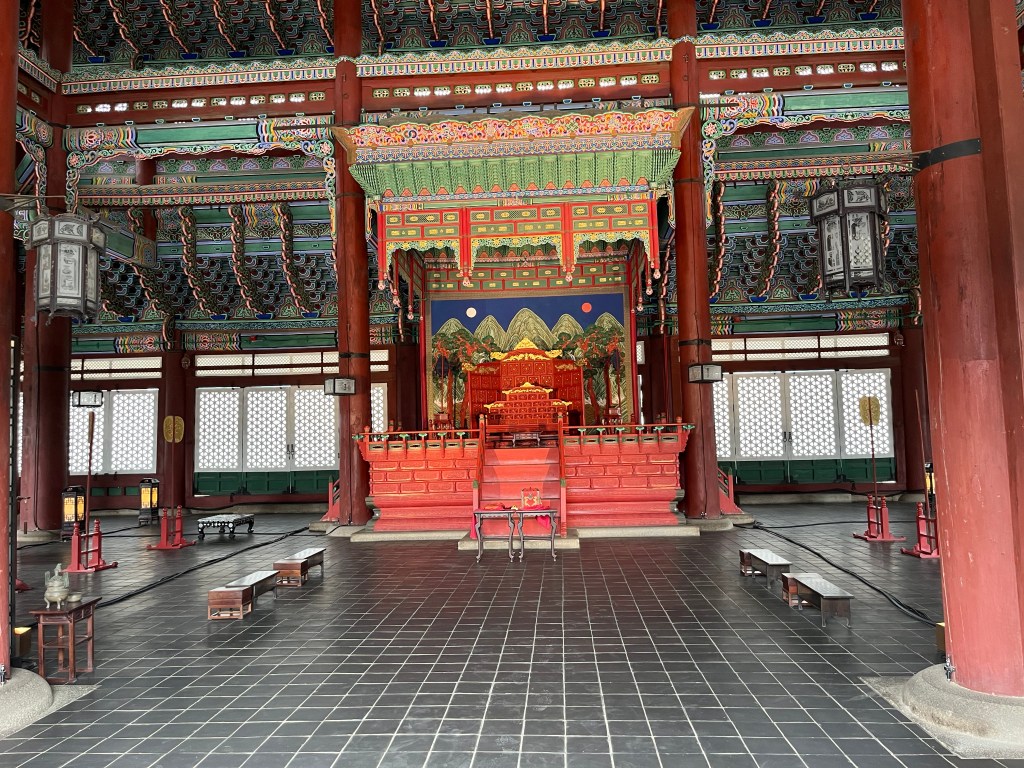
The king’s bedroom is behind the fifth gate, and it contains very little furniture. Assassins have nowhere to hide. The king and queen can only spend the night together on the full moon to ensure healthy sons. But there is a door to the queen’s domain. If the king knocks and she doesn’t want to let him in, it’s concubine time!
Actually that’s the only advantage of being the queen. Once she marries, she can never leave her rooms, not even to go out to the secret garden behind them. I’m not sure quite why she needs her own car though.
A lot of the visitors were wearing traditional Korean dress, but clearly a lot of them weren’t Korean. The reason for this is that you can get into the palace for free if you dress up; although I suspect that the hire of the outfit is more than the ticket price.
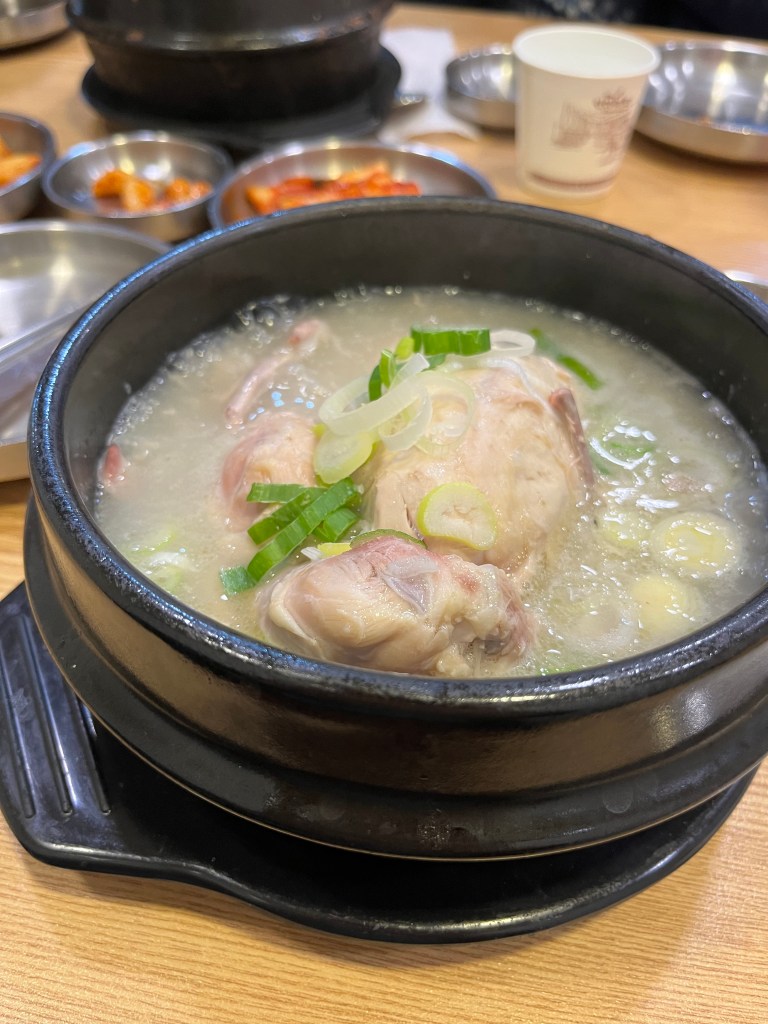
For lunch, Henry suggested a bowl of chicken ginseng soup. This sounded ideal for a light lunch. What we weren’t expecting was a bowl of soup with a whole chicken in it! Each! Or to have to dismember and eat it with chopsticks!
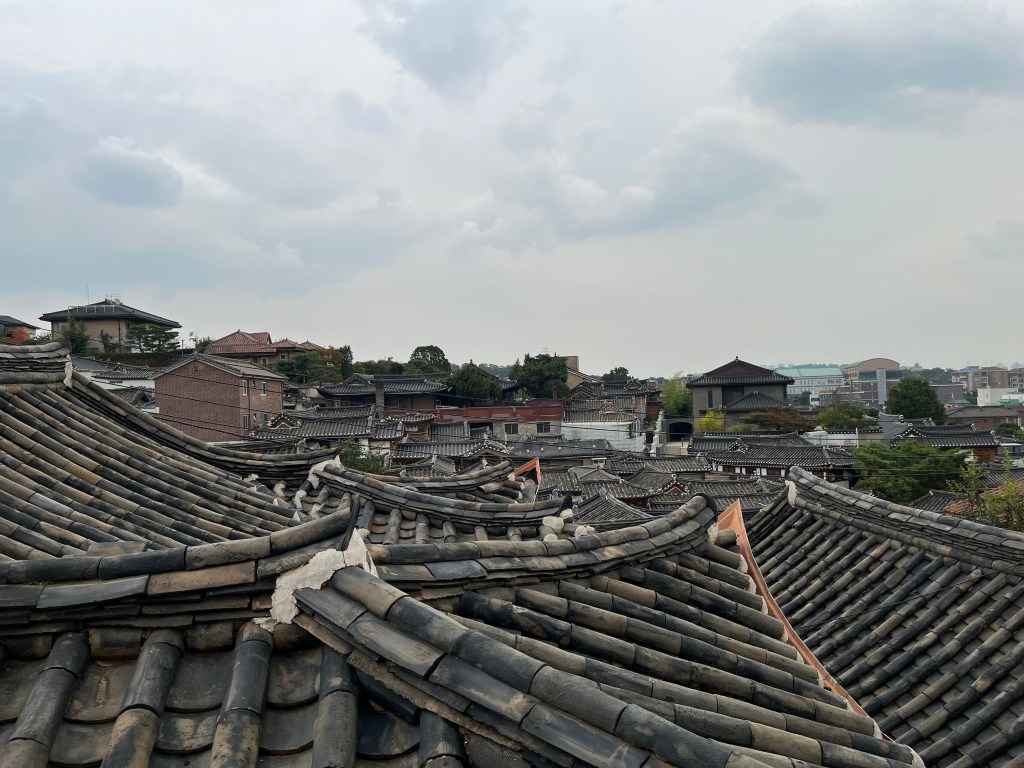
Next up was a visit to the Bukchon Hanok village. This is a small hilly area with about 900 traditional Korean houses, i.e. Hanoks. It was popular during the Joseon period because it was between two palaces; kind of like a commuter town. These days, many of the Hanoks are owned by wealthy families, a bit like the gentrification of Whitechapel.
We paid a quick visit to Insadong, another “historical centre”, with art galleries, coffee shops and antique sellers. To me it was just a busy tourist trap, selling mass produced rubbish. We decided we’d had enough at this point and Henry took us back to the hotel.
 Steve and Diane on Tour