Next morning we were picked up by taxi and deposited at the latest incarnation of Seoul railway station. The original station is next door, a lovely red and white stone affair that looks just like a station and was built by the Japanese. It was restored to the way it looked in 1925 and is now a cultural centre.
The new station is a big glass and steel building designed to handle today’s travellers. There are masses of manned ticket desks as well as self service machines. The departure and arrivals boards are huge, colourful and switch between Korean and English, so no problem there.
We were a bit concerned about our ticket, which we’d received with our itinerary back in the UK – train KTX 021, carriage 5, seats 8A and B. It was a poorly photocopied A4 page with one ticket on either side. As a backup we also had it electronically on both our phones.
Eventually, our train came up at the bottom of the board, so clutching our ticket we went off through the departure gate. And didn’t have to show our ticket! Then down to the platform to the train, which had the destination and 021 in Korean and English alternating on a sign by each door. Carriage 5 was just where it was supposed to be and our seats were next to a window so we could see out.
But we still hadn’t shown our tickets! Well, maybe they’ll check them on the train. Two and a half hours later, we arrived at Gyeongju with our tickets still unchecked. As I got off the train this guy says “Are you Steve?” It was BK, our new guide, who knew exactly where we were going to get off.
I’m quite liking Korean trains.
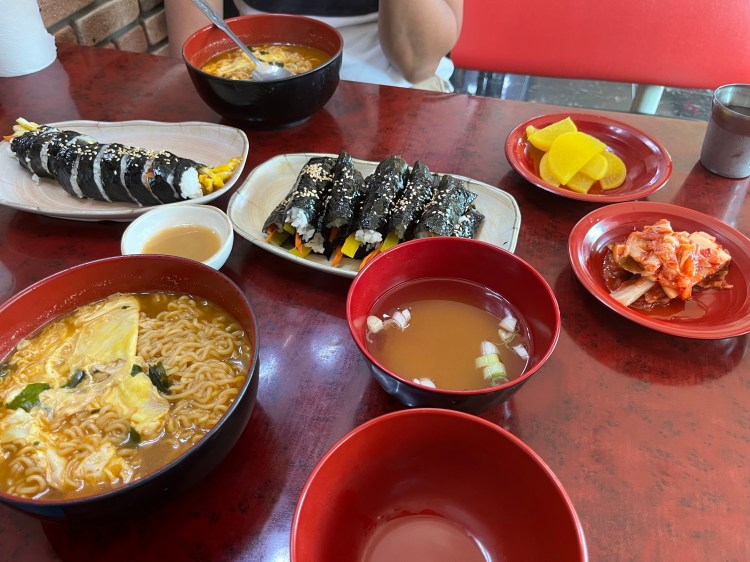
Lunch was our first priority – I’d bought a Toblerone at the station but it wasn’t enough. BK drove us downtown to one of his favourite eating places and we tried our first kimbap, rice and vegetables wrapped in seaweed, along with noodles and sides.
Gyeongju was the capital of the Silla kingdom, which unified the three kingdoms of Korea in 57BC despite being the smallest of the three. For unified, read conquered. The kingdom lasted nearly 1,000 years before collapsing.
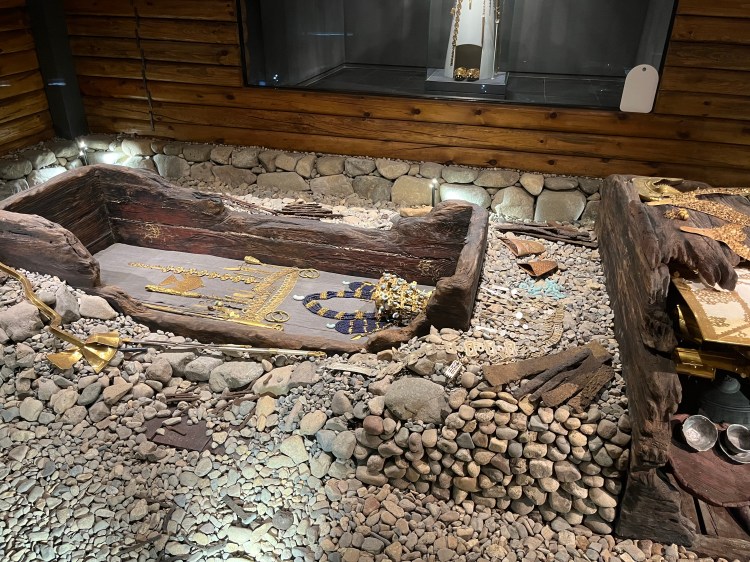
Wherever you look in Gyeongju there are burial mounds, 155 of them in total, most of which haven’t been uncovered. The body was laid in a wooden coffin, fully dressed and with all the possessions needed in the afterlife, and then covered over. After that, a wooden framework was added and filled with stones to make a great mound. In some cases, a mound would be breached and a second body added next to it, making it look like a camel’s back.
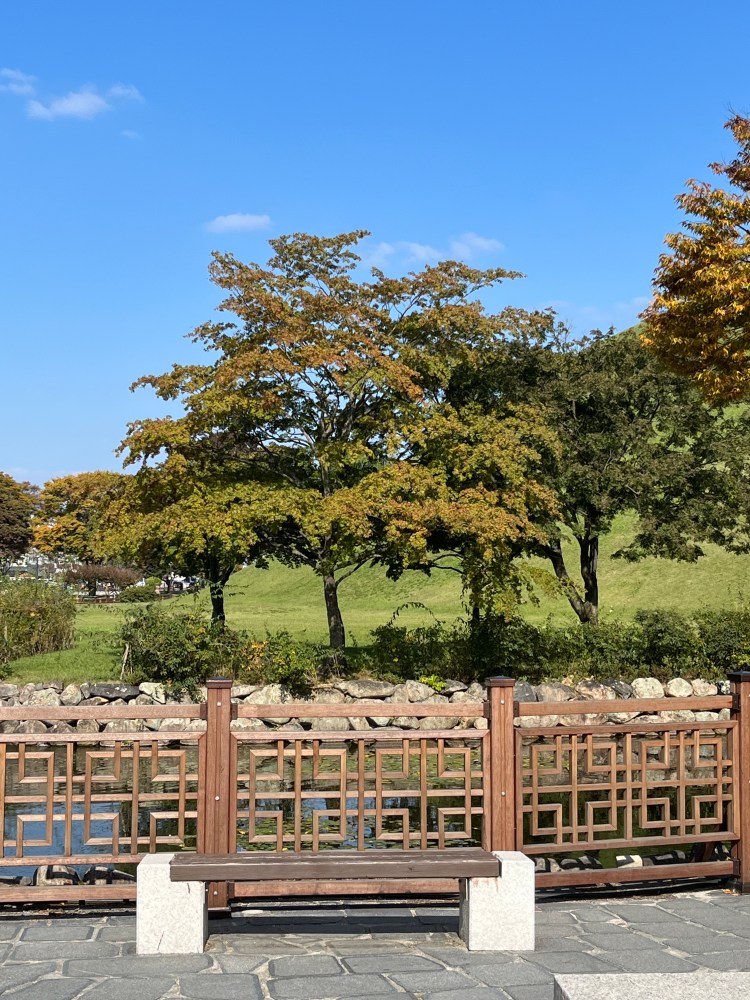
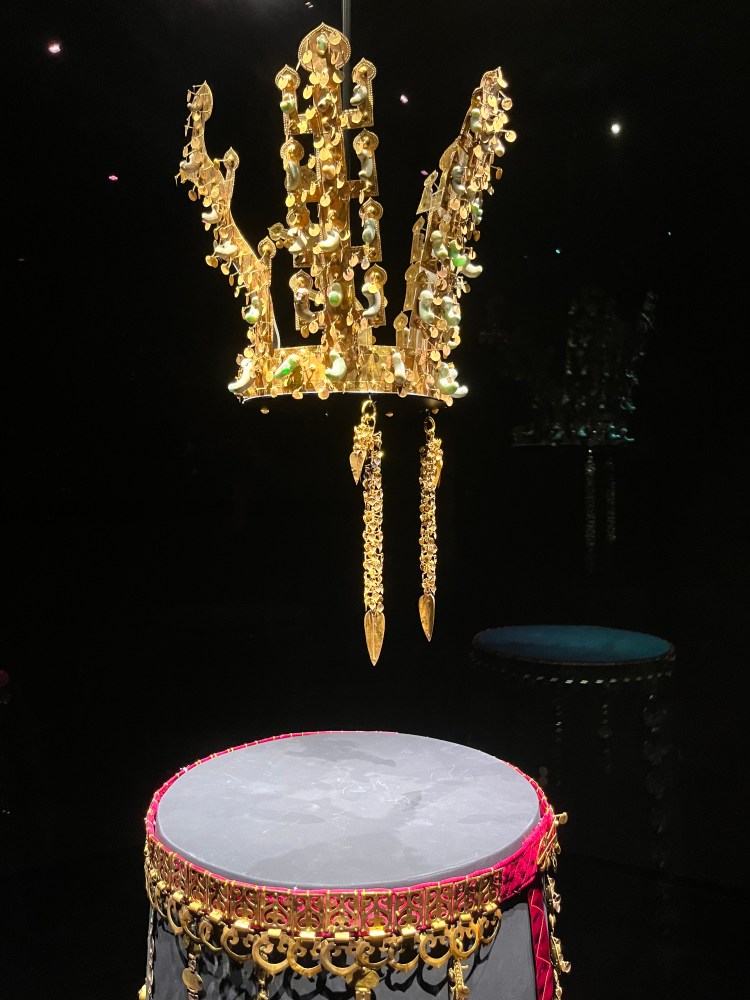
Only one tomb is open to the public and that was our next stop. It is called the Flying Horse tomb because, among the artefacts found, was a “mud guard” decorated with a flying horse. When the tomb was opened, they found all the artefacts laid out, but the body had disintegrated. One of the key items was a crown, indicating that this was a king; to date six crowns have been discovered, one of them being a woman’s.
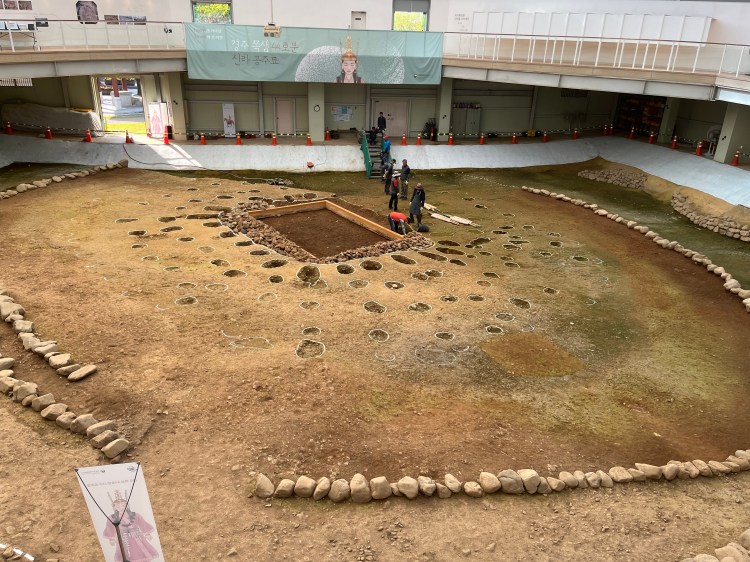
We then walked over to tomb 44, which is in the final stages of excavation. This is thought to have been the tomb of a teenaged princess, and there’s evidence that mourning rituals were held on the anniversary of her death for nine years.
Walking back to the car, BK introduced us to Hwangnam-ppang, a local speciality. It is a small bread roll filled with red bean paste, straight from the oven. We ate them so quickly that I forgot to take a photo!
Next, we were off to see the Cheomseongdae tower, said to be the oldest astronomical observatory in Asia. It is sited opposite the old royal palace, which has since disappeared.
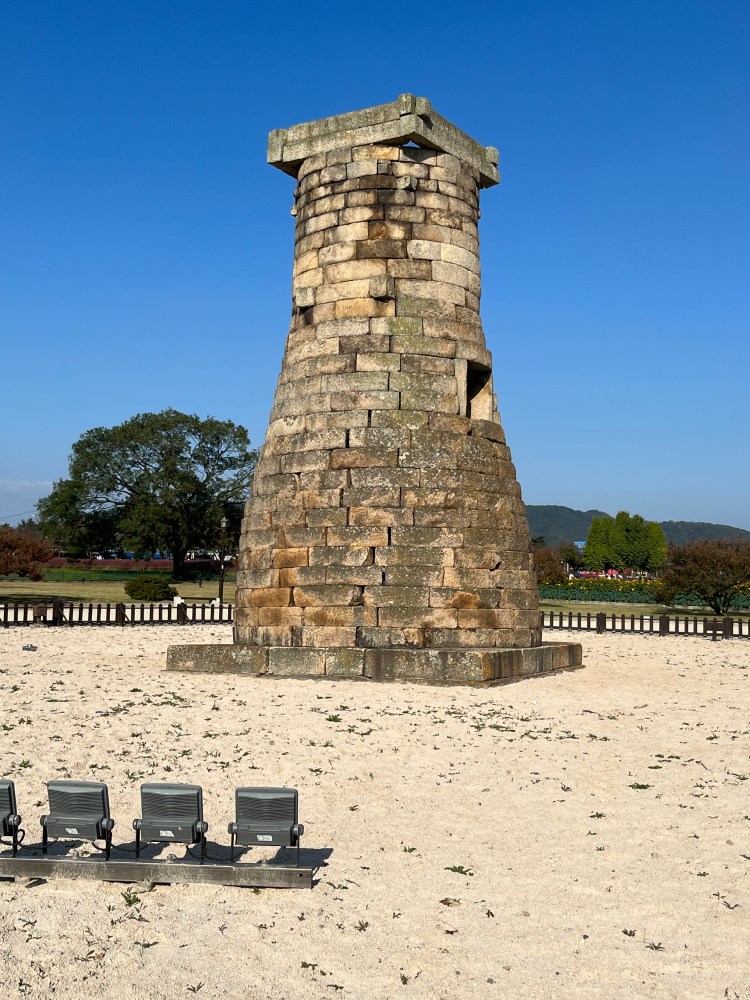
And it is in a park which features pink grass and a variety of other flowering plants. A lot of which have been trampled on by people who ignore the multilingual “Keep out” signs.

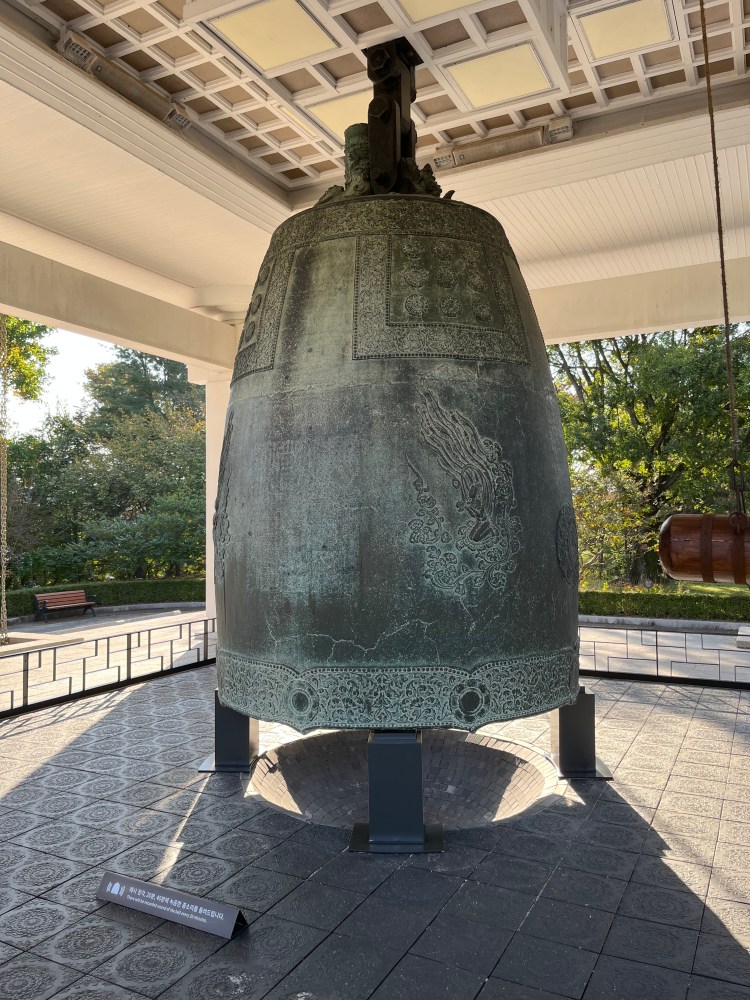
Back in the car, we drove to the national museum, in the grounds of which is the Sungdo dharma bell. Created in 1771, it is the largest bell in Korea. It sounds every 20 minutes, but only though a set of speakers!
Inside, we had a quick history lesson on the Silla kingdom and then saw many of the original artefacts recovered from the various tombs, including the Flying Horse tomb.

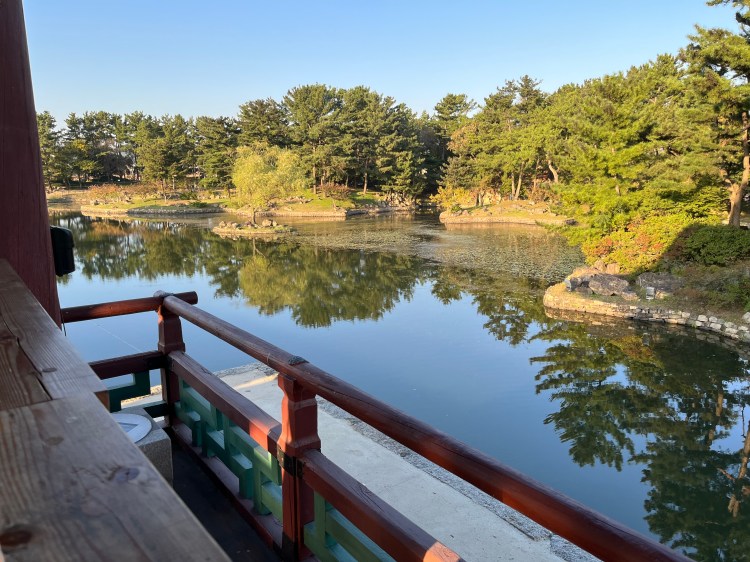
Also in the museum is a model of the Donggung Palace and Woji pond, built by King Munmu, the first Silla king. Only three buildings remain of the palace, around the Woji pond. Looking at the model from above, the pond and land around it look like the map of Korea, with Japan on one side and China on the other. The pond was dredged as part of the restoration in the 70s, and the museum contains several artefacts, including a boat.
We then went off to visit the Palace and pond themselves.
It had been a very long day, so I didn’t get to finish writing about it. Another post will be along soon!
 Steve and Diane on Tour