This morning we walked down to Miyajima docks and caught the “fast ferry” to Hiroshima port. After crossing the sea, the ferry slowed down to navigate up one of Hiroshima’s river channels to arrive at the Peace Park.
As we approached our destination, we sailed right past the A bomb dome. Once known as the Hiroshima Prefectural Industrial Promotion Hall, this was one of the few buildings left standing after the bomb hit Hiroshima in 1945. The bomb exploded almost directly over the dome which, due to it’s construction, wasn’t totally destroyed, unlike all the people inside. It has been preserved as it was on that morning as a memorial to over 140,000 people who died in the bombing.
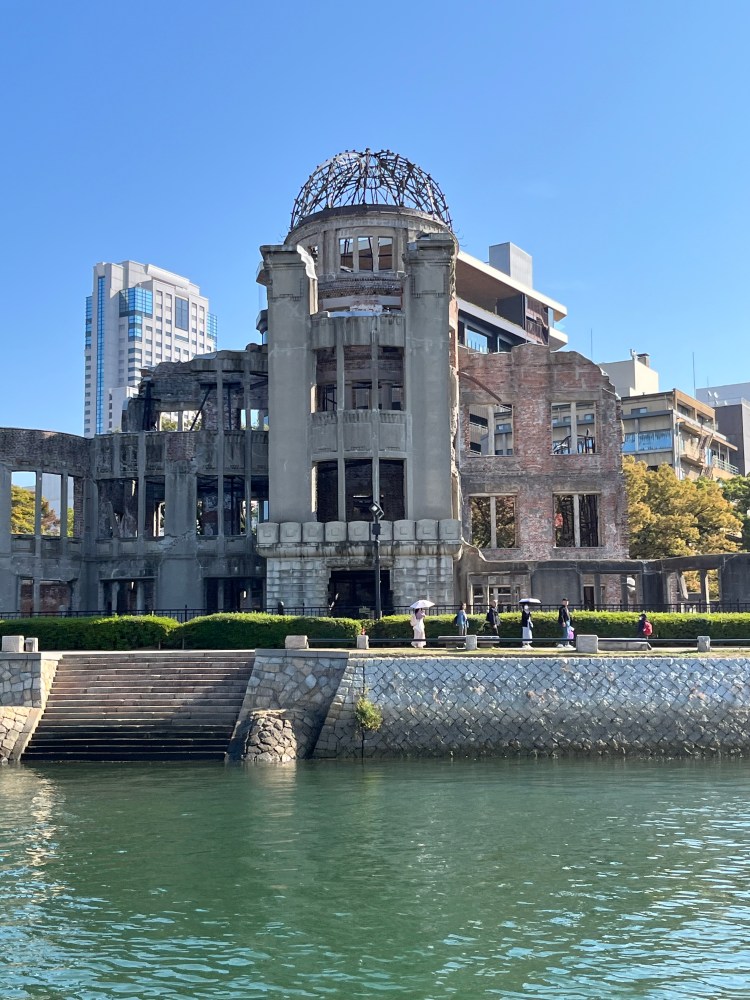
From there we walked across to the Hiroshima Peace Memorial Park, which occupies what was once the city’s busiest commercial and residential area. Within the Park is a series of monuments and exhibitions designed to keep the memory of the horrors of the atom bomb alive in the hope of it never happening again.
The tourist office is located in one of the other buildings that wasn’t totally destroyed, and is the only bombed building still in use today. Originally the Taisho-ya kimono shop, by 1945 it had become the head office for fuel rationing. On the top floor there is a history of Hiroshima through the ages, with photos showing life as it was until 1945. In the basement, you learn the story of Nomura Eizo, the only survivor of the 37 people working in the building on that morning. He was in the basement looking for some files when the bomb exploded. He tells how he managed to escape the building, despite being injured, and the horrific sights that he saw when he emerged.
Further along you have the cenotaph for the bomb victims, which contains the names of 300,000 people who died as a result of the bomb. Looking through the monument, you see first the Flame of Peace and beyond it the A bomb dome.
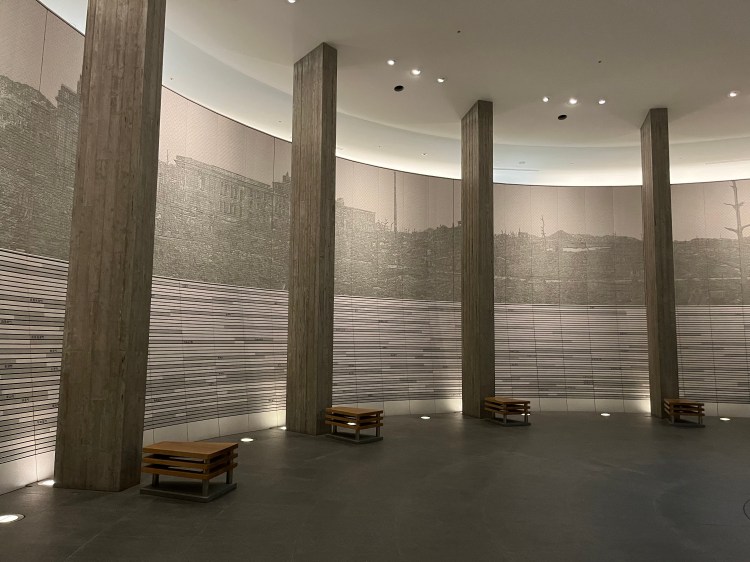
In the National Peace Memorial Hall further along, you can call up each of those names and find a photo of the victim and their age when they died. A circular building, it contains a panorama of the city as it was after bombing, made of 140,000 tiles to represent those who died that day. In an exhibition alongside, there are film clips from survivors from the meteorological observatory describing their experiences; the weatherman who kept taking readings because he didn’t know what else to do; a student who couldn’t walk due to injuries who managed to find help; a labourer who still regrets not being able to find his sister’s body.
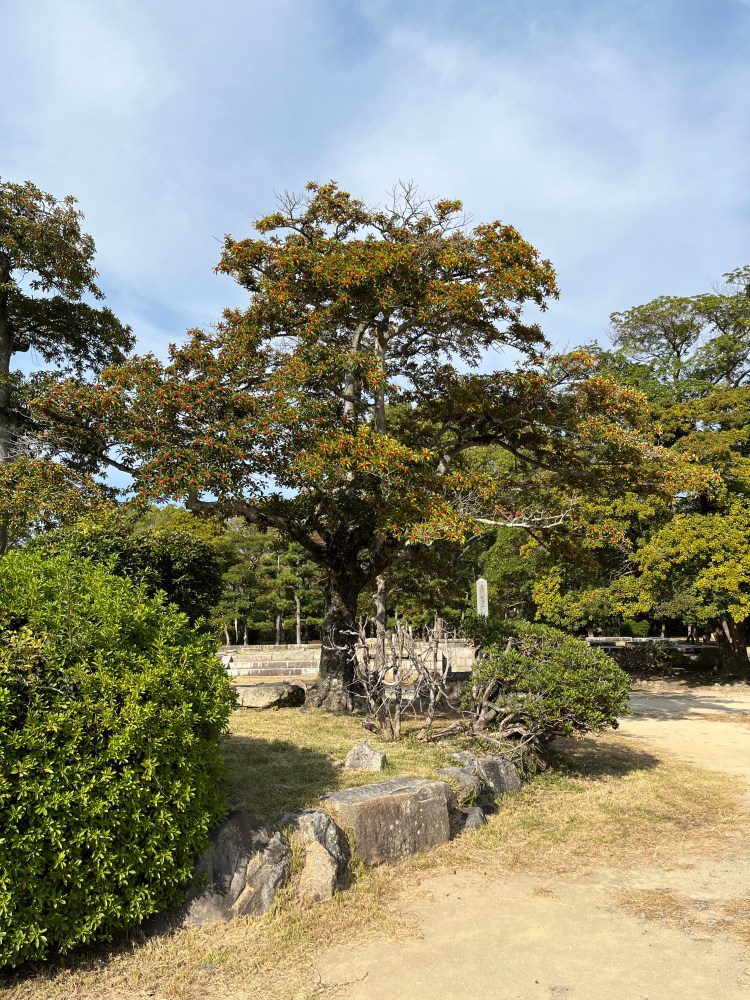
Dotted around the city are 170 trees that survived the bomb. They were all stripped bare by the blast and, in some cases, burned, but all came back to life and are still surviving.
While I’ve always been aware of what happened at Hiroshima (and Nagasaki), visiting the city makes it personal somehow. We only had time to visit the main monuments and we couldn’t get into the museum because of the size of the queue. You could easily spend a whole day there.
After grabbing some lunch, we headed off to look at the castle and then to the station to catch our train and ferry back to Miyajima.

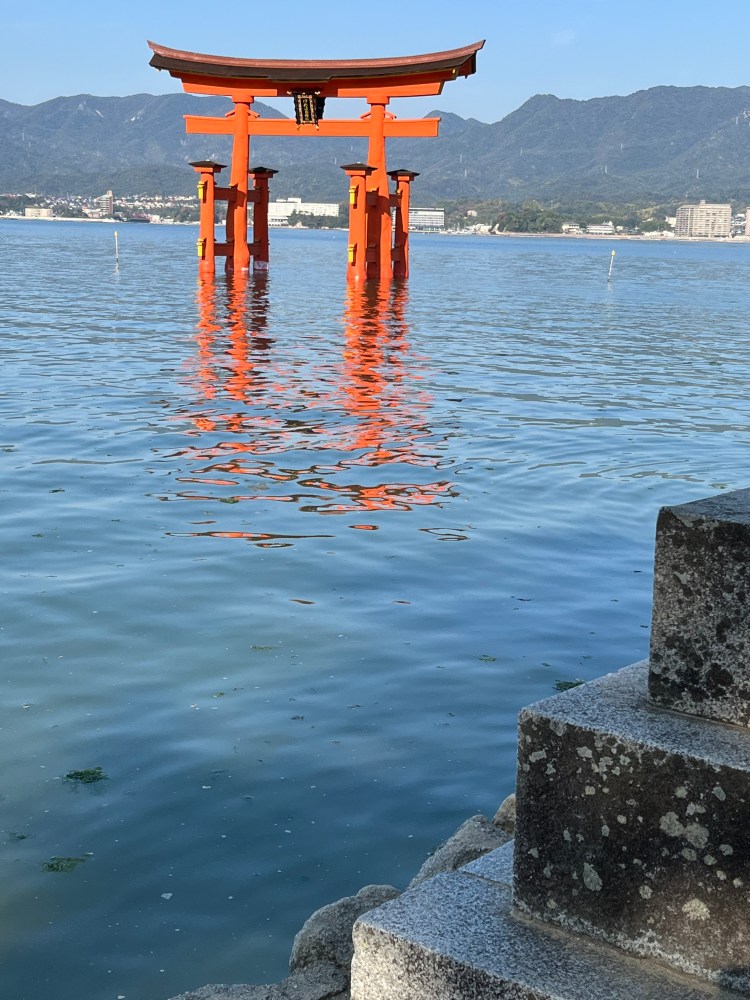
On the way back to the hotel, we stopped to admire the O-torii or Great Torii Gate, which is unusual because it was built in the water. It doesn’t float, it just looks like that. Equally, it isn’t embedded in the sand. It just sits there because it is so heavy!
 Steve and Diane on Tour