When we checked in at Eiheiji yesterday, they gave us the opportunity to join in the morning prayers from 4am to 7am today. We politely declined! However, at 3:55 this morning, they rang a very mellifluous bell to wake everyone up, just in case. It failed to enthuse us to climb the mountain in the cold and damp.
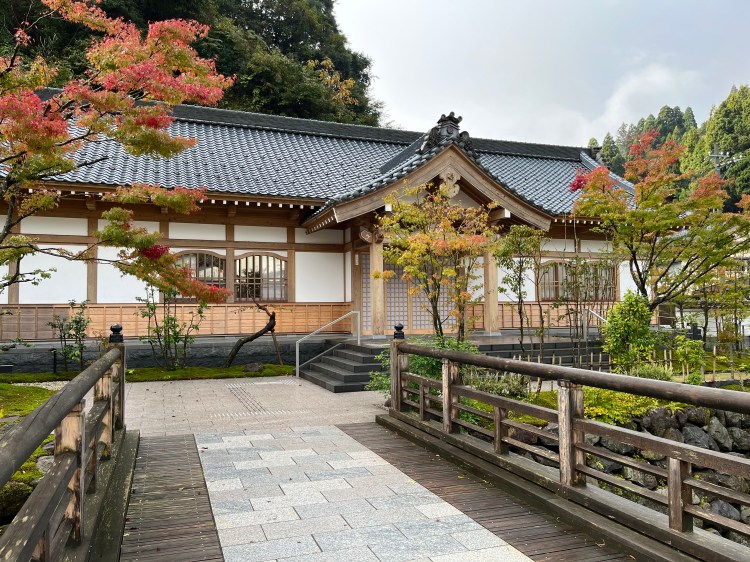
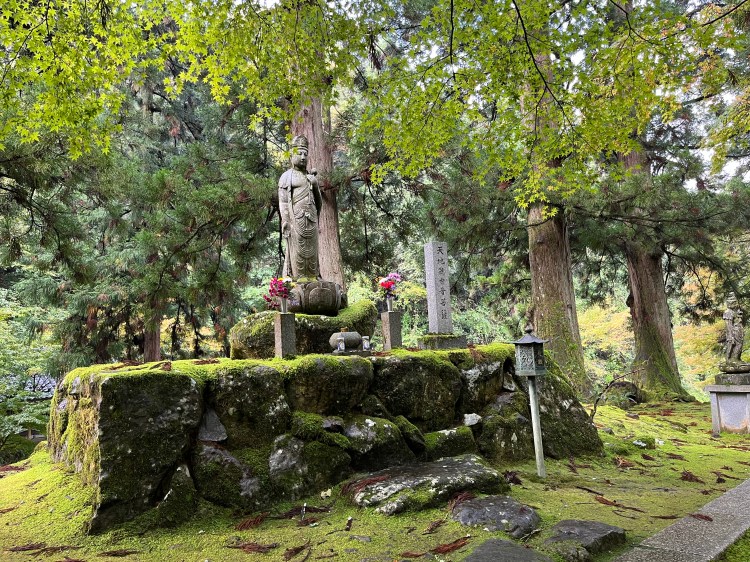
After a very nice breakfast, we did walk up to the temple to have a look around. We could only scratch the surface, as there are about 70 buildings in total.
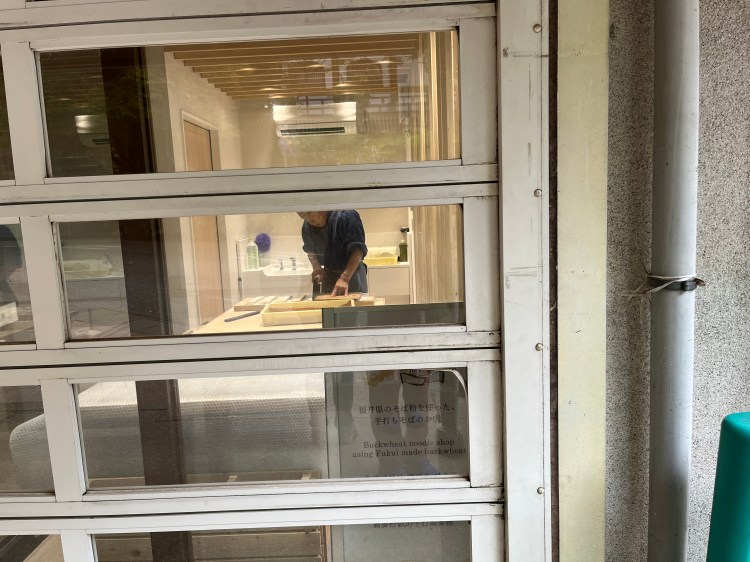
We also walked down the hill and into the village, where, among the souvenir shops and suchlike, we were able to watch a buckwheat noodle maker making buckwheat noodles by hand. He had a layer of dough covered by a metal tray and a very large cleaver. He cut against the leading edge of the tray, creating one noodle and pushing the tray back by the same width. At the end of the exercise, he had five bunches of noodles.
Returning to the hotel, we took a taxi back to Fukui and boarded the Thunderbird to Kanazawa. Whereas we had a whole carriage to ourselves yesterday, today’s train was fairly crowded. As was Kanazawa station, the whole place was packed, along with the bus terminus outside.
We extricated ourselves from the crowds and headed towards our hotel. We were in what looked like a commercial district, so detoured onto a side street instead and found ourselves in a residential district.
Up ahead, we saw a guy duck through a doorway and realised we’d stumbled on a ramen noodle bar. It was a tiny place, little more than a bar with stools where you could watch your food being prepared, plus a couple of tables at the end. It was so narrow, they even had a one way system; in through the front door and leave through the back.
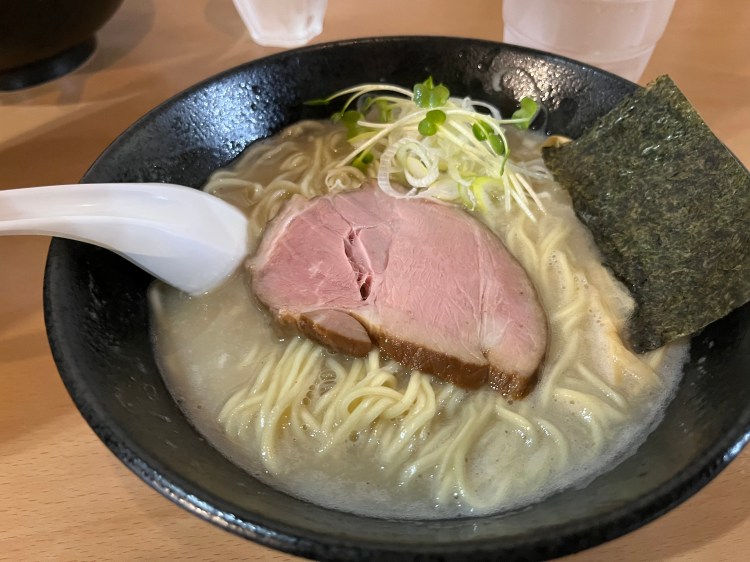
But they didn’t speak English. We managed to understand that we had to pick what we wanted from the menu, put some cash into a machine and press the button for the item we wanted. The first step was easy, we decided on two number 7s, ramen noodles with creamy chicken and seafood soup. The second step was fine too, wave a 2000 yen note at the machine and it gobbles it up. The third step didn’t go so well.
I looked at the top row of buttons and pressed the one with a seven on it. Diane said “that’s 27!” And it was! Number 7 was on the bottom row, because that’s how they count in Japan. “So what is a 27?” I asked, thinking I could try that instead. The list only goes up to 24! So we had to get the guy from behind the counter and try to explain that we wanted 2 times 7 not 27! It took a while, but eventually he twigged we’d made a mistake, unlocked the machine and did some kind of reset and we started again. It seemed to keep the rest of the customers entertained, because we got a lot of smiles as we ran the gamut of walking past everyone to get to the table at the back.
Still it was well worth it; we’ll never see those people again, but they’ll be able to tell everyone about these dumb tourists.
After that we started out for our hotel again, but it started raining heavily. I spotted a coffee shop, so we sheltered there for a while.
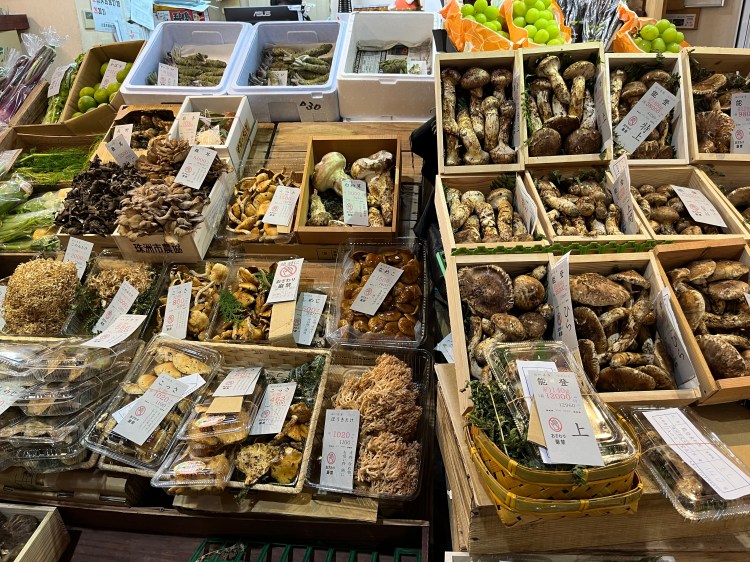
Then we came across Omicho market, the city’s biggest fresh food market which has been going for 500 years. They specialise in seafood, but there are all sorts of other exotic things, as well as several craft beer stalls. There were also several eating places, all of which had long queues outside.
And finally … we made it to our hotel. We hadn’t expected to be able to check in, but they said our room was ready and our forwarded bags were already there. Which was useful, because Diane’s raincoat was with them because we hadn’t thought she’d need it.
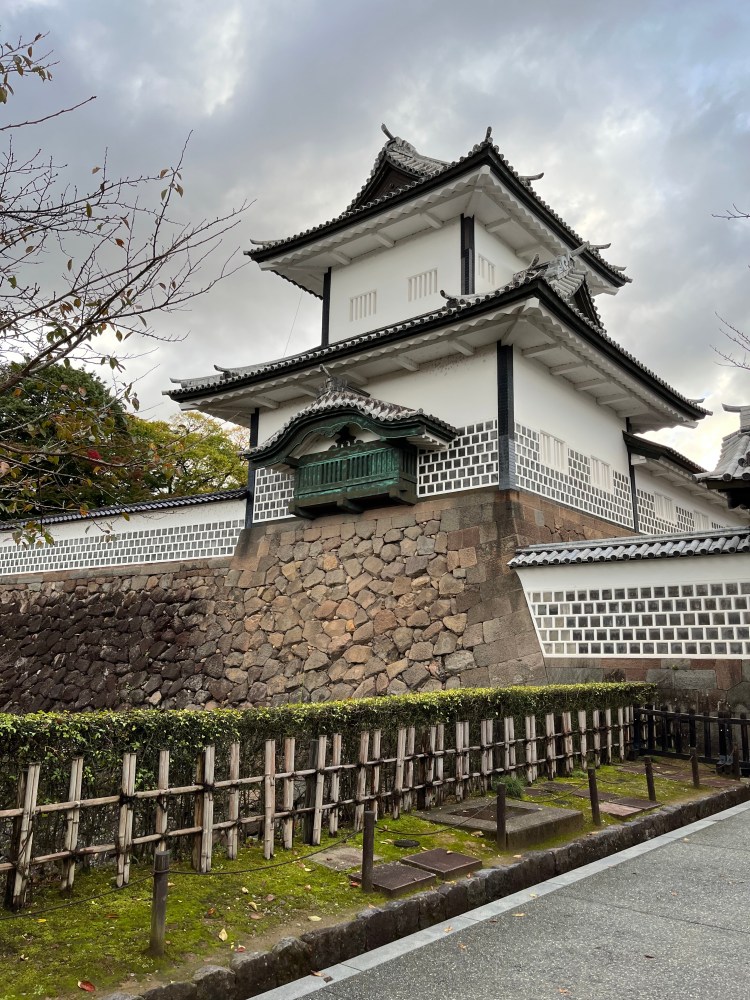
After a quick look at the room, we went out again to go and visit the castle and the Kerokuen Gardens. Originally built around 1600, the castle has burned down and been rebuilt several times. It has been a fortified temple, a residence of the ruling clan, HQ of the 9th Imperial Japanese Army and part of Kanazawa university. Pretty much all of it now is a reconstruction, and it was swarming with tourists today.
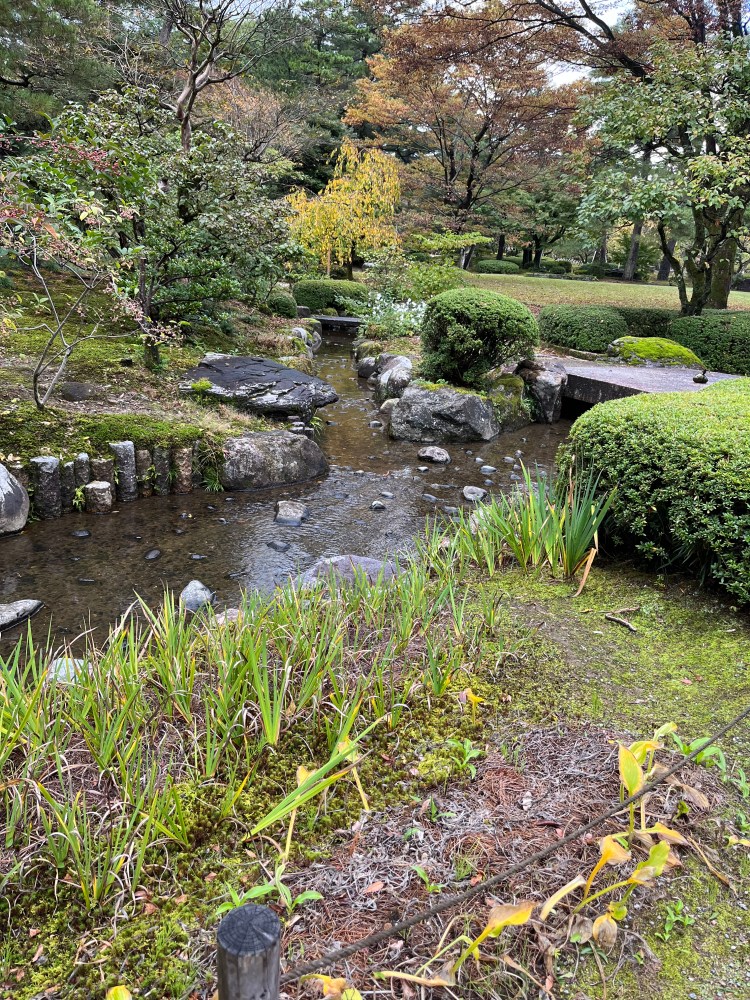
The Kenrokuen Gardens were originally part of the castle complex and also date back to the 1600s. Kenrokuen translates as “a garden combining 6”, referring to the six attributes of a perfect landscape garden. It is full of paths meandering around ponds, gardens and tourists, but very peaceful all the same.
One other thing we found out about Kanazawa is that they are holding their marathon tomorrow, which should make our tour interesting!
 Steve and Diane on Tour