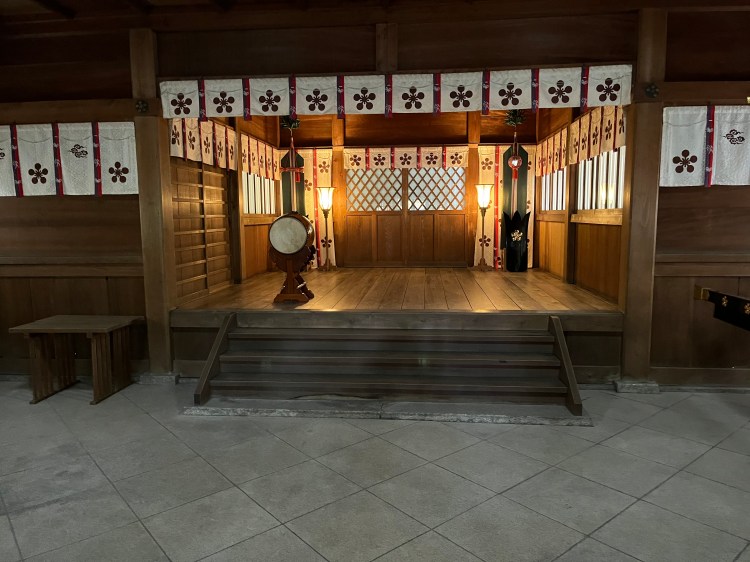
We set off on foot with Kiyomi, our guide, to explore the Samurai area. To get there, we had to go through the Oyama-jinja shrine, belonging to the Maeda family, the richest of the feudal lords. It would have been very peaceful if it weren’t for the helicopters buzzing around filming the marathon!
The shrine itself is very simple, but there are several other buildings, as well as formal gardens and some more modern artworks.
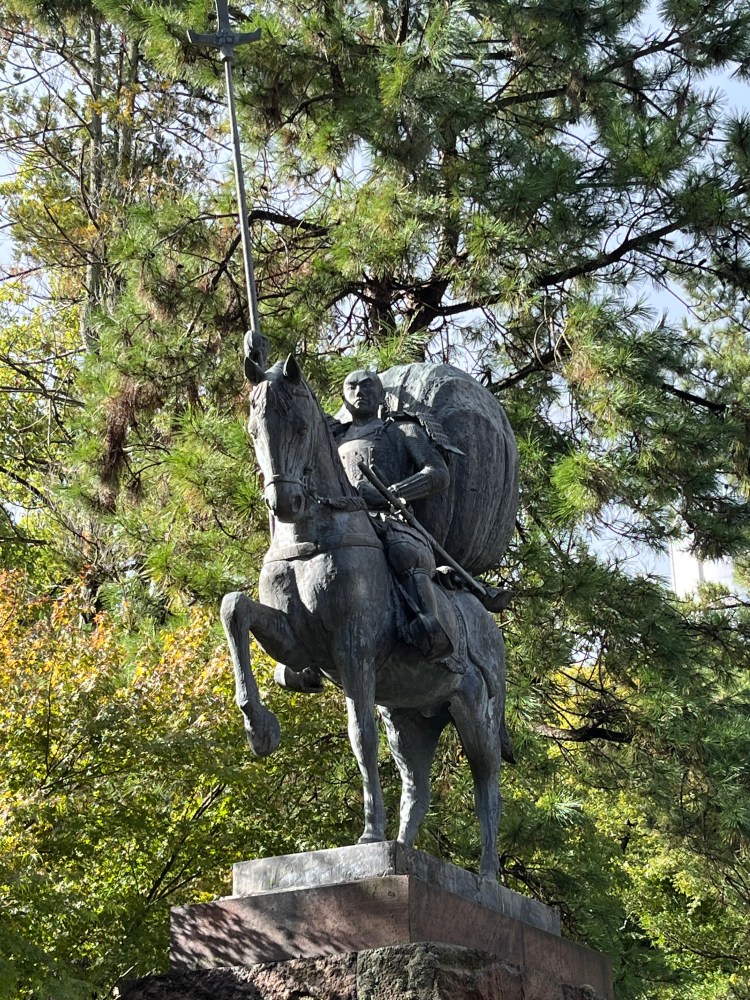
We even met the first Maeda lord on his horse.
Several buildings from the Samurai or Edo era have been moved to the area, to illustrate what life was like at the time. I was quite surprised to hear that there were middle and lower class samurai too. First and foremost they were soldiers, but in times of peace they were administrators, artists, teachers, etc.
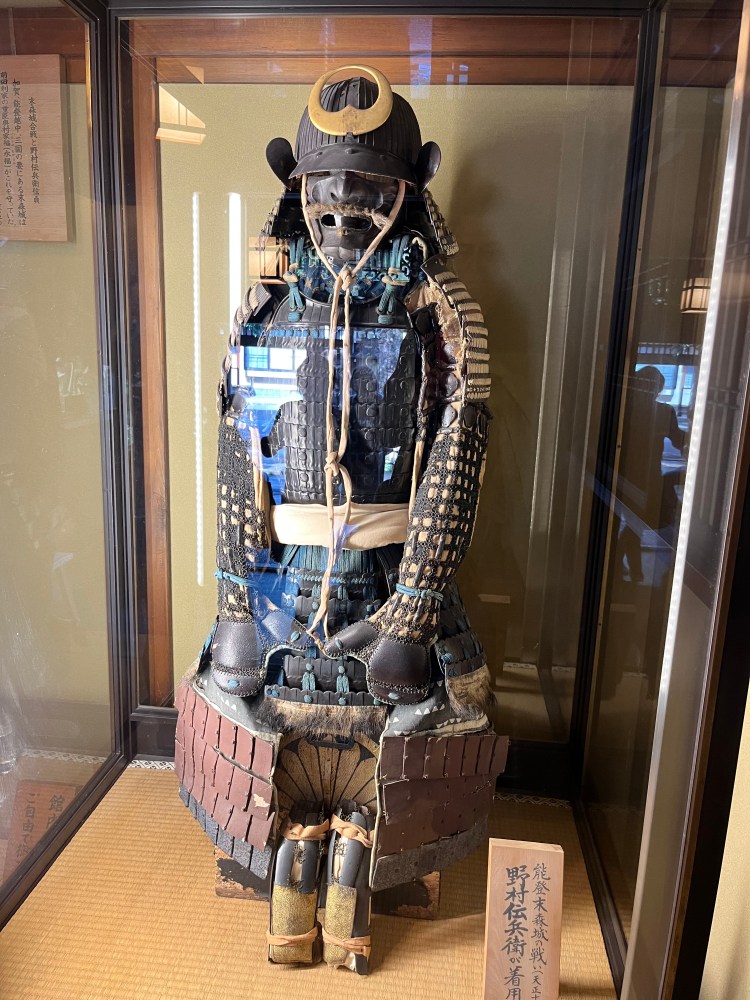
In one house, we saw an indoor fireplace, which explains why there were so many fires in these buildings. There was also a well. We visited the Nomura house which belonged to one of the richer families and has now been turned into a museum. The feudal lord collected all the taxes from his lands and then paid his followers in rice. Nomura was awarded enough rice to feed 1,200 people for a year, so he was quite well off.
Among the exhibits in the house was a suit of samurai armour and a thank you letter for killing a rival and sending his head!
By this time, we needed a coffee break so we stopped at the strangely named Moron coffee shop.
From there we took a taxi to the Geisha, or Chaya, district. Well, we would have, but the last part of the road was closed due to the Marathon. We walked through Kazuemachi Chayagi district, one of the smallest of the the three areas. Kiyomi explained that the Geishas are self employed, but to work they need to belong to a Chaya, or tea house. In the past, the Chayas might have been brothels, but prostitution is now illegal in Japan and the Geishas are entertainers instead.
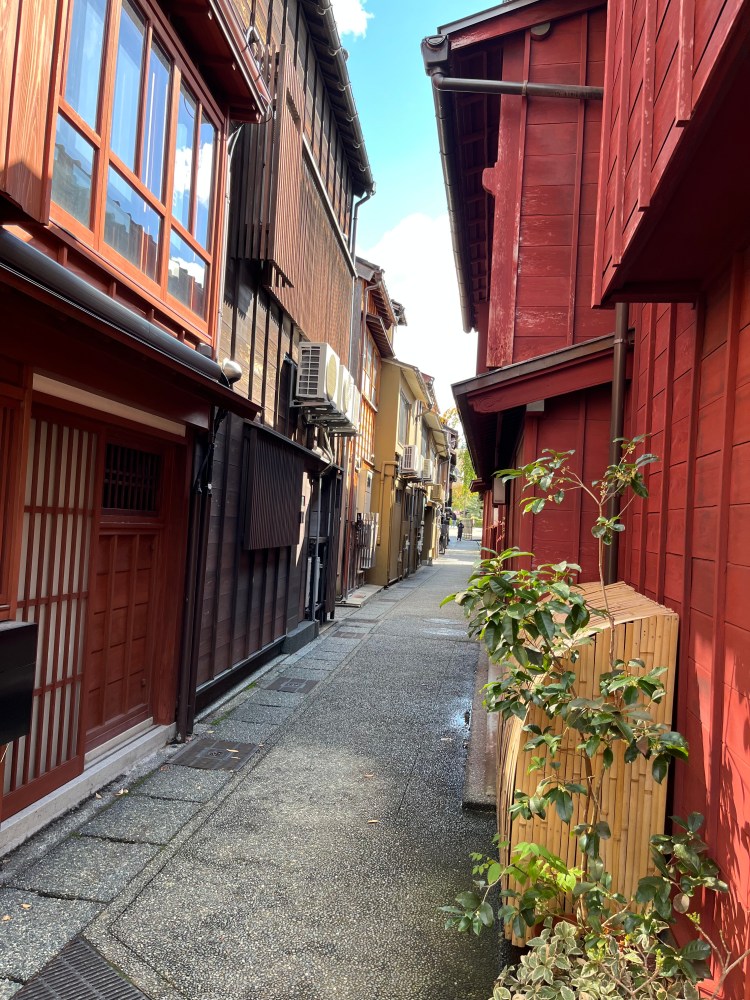
We were heading to Higashi Chayagai, the biggest of the three Geisha districts, but we still had to cross the route of the marathon. This was handled in a typical Japanese orderly way. We queued on one side of the road. The marshals directed the runners to the far side of an island in the middle and then let us through onto the island. Then they directed the runners to the near side and let us cross to the far side.
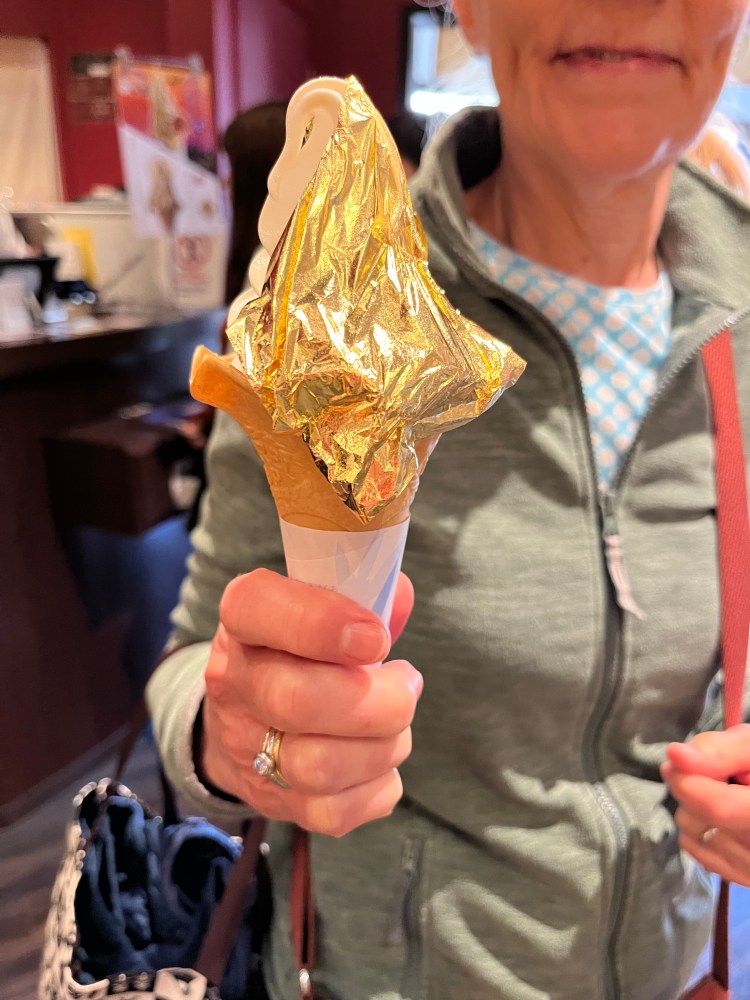
Whereas Kazuemachi was very quiet, Higashi was teeming with people. It is a warren of little streets, and most of the houses are externally as they were in the Edo period. However, there are only about 35 working Geishas left in the area, so a lot of the tea houses have been turned into restaurants, cafes and other types of shop. We visited one of these, a gold shop. Kanazawa means “gold pond”, and it is famous for its gold leaf products. One of these products is gold leaf ice cream, which we had to try. It tends to stick to your lips, but otherwise it’s like any other ice cream.
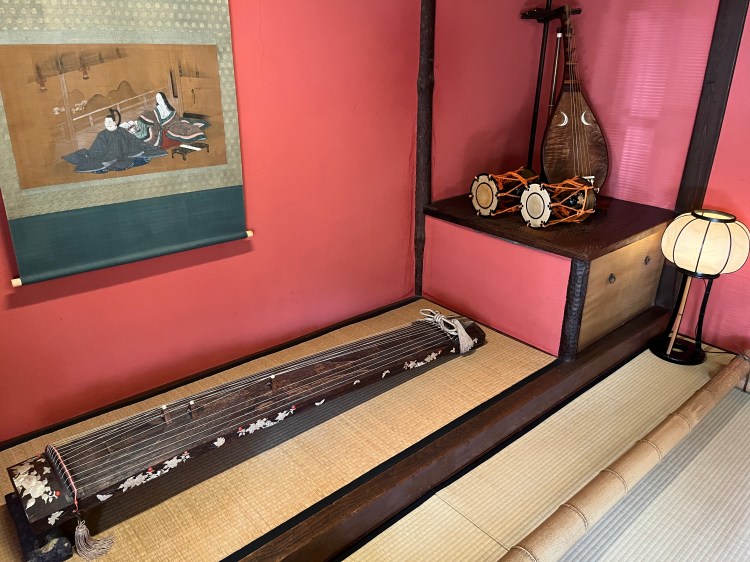
Our final port of call was a Geisha museum. This was another shoes off building, but this time we had to put all our bags into a locker as well. Geishas only entertain upstairs, which is where we started, looking at the variety of musical instruments they played.
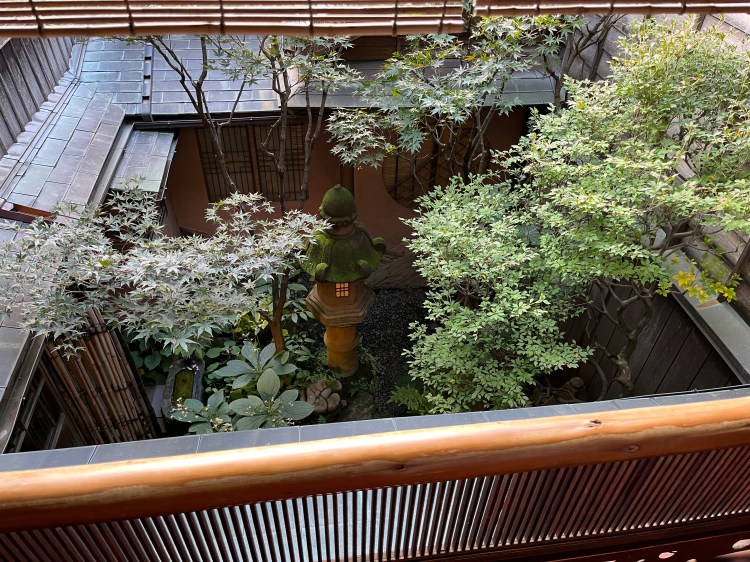
The house has a tiny central garden and a room on each side.
Downstairs is the (female) owner’s domain, with a kitchen and office area.

To visit a Geisha, you have to be introduced by someone known to the house; this helps ensure their safety. Samurai and Buddhist monks weren’t allowed to visit!
That ended our tour, so we parted ways with Kiyomi and went looking for some food. We ended up in another noodle bar, dining on Udon noodles and tempura. Then we meandered around the little alleyways, sheltered from the rain in a cafe and made our way back to the hotel.
 Steve and Diane on Tour