We had some of our most complicated transportation arrangements today, using several metro lines and a train line to get to the west of the city.
Our first port of call was to the Meiji-Jingu shrine. Set in a wooded park, this was dedicated to Emperor Meiji and Empress Shoken in 1928. There are several buildings, but there was a service going on in the main shrine and we were told we couldn’t watch unless we wanted to pray.
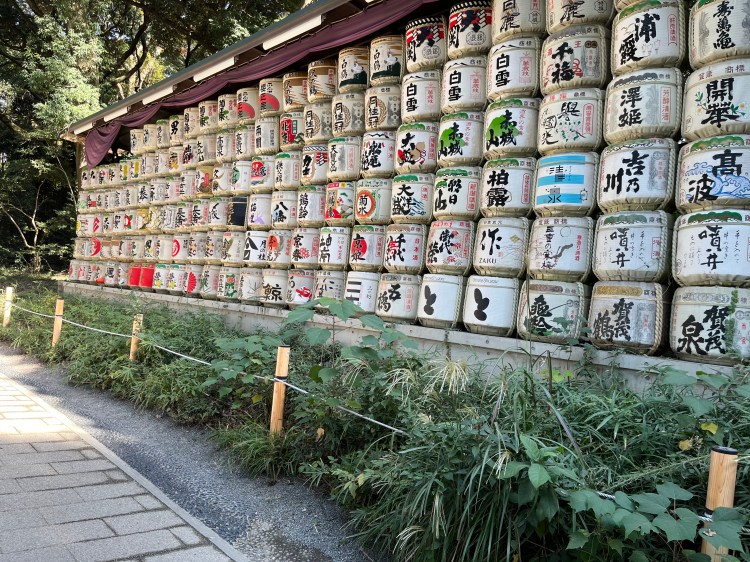
There was some kind of event featuring chrysanthemums, but we couldn’t work out what it was.
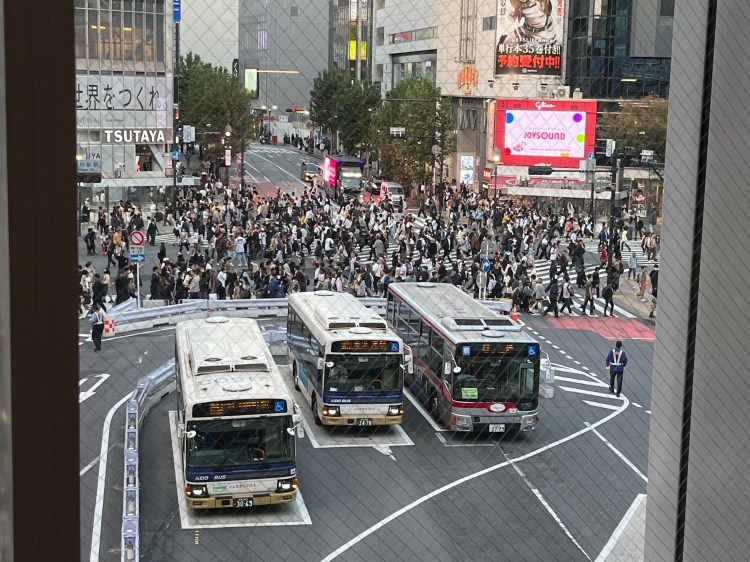
From there we travelled on to Shibuya, to see the famous crossing there. It looks like a cross between Oxford Circus and Piccadilly Circus. Like the former, it is a scramble crossing, meaning that you can cross diagonally, but it is also covered with advertising like the latter. When the little man turns green, it is a mass scramble as people pour across in all directions. We didn’t stay long.
We next had to get to Setagaya Daita, which was a few stops further west but on a different line. Finding the platform was a real mission, as this was an elevated railway in a totally different building. However, find it we did and we were also lucky enough to get an express service that missed out the next three stops.
We then went in search of some lunch. We spotted a likely looking place located near a level crossing. They only had three things on the menu, but it turned out that two of them are only available on holidays. So we settled for three sandwiches and a bowl of pickles. The level crossing seemed to close every couple of minutes, but it didn’t seem to cause any problems. Maybe the people complaining about the level crossing in Bicester should come and see how easy it can be.
Shimokitazawa, the area we were in is one of Toyko’s trendiest neighbourhoods, and we were booked on a tour called Cool Tokyo. We were a bit early at the meeting place, so we went into a nearby coffee bar to pass some time. A few minutes later, this guy comes in and asks if we’re Steve and Diane. This was our guide and that’s how few westerners there are in this area!
For once, we didn’t have to struggle with his name – Brad. He’s an American who now lives in Japan doing walking and cycling tours in the summer and skiing tours in the winter.
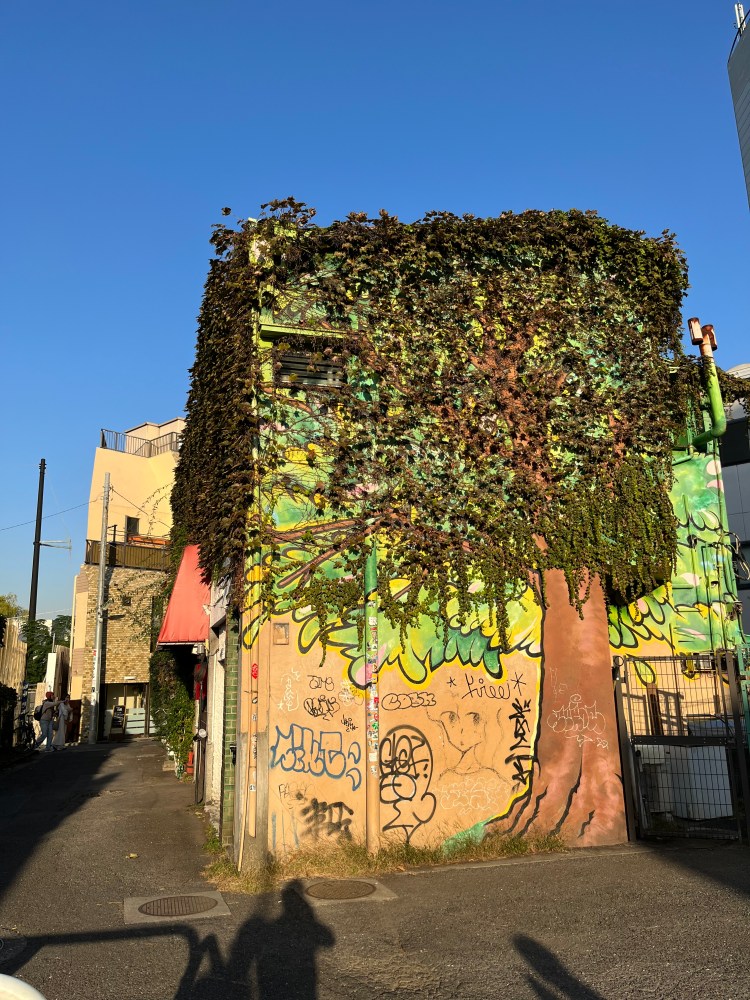
He gave us some history of the place and then took us around the narrow streets and alleys of the area. There are vintage clothes shops, arty cooperatives, vegan and vegetarian stores, graffiti and food!

At one place Brad introduced us to Mushi Dori, steamed chicken salad, and gyoza, dumplings stuffed with minced pork, washed down with jasmine tea.
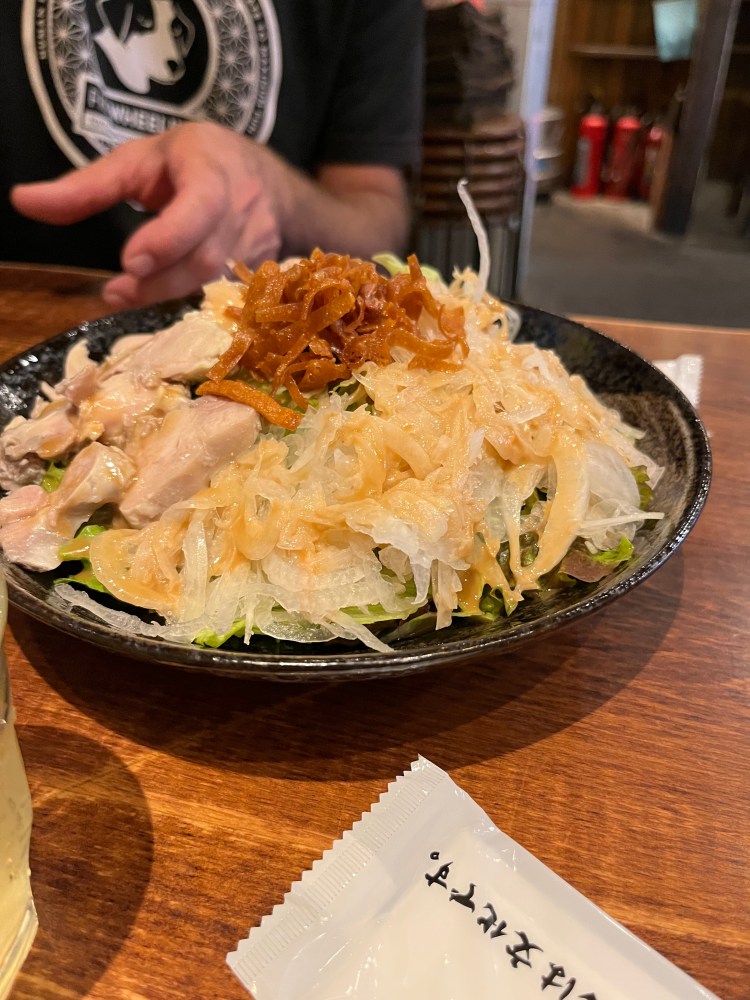
Further on we had sweet doughnuts with ice cream and at a third place we had some excellent coffee in a shop owned by a famous music producer. All in all, this was one of our favourite tours.
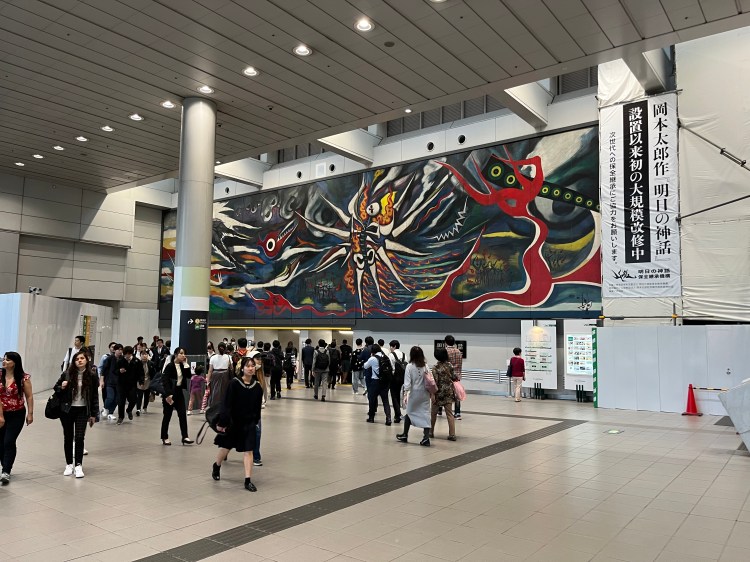
The bonus was that he told us how to switch from the railway line to the subway line at Shibuya so that we could look down over the crossing and see a famous artwork by surrealist artist Taro Okamoto. Called “The Myth of Tomorrow”, it is 30 metres wide and was painted in response to nuclear proliferation in the 60s. It was installed in Mexico City in 1968, but vanished in 1969. It reappeared in 2003 and was returned to Japan in 2008.
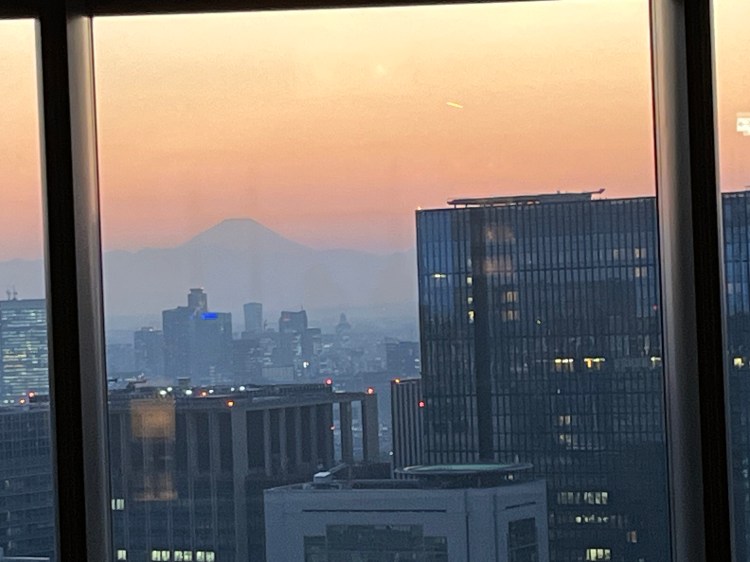
Back at our hotel, we finally got to see Mount Fuji. Since we’ve been here, it’s been too hazy to see, but we walked in just as the sun was setting and finally managed to get a glimpse of it.
 Steve and Diane on Tour