We started our day with a nightmare journey to Cusco. It took a little over an hour to get to Lima airport through the rush-hour traffic.
Our driver told us which door to use to get into the terminal. Once inside, we were met with a wall of people! We discovered that we had to print our own baggage tags. We managed one by ourselves but then needed help for the second one.
We then had to go to the bag drop and work that ourselves. Despite not being able to display the instructions in English, we got one done but again couldn’t do the second. The agent trying to help also failed, but then she asked why we didn’t go over to the premium check in desk. It turned out that we should have used a different door, but even then we had to ask where the check in was. They clearly don’t want people using it.
Anyway, we found the Latam premium desk where a real person checks you in. Except that she couldn’t do the second bag either! Finally, she started again and did them both. With a tear in our eye, we said goodbye to our bags, wondering where they were going to end up!
After all that, the flight was fine, although coming into land between all those Andes was a bit hairy. We managed to recover our bags and find Joan, our “PA” for the next few days, and drove to Cusco. Our hotel is a charming renovated villa on a cobbled street in San Blas, one of Cusco’s oldest neighbourhoods. There’s plenty of wooden colonial furniture and lots of local art and artefacts scattered around.

Joan talked us through our programme for Cusco and the Sacred Valley of the Incas, the rest of this day being doing nothing while we acclimatised to being at 3,400 metres above sea level. We duly did nothing but eat, drink and sleep.
Next morning after breakfast, we met up with Joan and he introduced us to Elias, our guide. We walked up the street a short way and found Juan Carlos, our driver, and were whisked off to our first stop, the Inca ruins of Sacsayhuaman. In fact, these pre-date the Incas, who just moved in and extended them. The only thing left is the walls, which are made of huge blocks of granite, fitted closely together without mortar. It’s like a cousin of Stonehenge; it appears to be connected to the sun’s cycle and nobody knows how a civilisation that didn’t have the wheel or metal could shift the blocks from their original quarry.
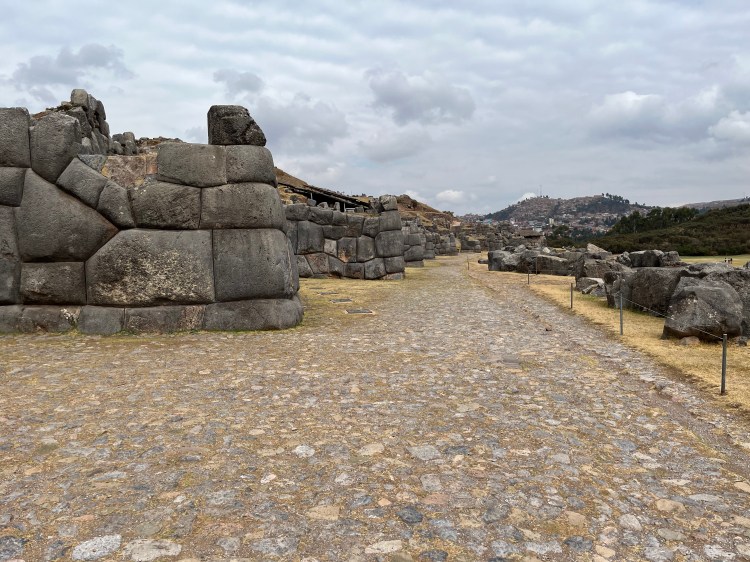
When the Spanish arrived, they started taking the stone and using it to construct their own buildings in Cusco, a practice that continued into the 60s when the area became protected.
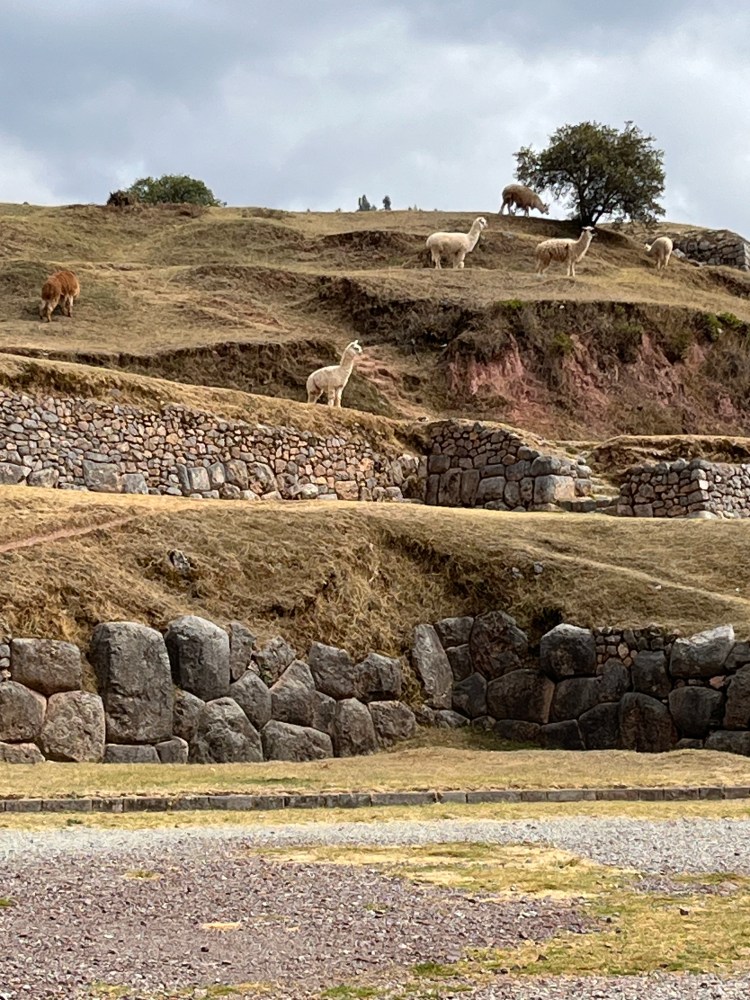
On the way back down, we came across some wild alpacas and llamas and learned how to tell the difference between them.
From there we drove to Q’enco, a funeral site where the dead were mummified and placed in niches in the walls. Lacking some of the oils the Egyptians used, Inca used water that quinoa had been soaked in, as well as mint oil.
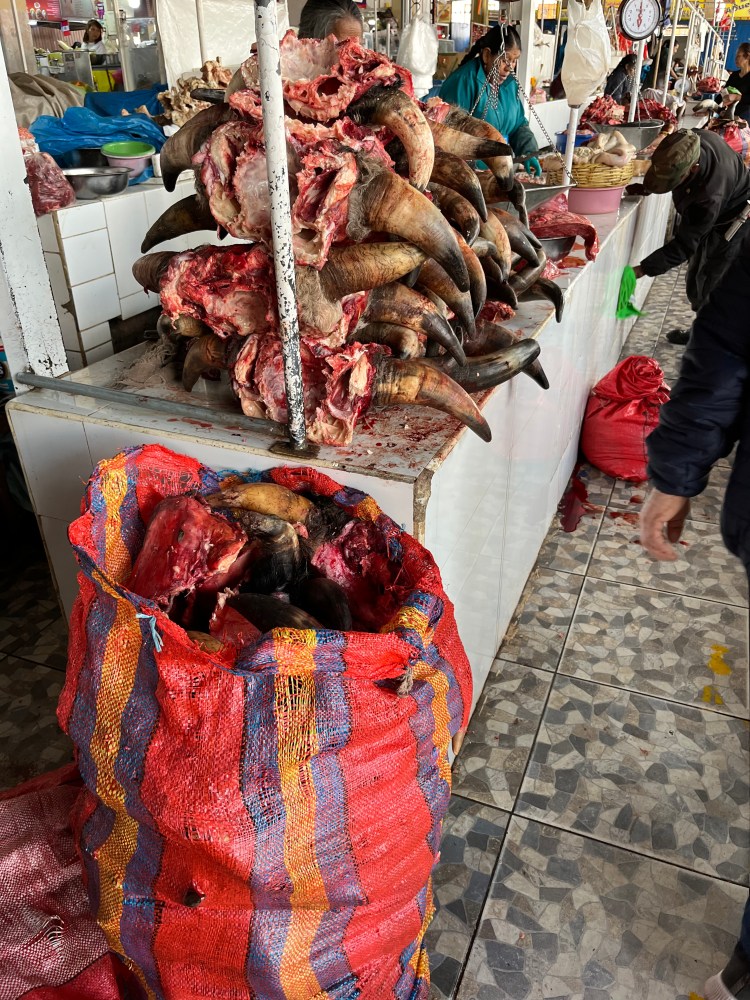
Juan Carlos then drove us back to the city and we took a walk through San Pedro market, a huge indoor market open every day of the week. You can buy anything there and it is divided into sections for meat, vegetables, medicinals, toys, household items, fruit juices, etc. There were some very strange items on sale!
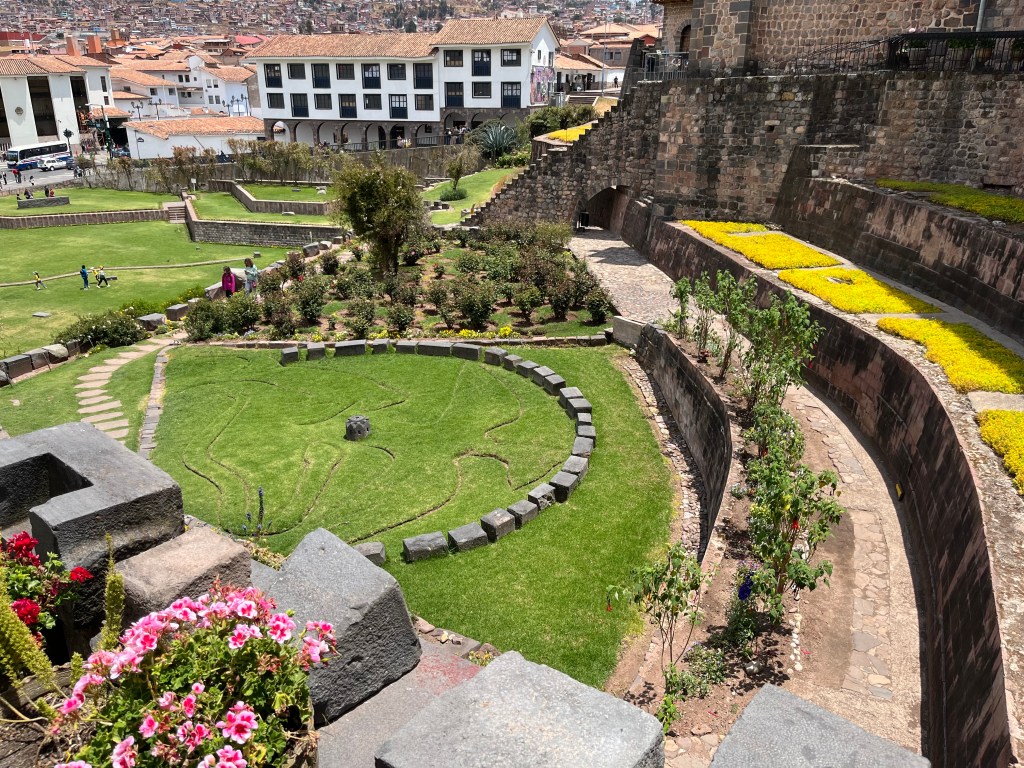
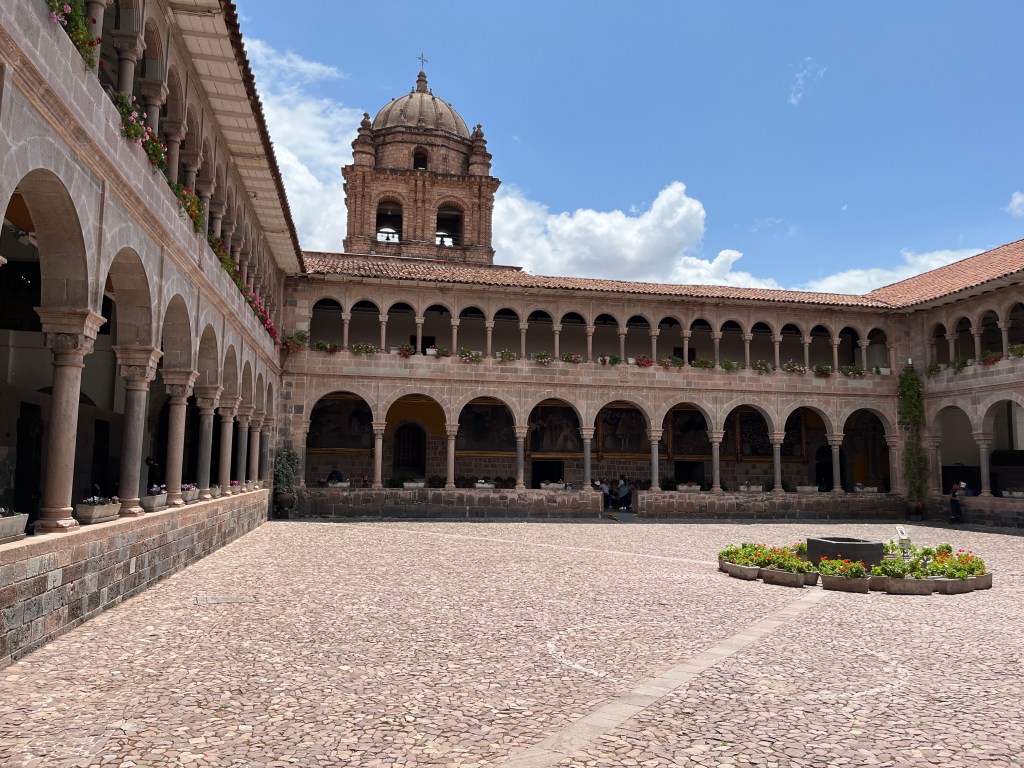
From there, we moved on to the Temple of the Sun. When the Spanish arrived they described it as having a thick gold layer coating the top of all the outside walls, with caches of golden and silver religious objects inside. They promptly melted all the gold down and shipped it back to Spain! The buildings were also built of the same granite as Sacsayhuaman and the Spaniards turned the temple into Santo Domingo church. The ancient stones remain, but much of the Spanish part was destroyed by earthquakes.
Our final destination, after some lunch, was Cusco Cathedral, or Cathedral Basilica of the Virgin of the Assumption. Built from stone removed from Sacsayhuaman, the cathedral has three sections. The Triunfo is the oldest and was built to celebrate the Spanish victory over the Incan empire. It was built on top of the Inca temple Kiswarkancha. The central one was built to accommodate the growing congregation, as locals were converted to Catholicism and is in a very sumptuous Baroque style. The final part was built by the indigenous population and includes a fusion of catholic and local beliefs, including a black figure of Jesus.
By this time we were glad to get back to the hotel for a long rest.
 Steve and Diane on Tour