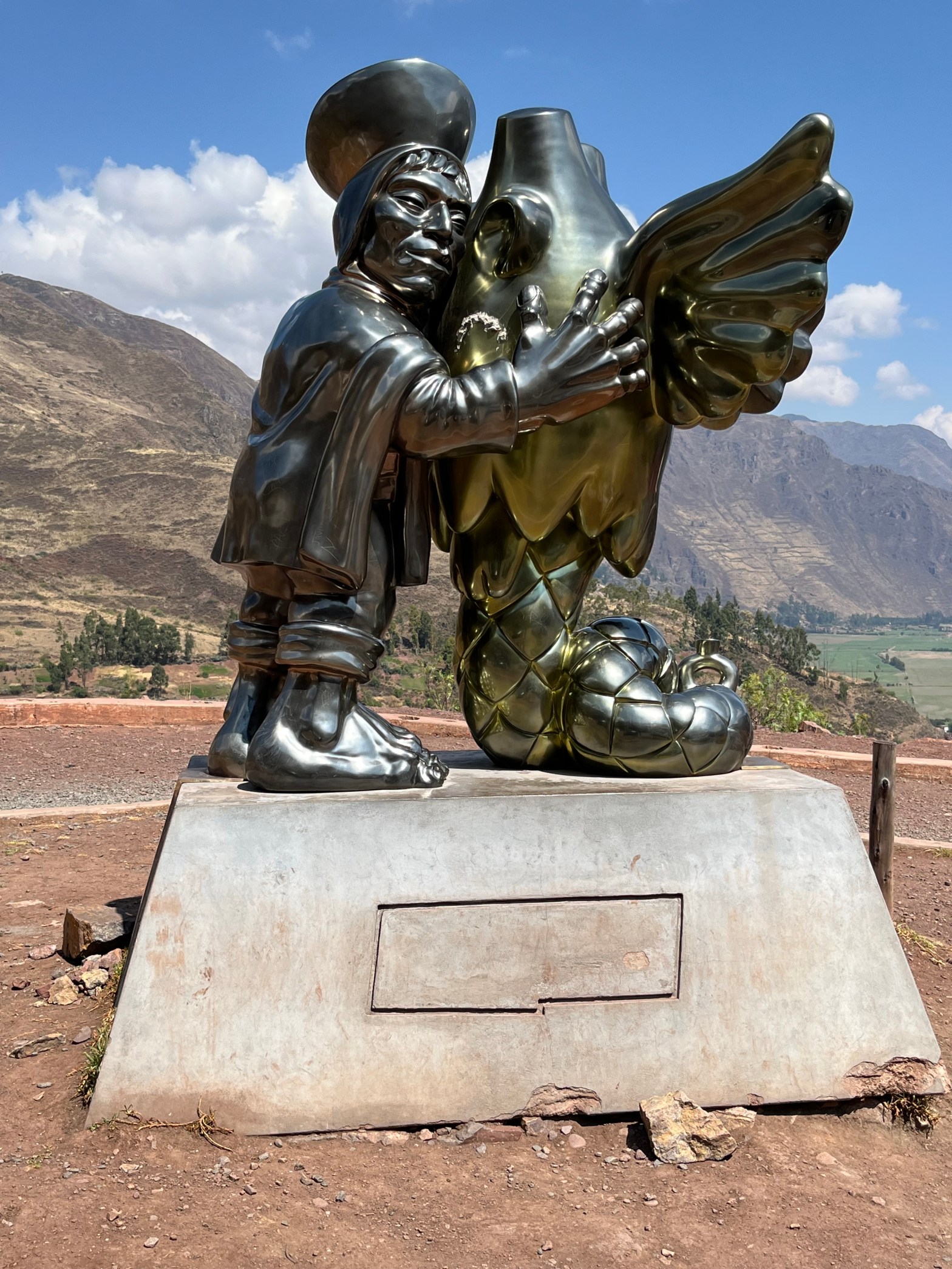
This morning Elias and Juan Carlos picked us up from the hotel and we drove to Pisac National Park.
The route is very winding as it climbs up to passes and then down again. We stopped a couple of times along the way at sightseeing places. The hills are all terraced and the local people grow mainly strawberries and potatoes, depending on the altitude. At one point, Elias pointed out a river down below us which finishes up in the Atlantic, despite our proximity to the Pacific.

As we neared the park we came upon a long line of tourist buses completely blocking the road. We jumped out and followed Elias to the entrance, leaving Juan Carlos to figure out where to park.
Pisac was built by the Wadi people, who pre-date the Incas. As was their way, when the Incas took over, they didn’t destroy everything, they used and improved it. Very little of the village has been restored, but it gives you an idea of how it used to look.
The main feature is the terracing, which the Incas built. They didn’t just build walls and pile earth behind them. Each terrace comprises several layers; rocks, rocks and gravel, gravel and sand, sand, soil and a nitrogen-rich nutrient layer. The latter often contained guano from the coastal regions, as well as manure from local animals.
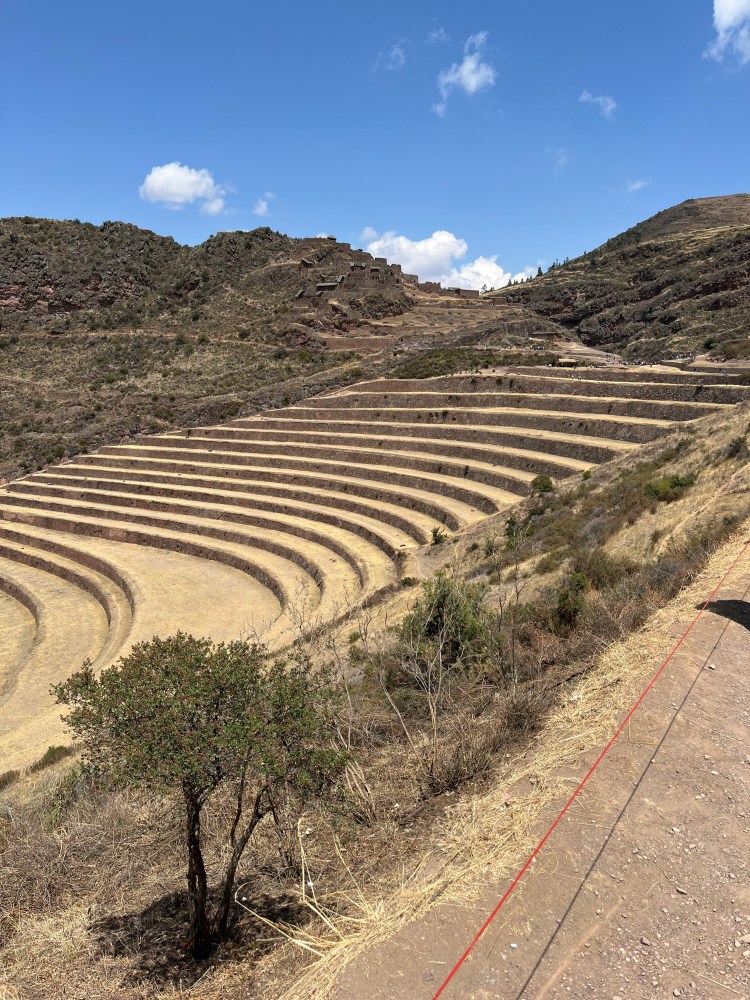
The Incas also ploughed deeper furrows, trapping moisture in the soil and creating a series of microclimates, allowing them to grow a large variety of crops.
One hill face wasn’t terraced. This was the local cemetery, where bodies were placed in holes. When the Spanish arrived, they discovered evidence of cranial trepanation in a large number of the skulls, with the holes being closed by gold or silver. They promptly destroyed the tombs and added the precious metals to their booty.

To me, it seems incredible the Incas had brain surgery and agricultural science back in the 13th Century.
From there, we headed back down to the modern town of Pisac for a very pleasant lunch.
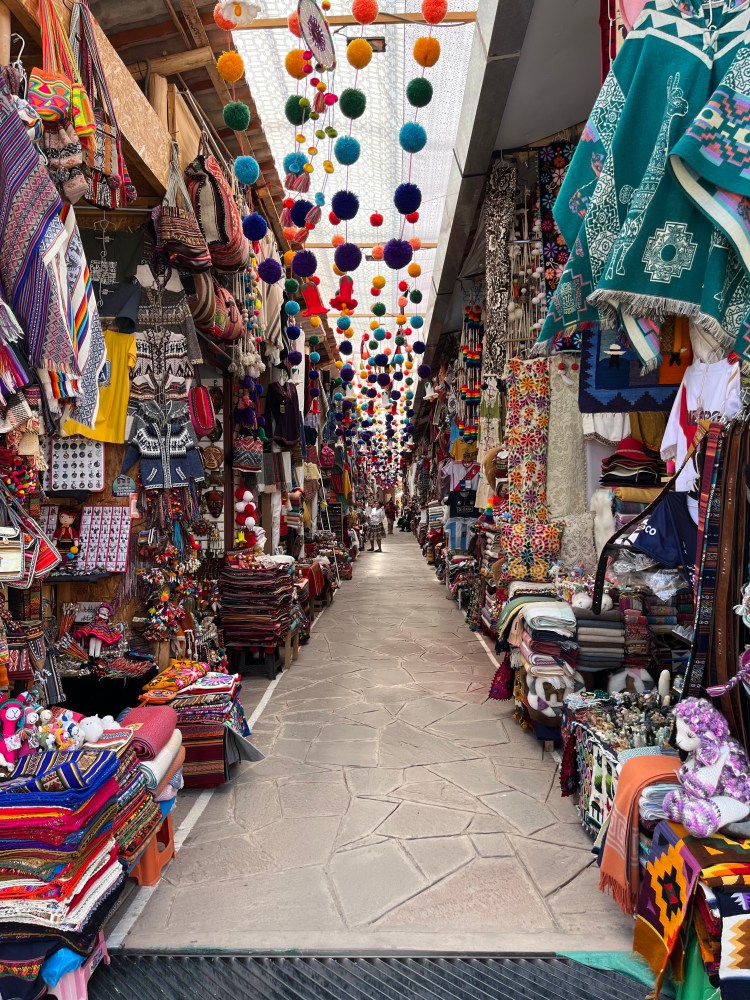
Inevitably, Pisac has a market, which we had to stroll through. It is mainly textiles and tourist items, but we got the impression that local people shop here too. We came away with a couple of purchases. I rather suspect that Elias is in line for some commission too!
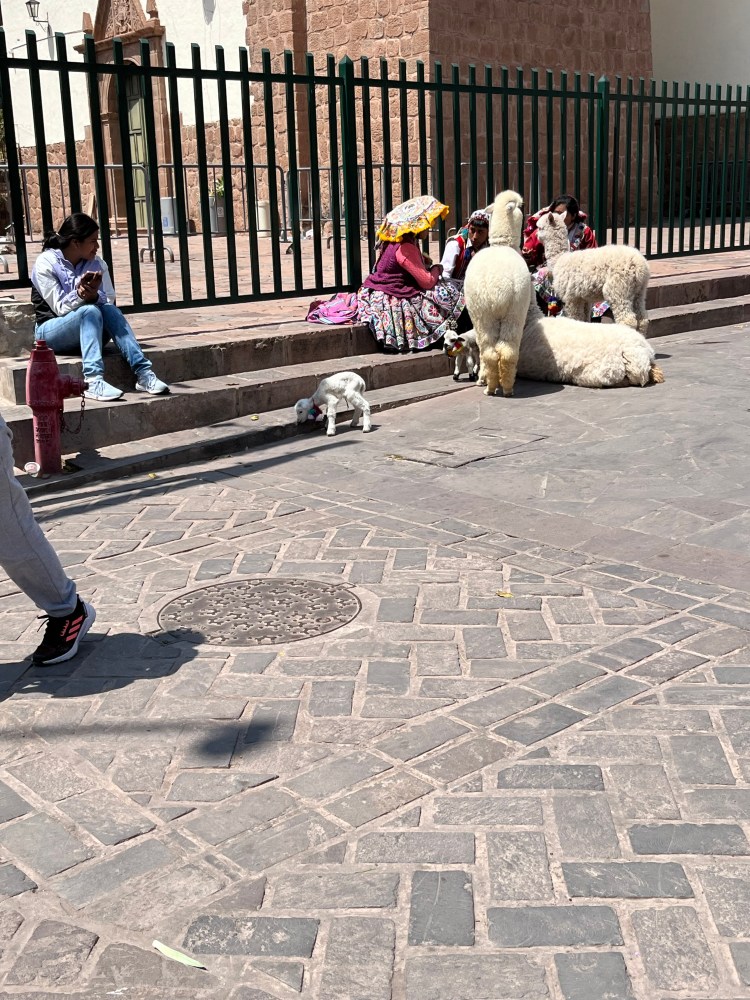
A fairly common occupation for women here is to dress up in their local gear and pose for photos with a baby alpaca – for which you have to pay them. In this photo, they are passing off a couple of lambs as alpacas.
And that’s the end of our visit to Cusco. Tomorrow we’re off to the Sacred Valley of the Incas. Sounds a bit like something from Indiana Jones!
 Steve and Diane on Tour