We had to pack our bags this morning due to our change of rooms. We then met Gerardo, the local Audley guy who was going to give us a tour of this lovely city. And as a 7th generation Arequipan he is well placed to do so!
We walked up to the San Francisco church and Gerardo told us some of the history of Arequipa. When the Spanish arrived it was an agricultural area, with terraces built of Silla stone – the product of compacted volcanic ash from one of the three volcanoes around the city. This heats up in the day and keeps the roots warm at night.
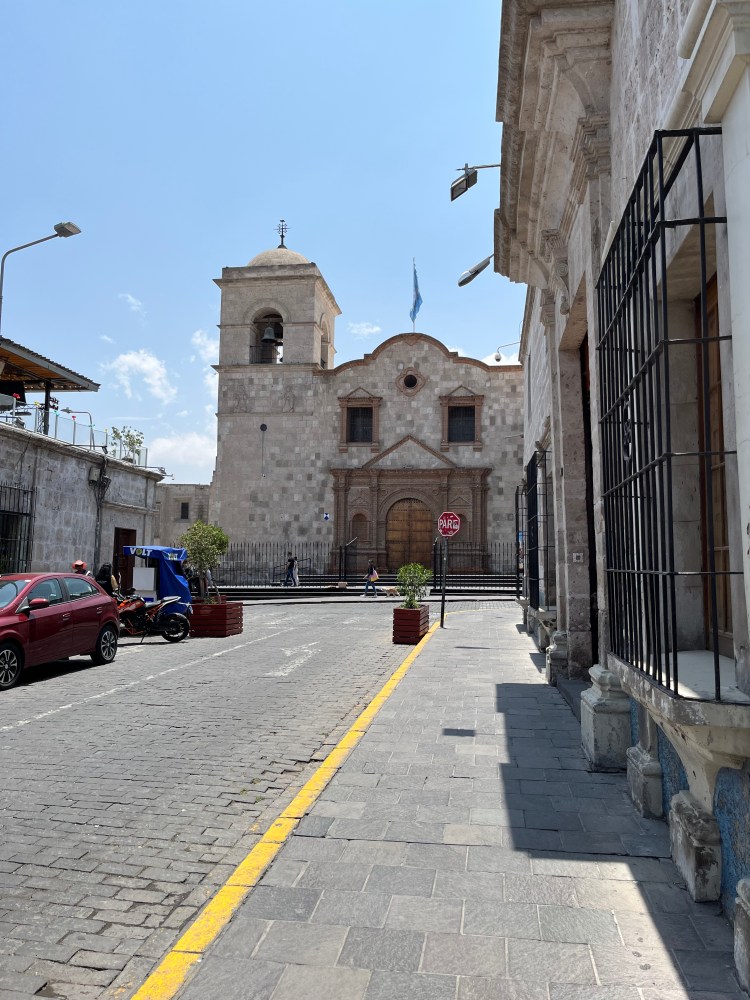
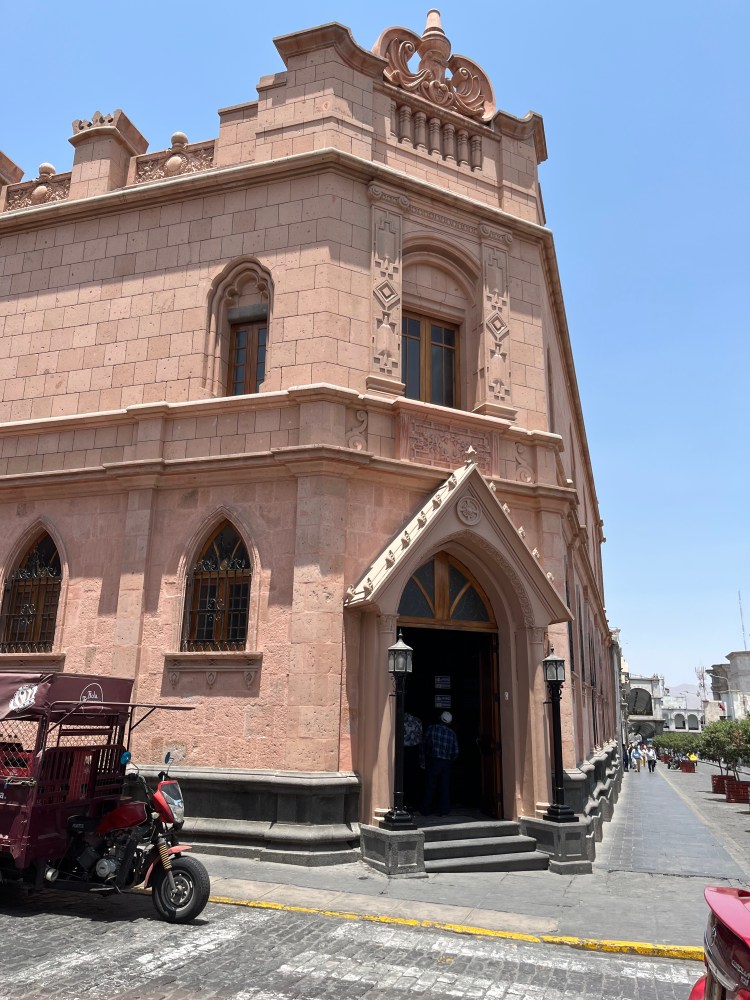
When the Spanish recognised the thermal properties of sillar, they used the stone to build all the buildings of their new home. Hence Arequipa became known as the White City. The original buildings were very simple in style, but after several earthquakes, rebuilds have used new designs, lending a very uncontrolled aspect to the architecture. The only building we saw that wasn’t white was the Bishop’s Palace, build of pink sillar.
As we passed several alpaca shops, Diane asked how all the products could be 100% baby alpaca. It turns out that it isn’t the alpaca that is a baby! Wool from the sides of the body is called baby alpaca while wool from the back is called royal. The rest is ordinary alpaca wool. So alpacas can provide baby wool into their dotage!
We visited a couple of houses, one small, the other larger. They share the same design, with an inner courtyard surrounded by public rooms and a second courtyard with the private spaces. The larger house had a third courtyard, but not everyone can afford to be a bank!
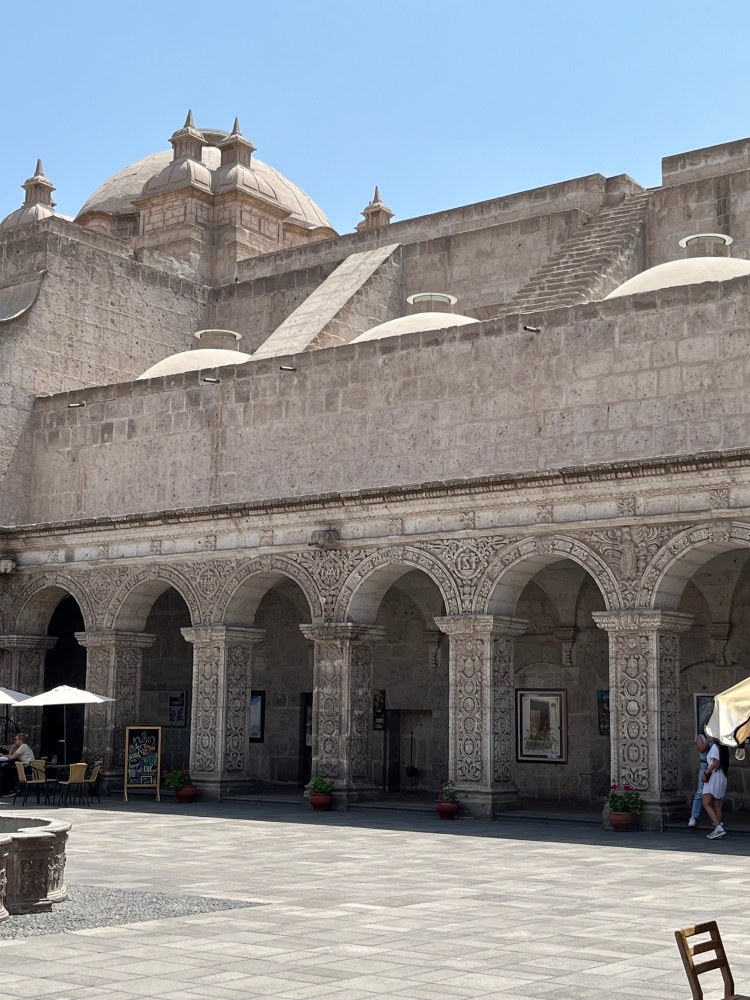
We arrived on the Plaza de Armas, a huge square with the neo-classical cathedral taking up one side. Unfortunately, it is only open at certain times; the next is at 8pm tonight so we probably won’t be visiting. Not far away is the old Jesuit church and associated school. This is in the Barroco Mestizo style, which involves a lot of intricate carvings.
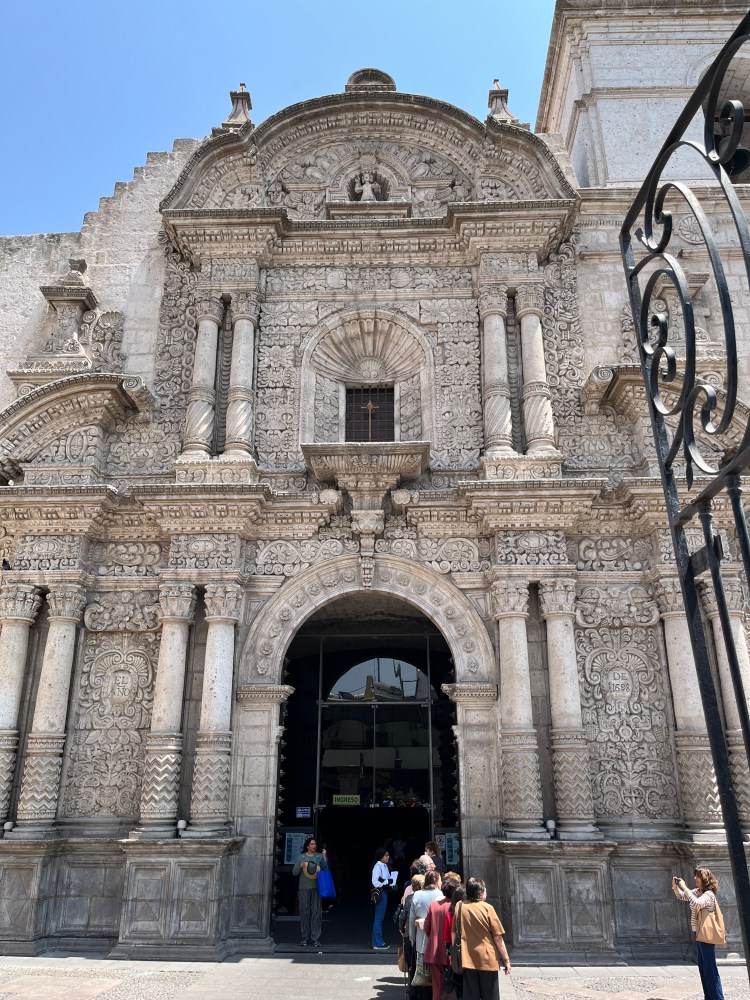
The building next door was the school until 1768 when the Jesuits were thrown out of Peru. It then became an orphanage and all the carving was covered up until the derelict building was restored in the 70s and the carvings revealed.
From there we walked to the Museo Sanctuarios Andinos, home of Juanita, the Ice Maiden. Juanita was a 12 year old human sacrifice dating from Inca times. Human sacrifices weren’t uncommon in Inca times, but the children chosen considered it an honour and privilege to serve their community in this way.
The snow on the volcanoes provided a constant supply of water to the lands around Arequipa. When one of them erupted, the snow vanished and the crops failed. Juanita was chosen to appease the gods and bring back the snow. She would have climbed to the top of her mountain attended by priests and other children and then laid down on an alter. She was killed by one blow to the head, after which she was wrapped up and placed in her grave, along with her belongings. The grave was then covered with a slab of stone.
It appears to have worked because the snows returned, everything went back to normal and Juanita was forgotten. That is until 1995 when a lighting strike hit the slab covering the grave. Rain entered the tomb and floated Juanita out and causing her to roll down the mountain. She was found within a few hours and her body was remarkably well preserved, having been frozen immediately after her death. One side of her face thawed while she was outside, but otherwise she was unharmed.
Juanita isn’t always in residence, so we aren’t sure whether we saw her or a model.
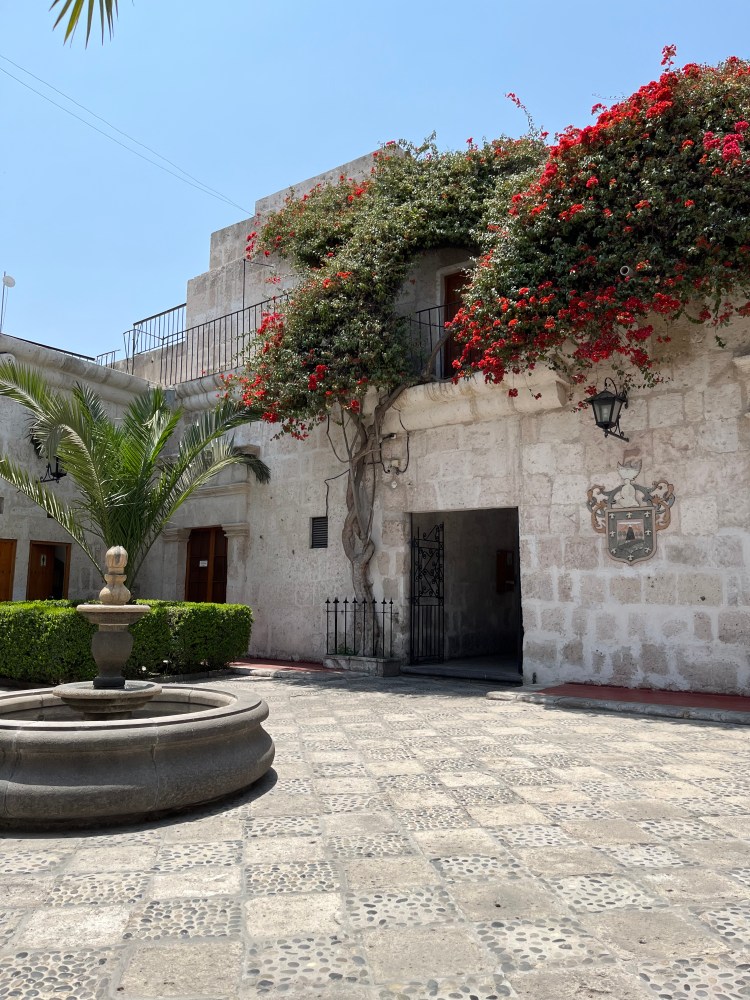
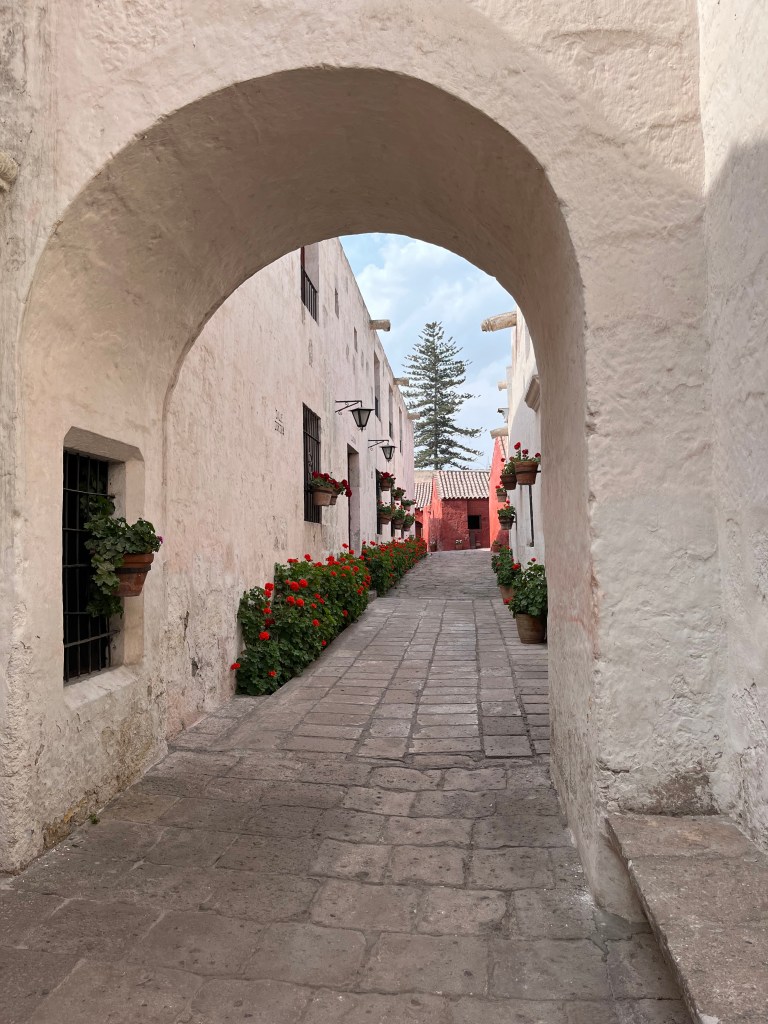
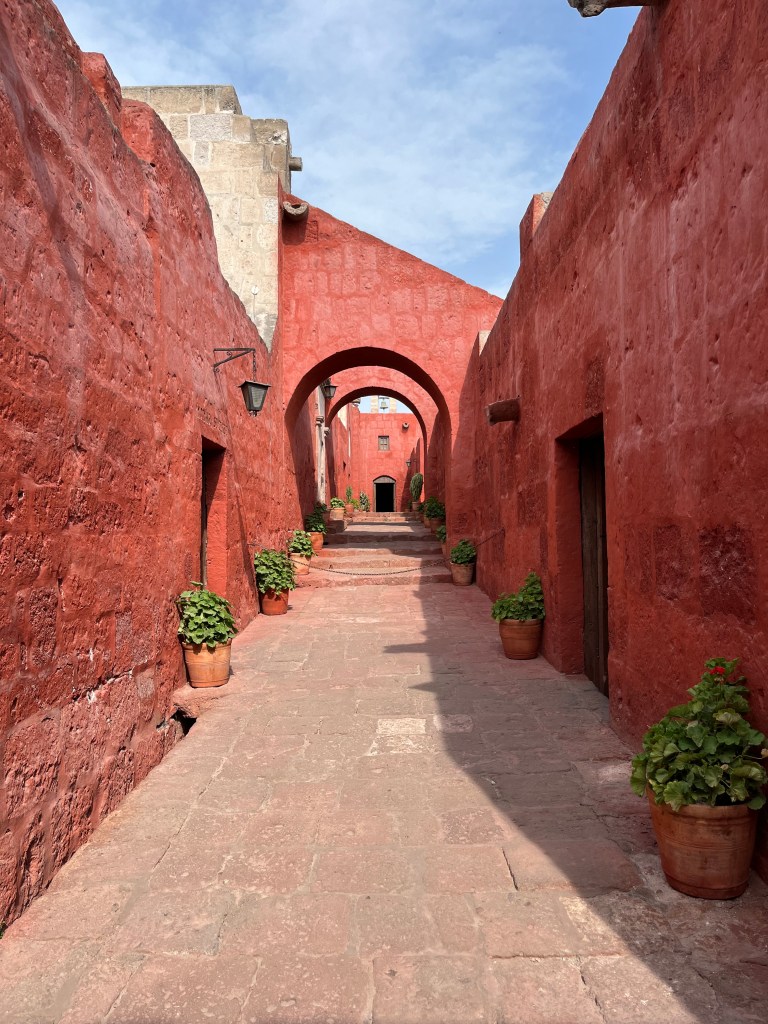
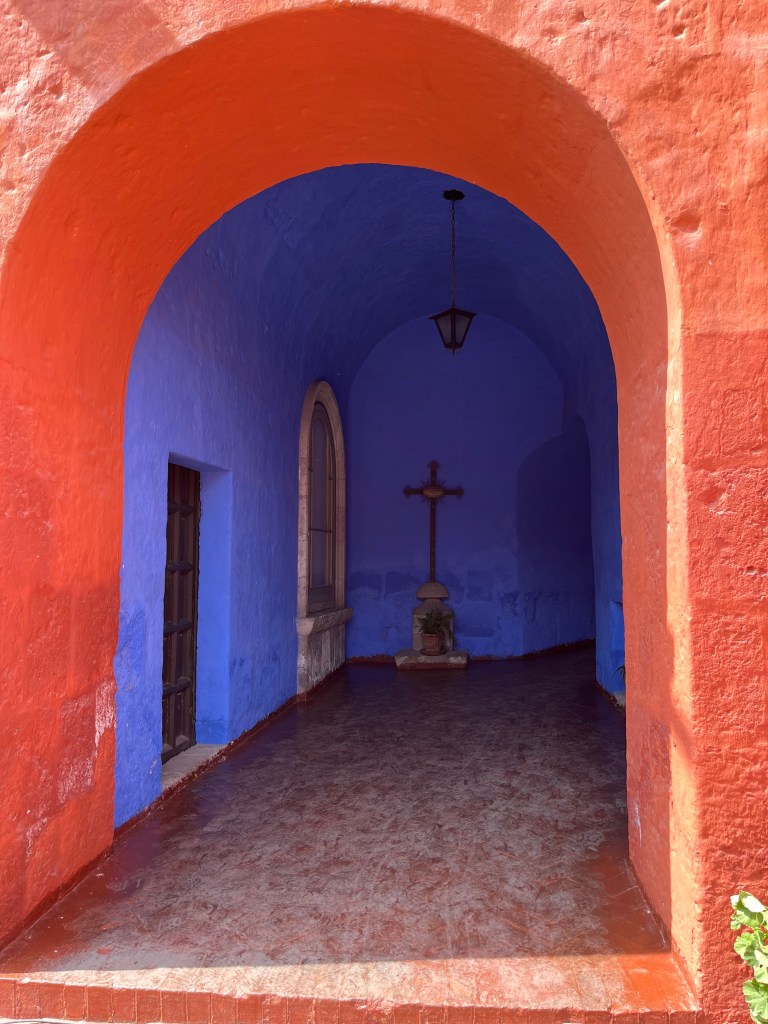
Finally, we headed to the Santa Catalina convent for a guided tour with a scary guide. A walled colonial town inside of Arequipa, it was opened to the public in 1970 after 400 years of secrecy. There are still about 20 nuns living there, but they have their own private section. Having had a look at their bedrooms, kitchens and communal spaces, I’m not sure that being a nun was such a hardship compared to living on the outside.
A lot of the walls are either red or blue. However, they are also white sillar stone. When the convent was opened commercially, the walls were painted because they were too white for tourists!
We asked Gerardo to recommend somewhere we could eat guinea pig. Since by this time it was 3pm, we thought we’d go there for lunch rather than dinner. But there was a huge group in the restaurant and we were told it would be at least an hour before they could serve us. The earliest reservation we could have in the evening was 10pm. Sadly, we gave it a miss and got a sandwich in the Van Gogh café instead.
All in all, Arequipa is somewhere you should go if you get the chance.
 Steve and Diane on Tour