Yesterday we flew back from Atacama to Santiago and then drove to Valparaiso. After a long day, all we wanted to do was eat and sleep.
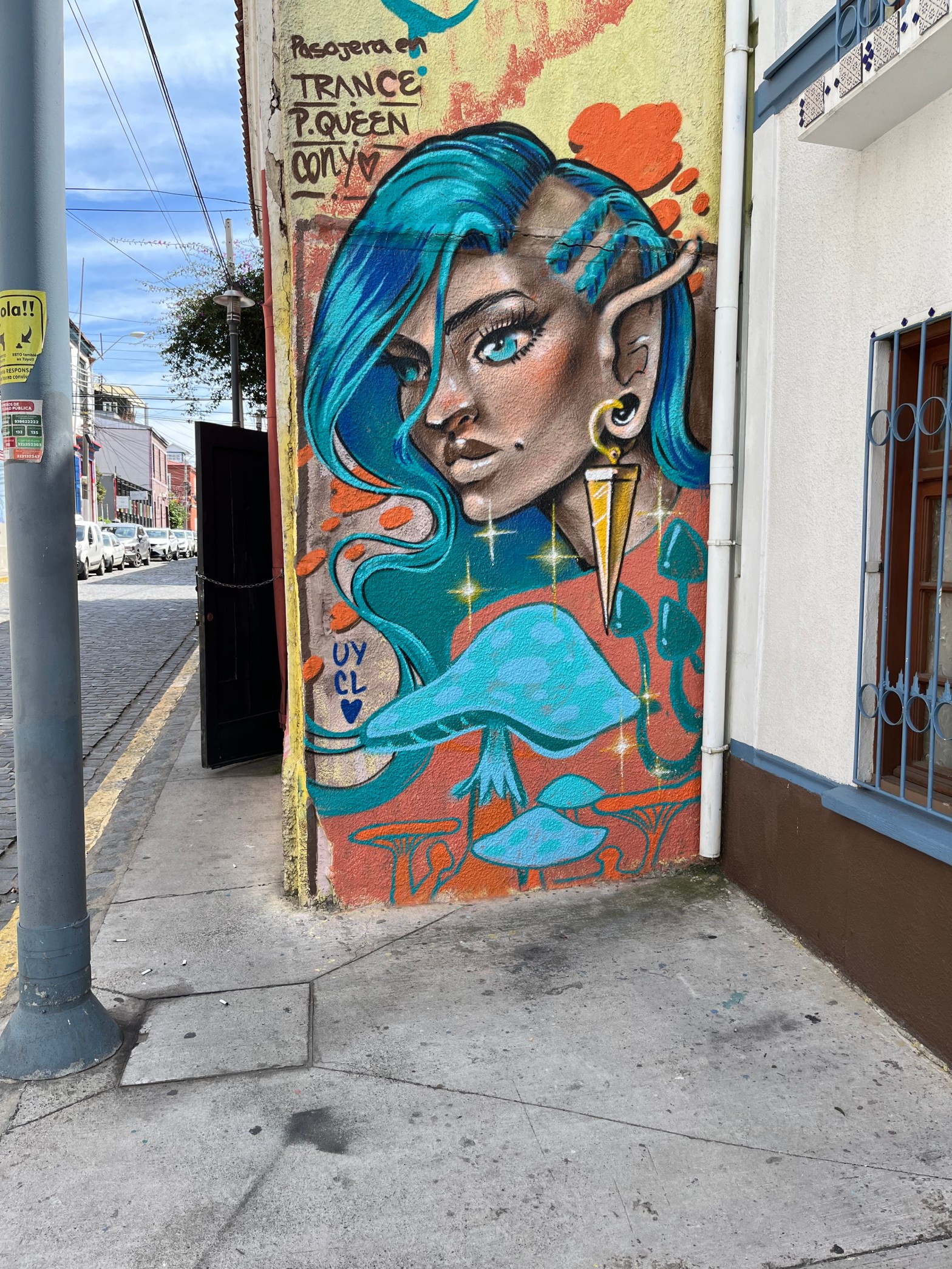
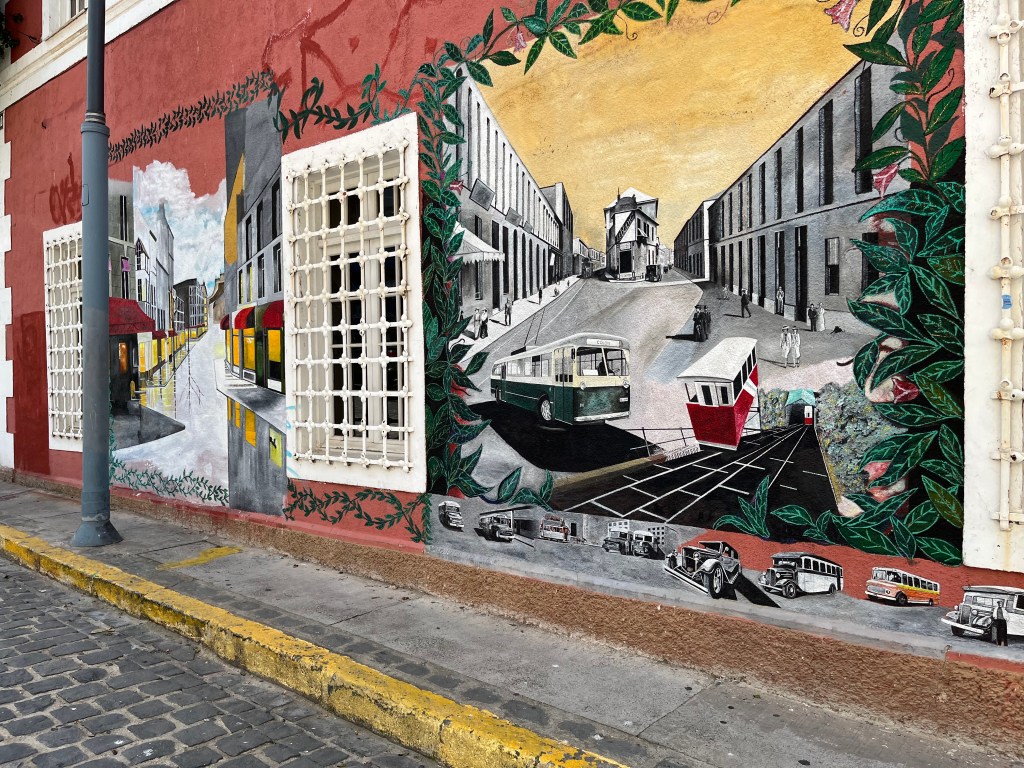
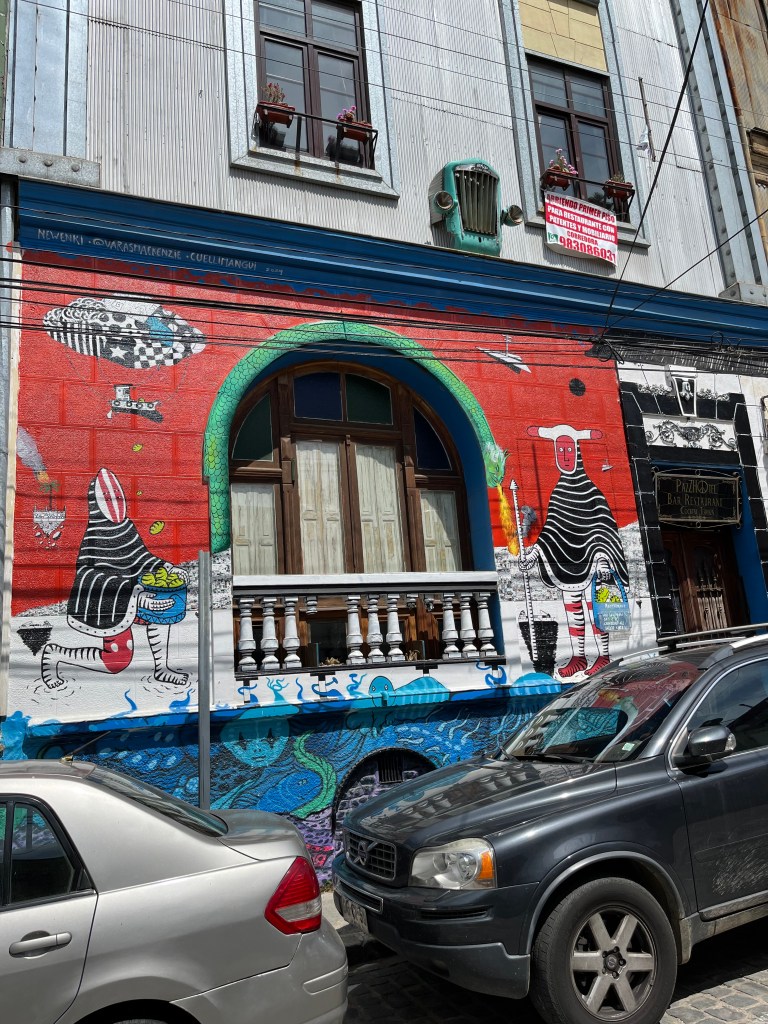
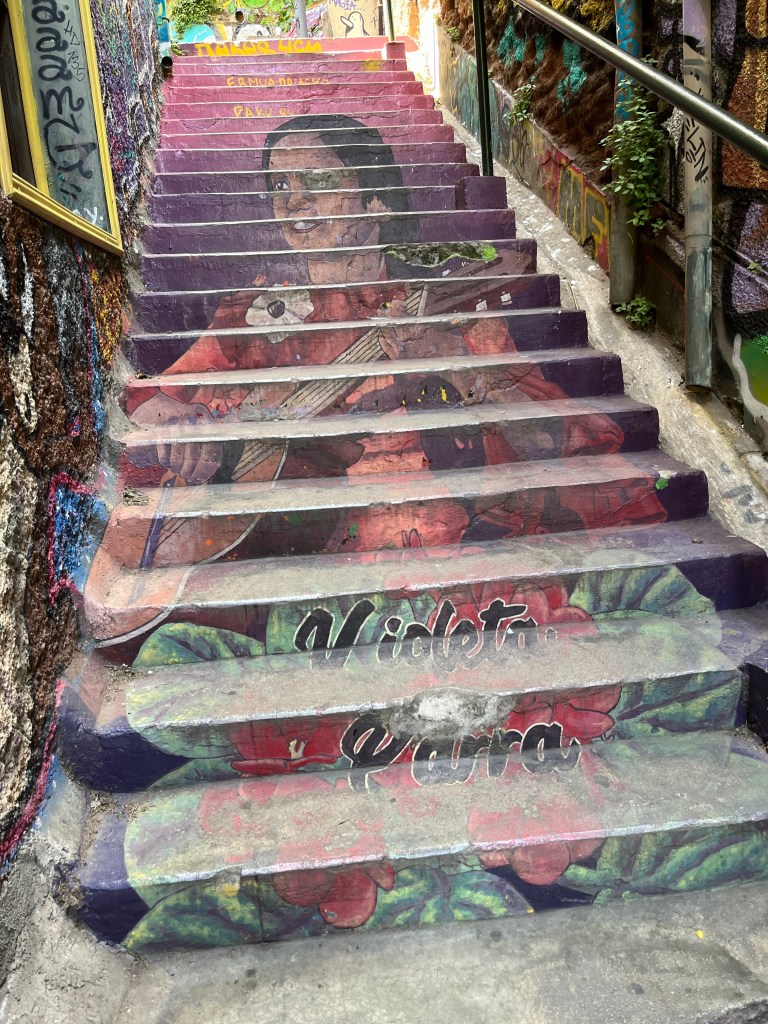
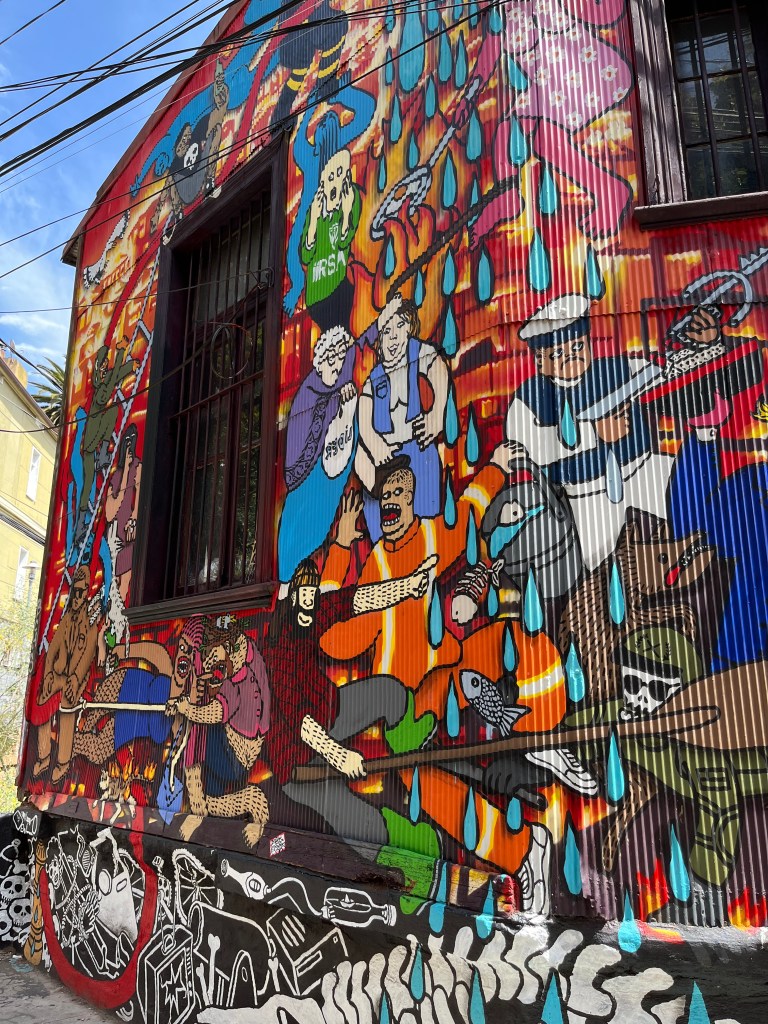
This morning we met Magdalena, our guide for Valparaiso. The first thing you notice about the city is the colours. A lot of the houses are painted in bright colours and wherever you look there is street art. A lot of it is commissioned by building owners in an attempt to keep graffiti off their walls, and many of the artists are well known and make a living doing it.
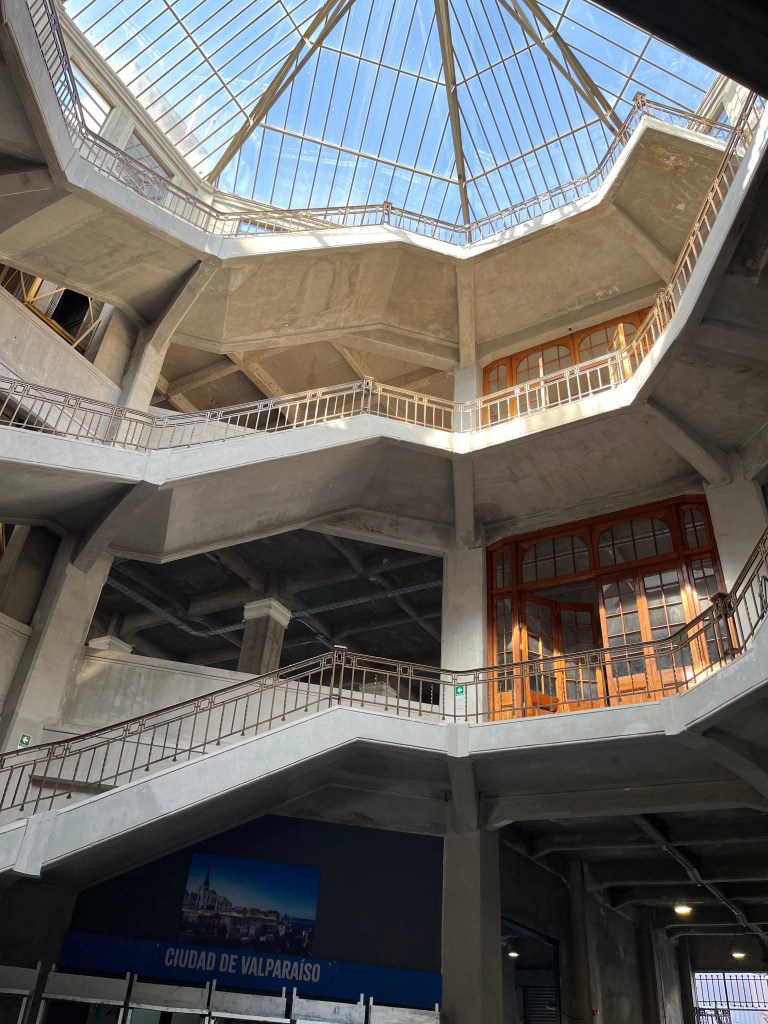
We started at the Puerto Mercado, a large, five storey building. It was closed in 2010 after being damaged in an earthquake. Just as it was about to open, COVID happened, so the building remained closed for a further two years. In the meantime, the traders had moved to other venues, so now there are only a few stalls in use.
The reason we went there despite it being empty is that we could get up onto the roof, from where there are great views of Valparaiso. Unlike most cities in South America, Valparaiso was unplanned. Instead of the traditional Spanish layout of a square and streets radiating out from it, it is a complete hotch potch. The city is built on 45 hills, with a very small patch of flat space fronting the harbour; most of this land has been reclaimed over the last 100 years or so. During the 19th century, there was mass immigration from Europe, mainly UK, Germany and Italy. As the population increased, the city simply expanded onto the hillsides in an uncontrolled way, each nation having its own neighbourhood.
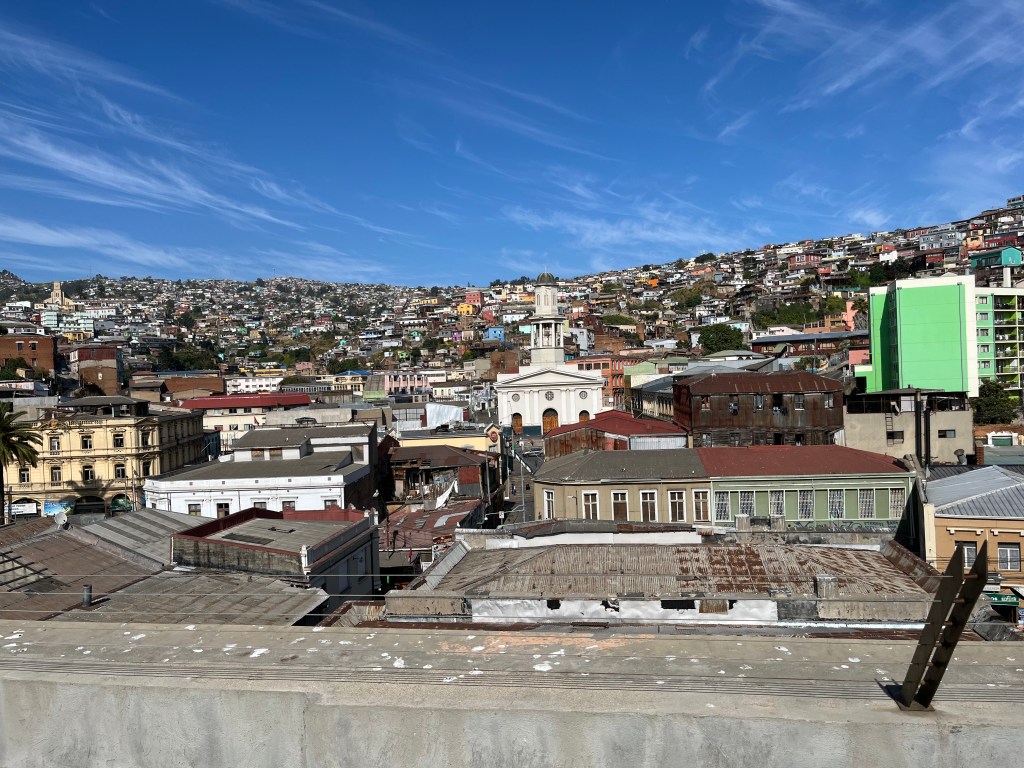
A majority of the houses are built with a timber frame clad in corrugated iron painted in bright colours and filled with adobe blocks. This makes them more resistant to earthquakes.
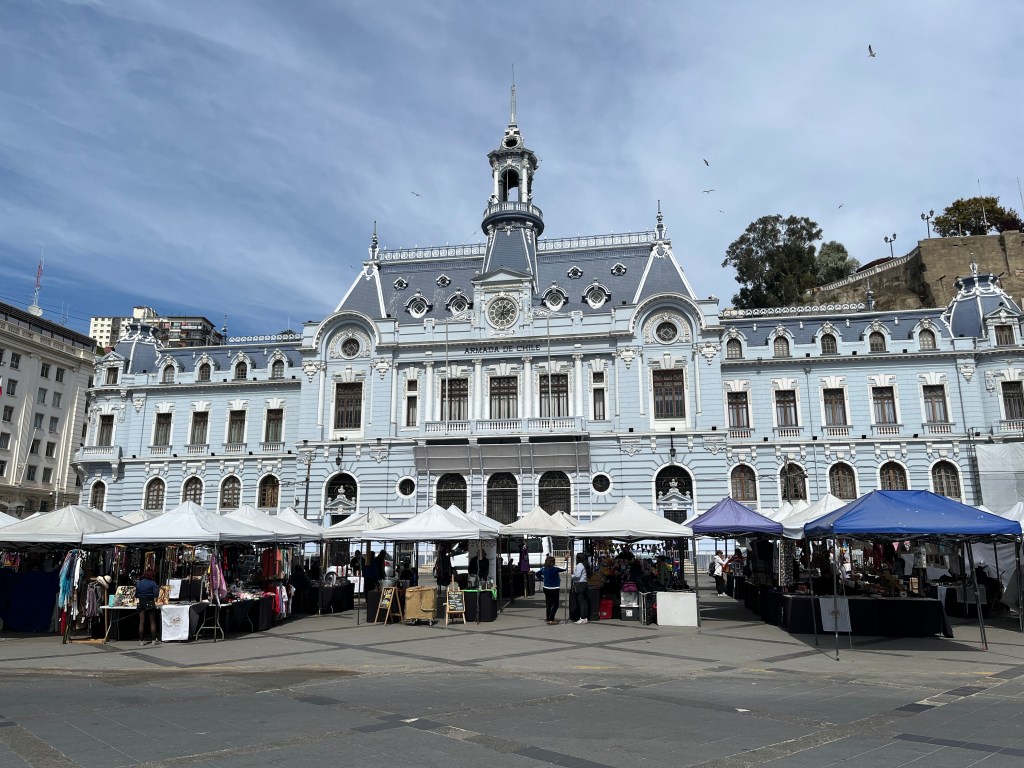
From the market, we walked along some of the flat part of the city, through the financial district to the Plaza Sotomayor, one side of which is home to the Navy headquarters. Opposite that is a monument to the people who fought in the Pacific War, between Chile and Peru and Bolivia, which established Chile’s modern borders.
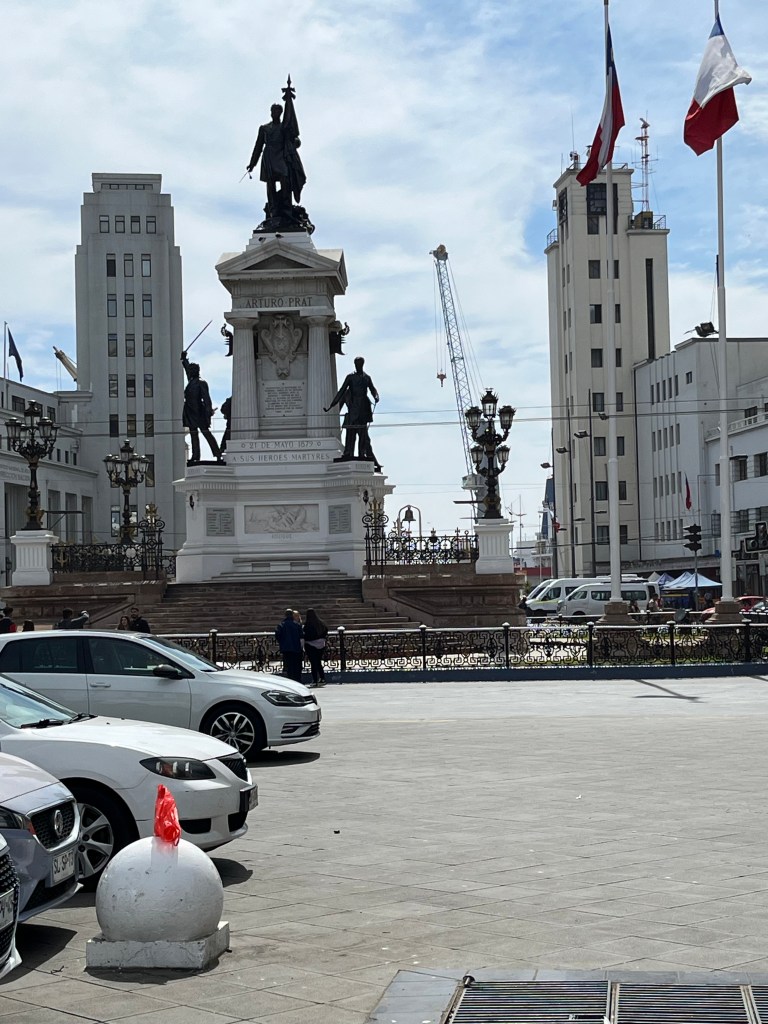
It also contains America’s first fire station, which is manned entirely by volunteers. Even today, all the fire stations in Valparaiso are manned by volunteers. Further on, we came to the Concepcion funicular, built in 1883 and still using the original mechanism, although it is now powered by electricity. At one time there were around 30 funiculars, but now only 12 remain in operation. As part of being declared a UNESCO site, Valparaiso has pledged to maintain these as important cultural assets.
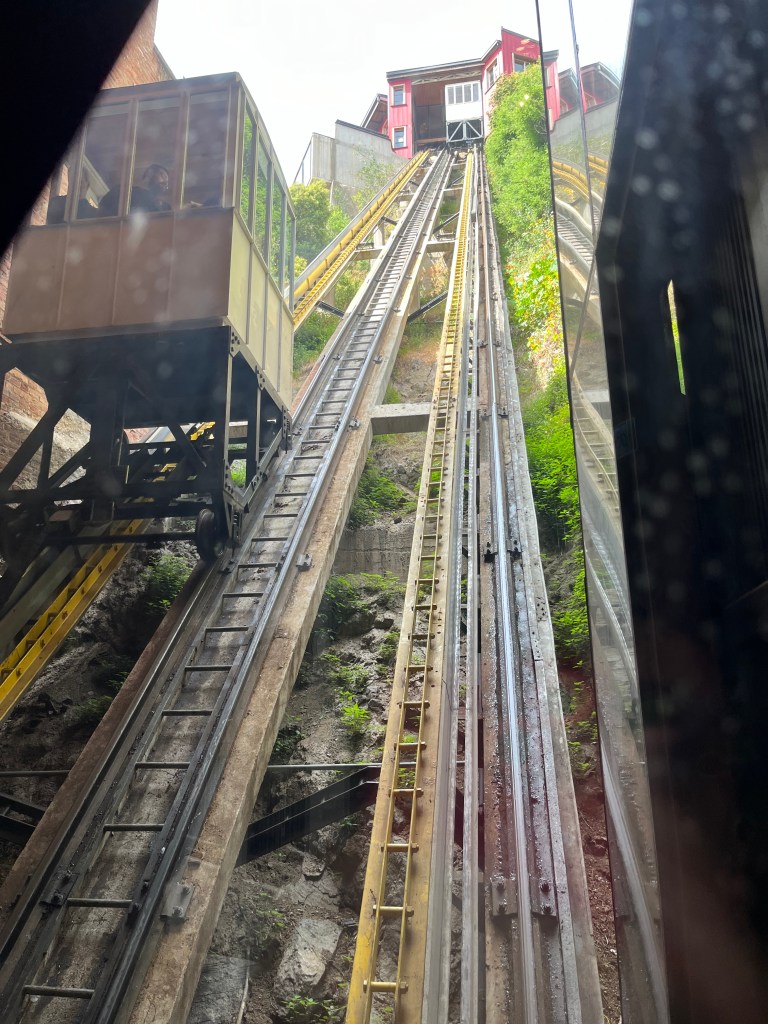
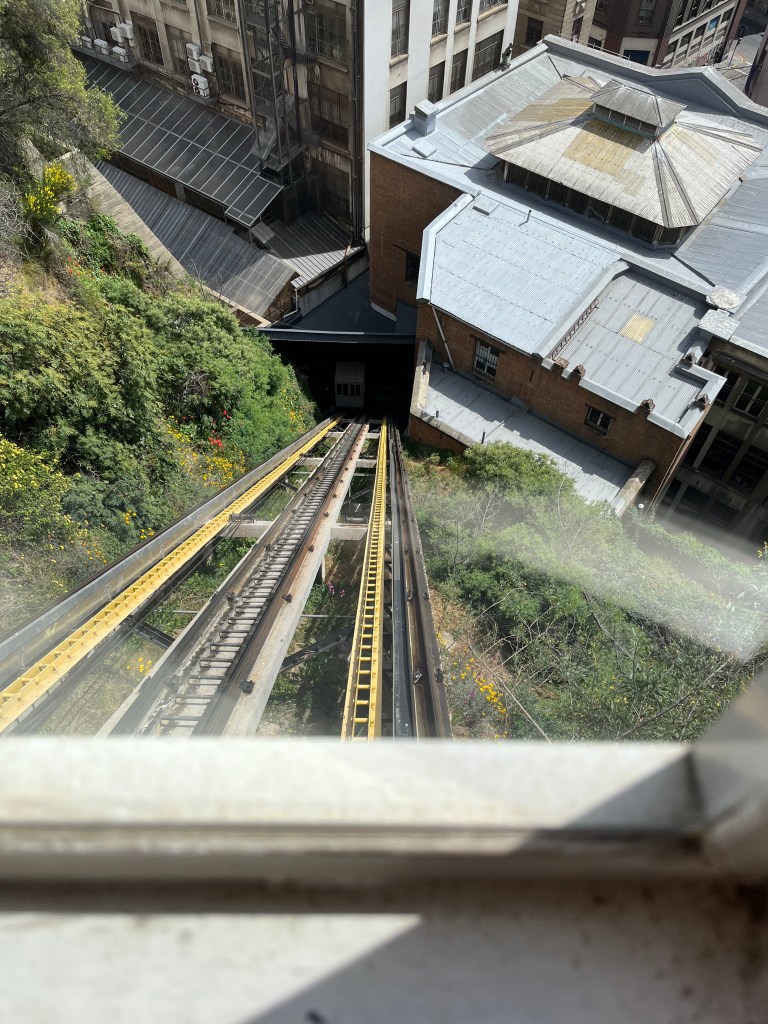
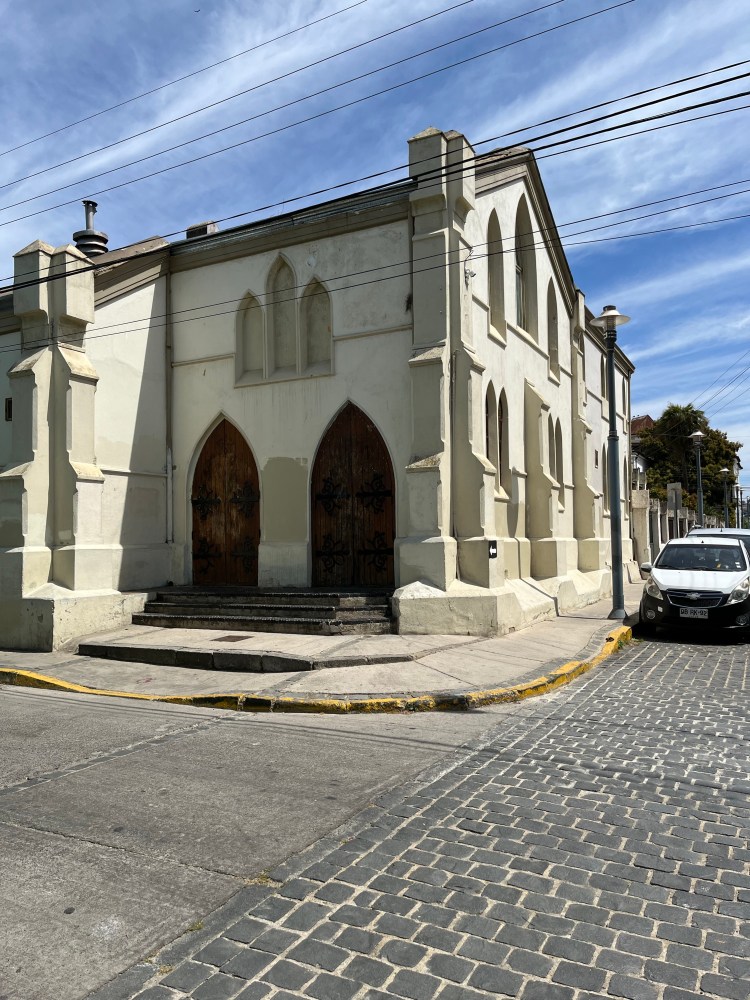
At the top, we strolled through the German and British sectors and popped into the Anglican Church for an organ recital. The music was so sombre that we quickly popped out again!
We also popped into a little art gallery selling local contemporary art, some of which is quite unique. And if you step onto the terrace at the back and look down, there’s a piece of street art created for the gallery owner that you can’t see from anywhere else.
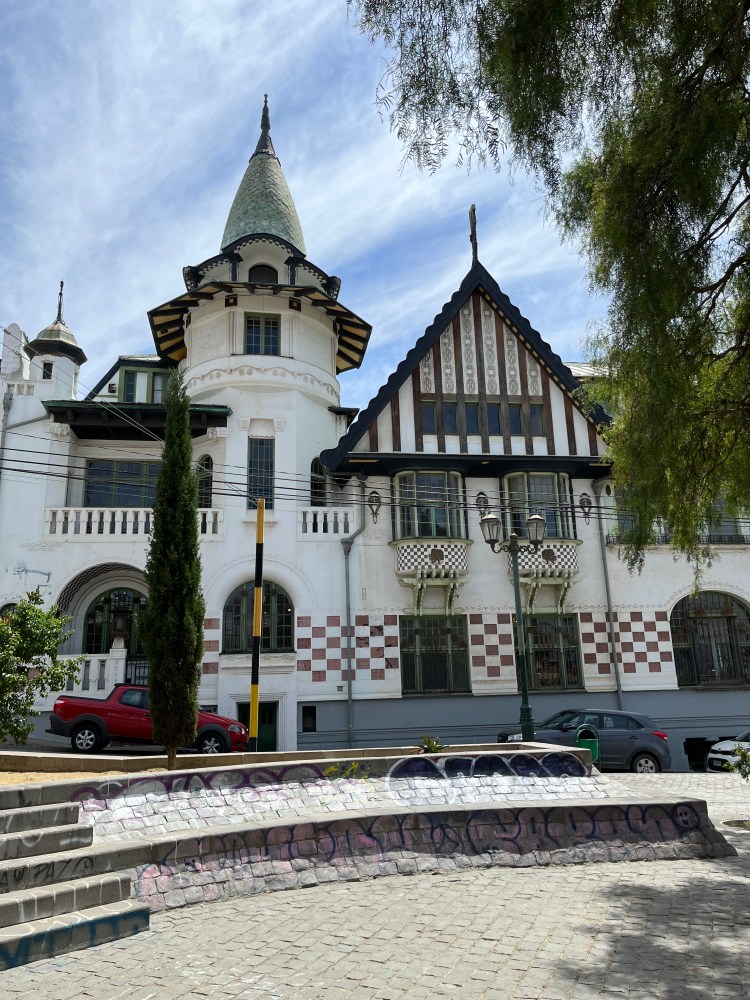
Our last stop was at the Palacio Baburizza, a beautiful Italian-style building that houses the museum of fine arts. Built by Italian businessman Ottorino Zanelli, it was acquired on his death by Yugoslavian Pascual Baburizza, who lived there and had a large collection of European artworks. When he died, he left the building and his collection to the city. The original collection is now housed on the ground floor; the next two floors contain Chilean art that has since been acquired by the museum.
Back at the hotel, we said goodbye to Magdalena and then wandered off to look for something to eat. By then it was 3:30 and we hadn’t eaten since breakfast. We found a lovely seafood restaurant, Gente de Mar, or People of the Sea, whose motto is “Time to relax, this is not fast food”. So we relaxed in the sunshine and explored some Chilean salmon dishes and deserts!
We probably won’t have dinner.
 Steve and Diane on Tour