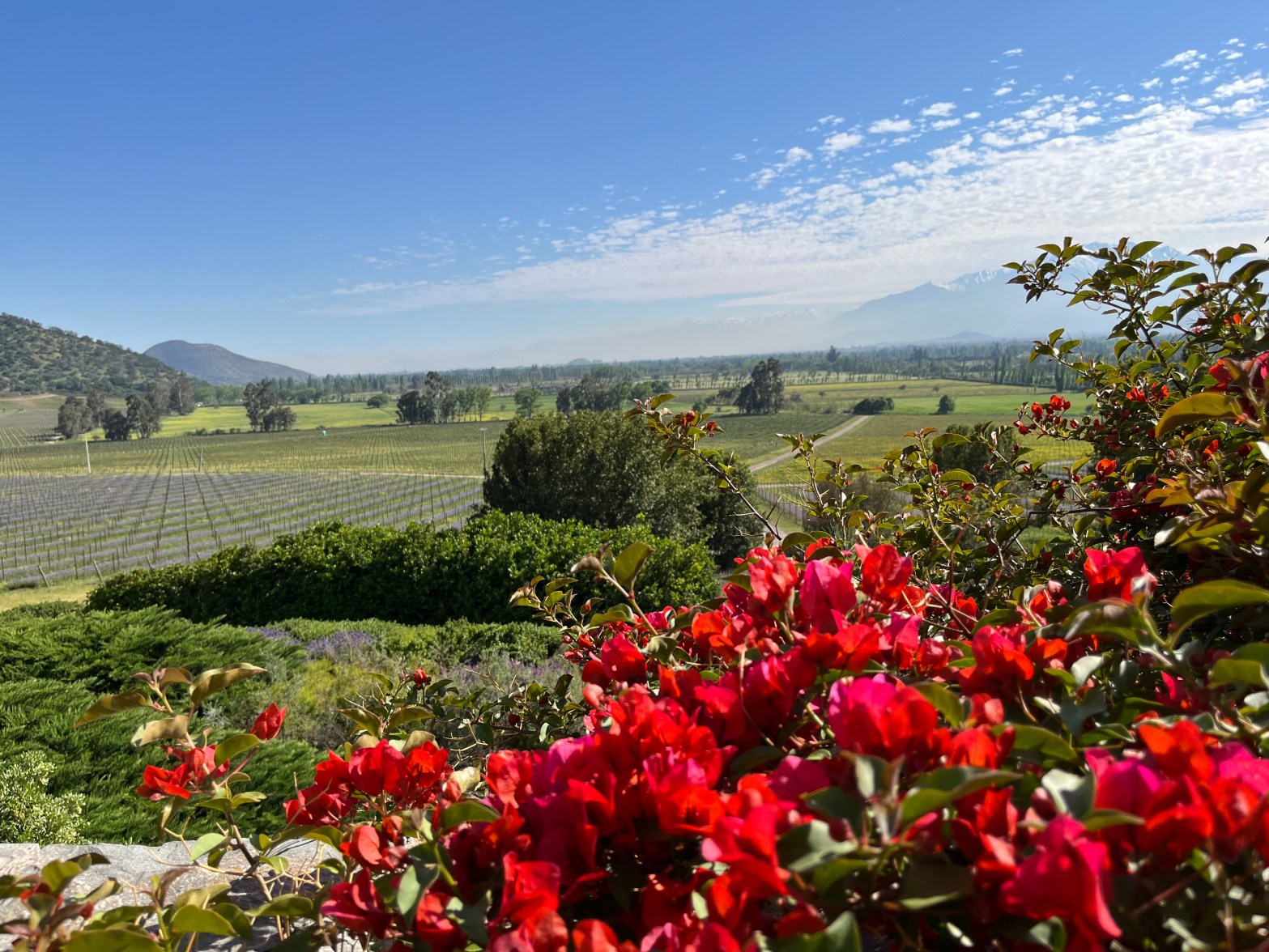
This morning we had a new guide, Katia. We were whisked off to the South and the Maipo Valley. Whisked slowly, since it was the morning rush hour. We had a date with Haras de Pirque, one of the mid-sized wine producers of the area.
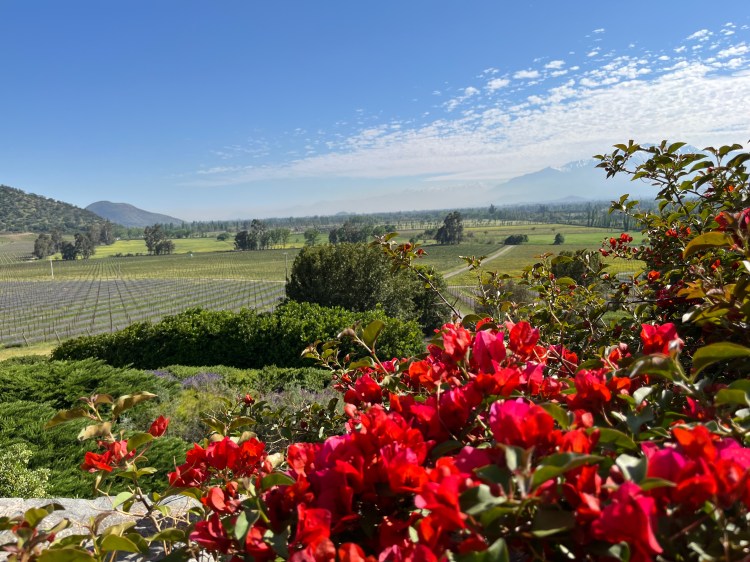
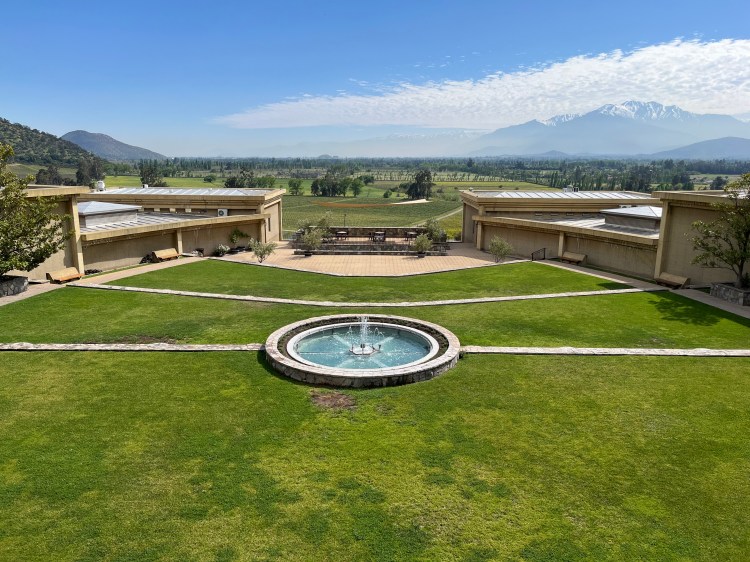
Our guide for the tour was Mathias, who came to the estate after studying tourism. The estate was originally a stud farm, but the Chilean owner planted some grapes in 1993 with a view to diversifying. The buildings are arranged in a horseshoe shape, and their signature wine is named after a famous horse – if you know about horses.
In the early 2000s, the Antinori family, wine makers in Italy for 600 years, bought the estate and have been developing it ever since. They focus on producing vegan, organic and sustainable wines.
Mathias took us through to the steel tanks where the vinification process starts, then up to the fermentation tanks and out onto a balcony where you can see the entire horseshoe shape from above. There’s a nice fountain in the centre.
Next, we went down two flights of spiral staircases until we found ourselves in the striking aging cellar.
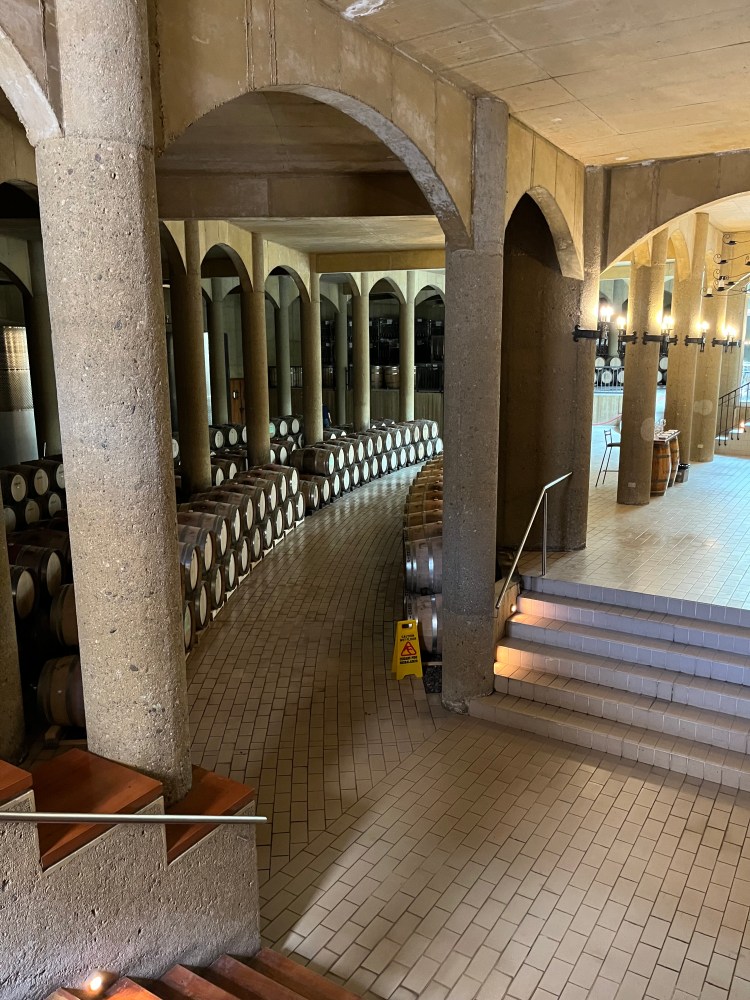
In the exact centre, there’s a tasting room, right under the fountain you can see up above.
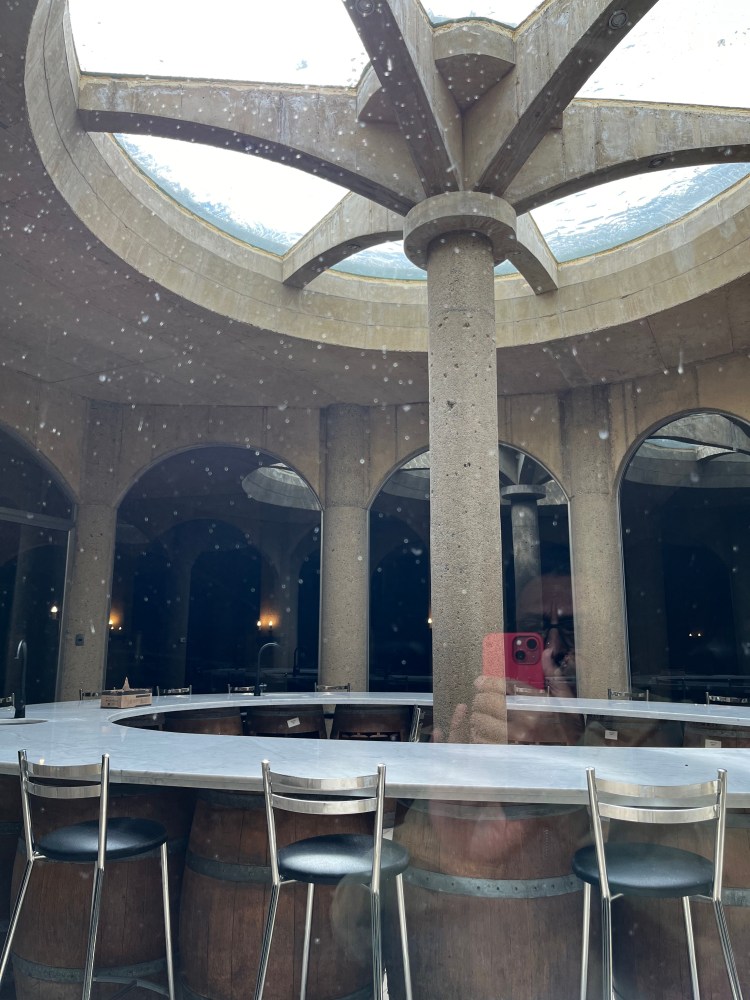
But we weren’t going to have our tasting there. Instead we were upstairs again, with a great view over the countryside.
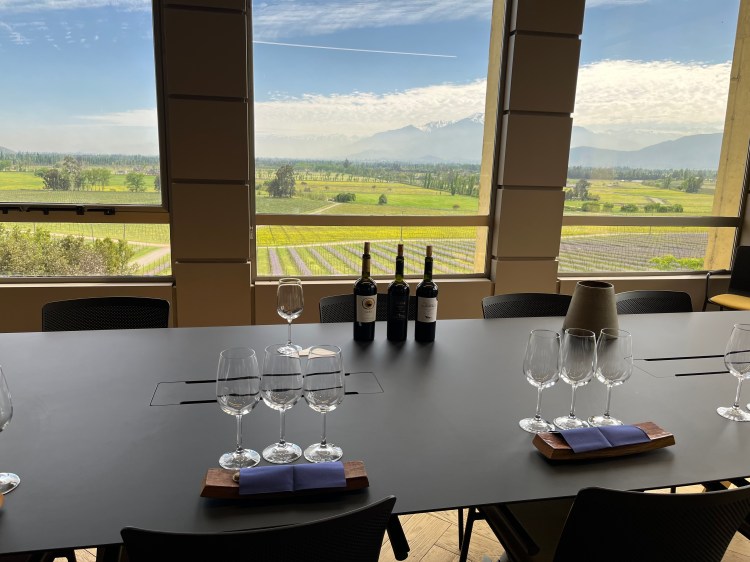
We started with a Sauvignon Blanc, which is made from grapes bought in from the Casablanca valley; they only grow red grapes in Maipo. Next came a Cabernet Sauvignon called Hussonet, the name of their most famous horse.
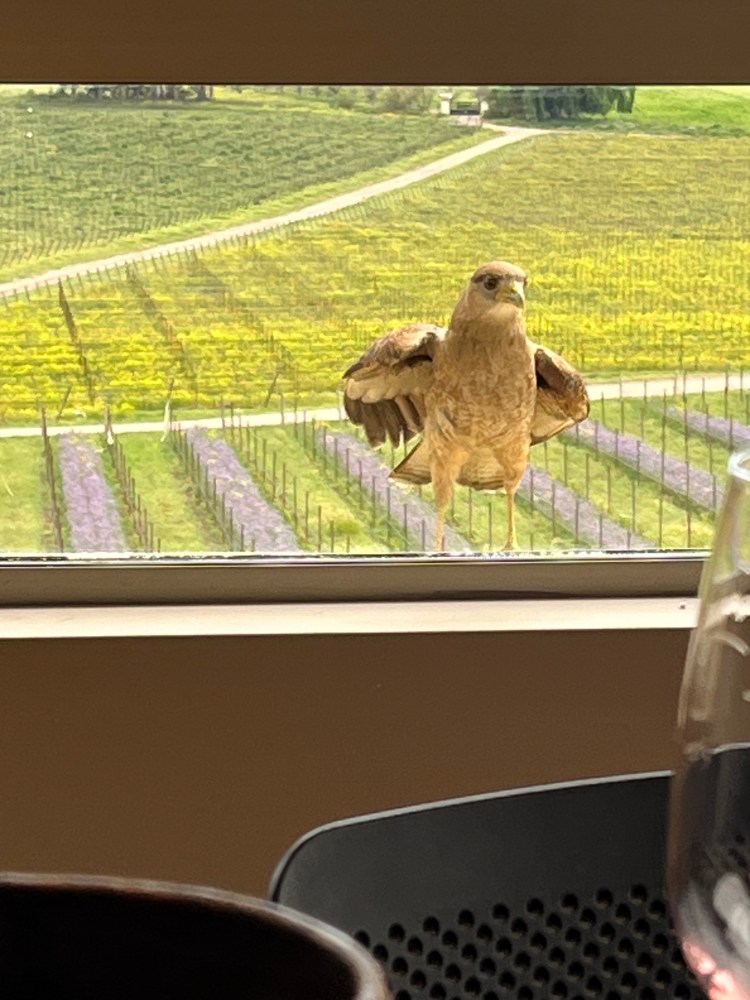
I’d seen some brown birds of prey flying around and one happened to land on a nearby tree, so I asked Mathias about them. They are Chimango or Cara Cara, a smaller relative of the Condor. Right on cue, one of them landed on the ledge outside and was closely followed by a second. They threw their heads back and started to howl, then kept fluttering at the windows. Apparently, they were fighting their own reflection.
After the excitement, we continued with a Carménère called Ecral, after another horse and finally Albis, a Cabernet Sauvignon/Carménère blend, named after Antinori’s eldest daughter. Despite the last one being the most expensive, our votes went to the third one.
We then repaired to the restaurant, for a fine, three course meal with a wine flight.
After staggering out, we were supposed to do it all again at Concha y Toro, who make Casillero del Diablo. However, the tour was booked for 4:30 and they didn’t have an earlier one. Rather than hanging about for two hours, we decided to return to our hotel.
 Steve and Diane on Tour