Seoul street food tour

One of the tours we’d been most looking forward to, tonight we set off on a street food tour of Seoul.

Henry picked us up in the middle of the rush hour, which wasn’t a good start, drove us to our first stop, a noodle restaurant.

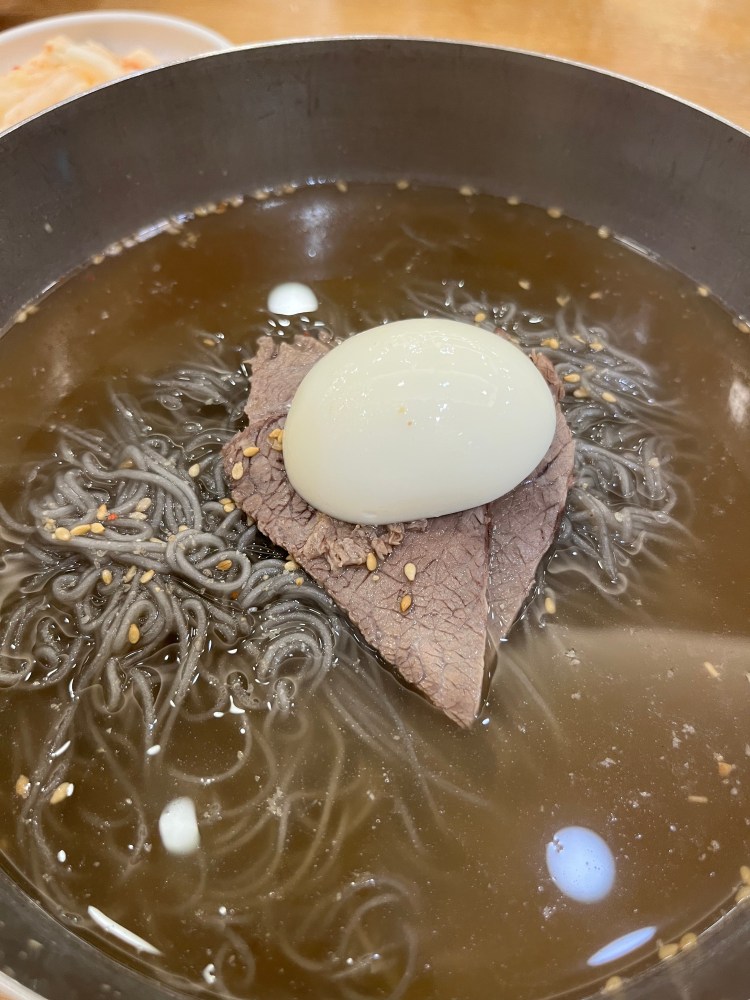
There was a choice of four dishes on the picture menu, so we picked a hot noodle soup with beef and a cold stack of noodles, beef and chilli.  I have no idea what they were called as that was in Korean – they don’t seem to get many foreigners here.

As always, it came with side dishes including what seemed to be some kind of baked beans.  After trying one I found they were garlic cloves!  We started with some kind of dumpling that came with a dipping sauce.  They were one of the highlights of the evening, absolutely delicious!
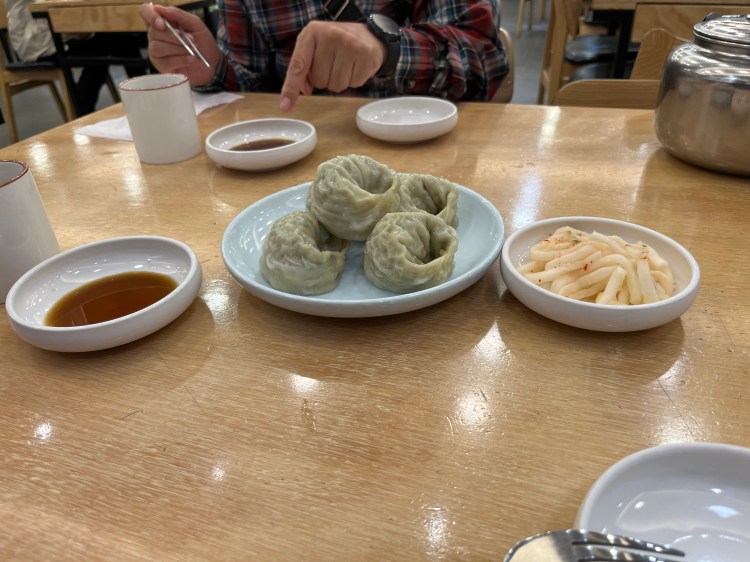
Savoury dumplings

Once the main dishes came, Henry pulled a large pair of scissors out of the drawer and proceeded to make three large cuts in each bowl to make the noodles manageable by chopstick.  Both main dishes were good; the hot one had softer noodles, which were easier to eat, while the cold one was hot!
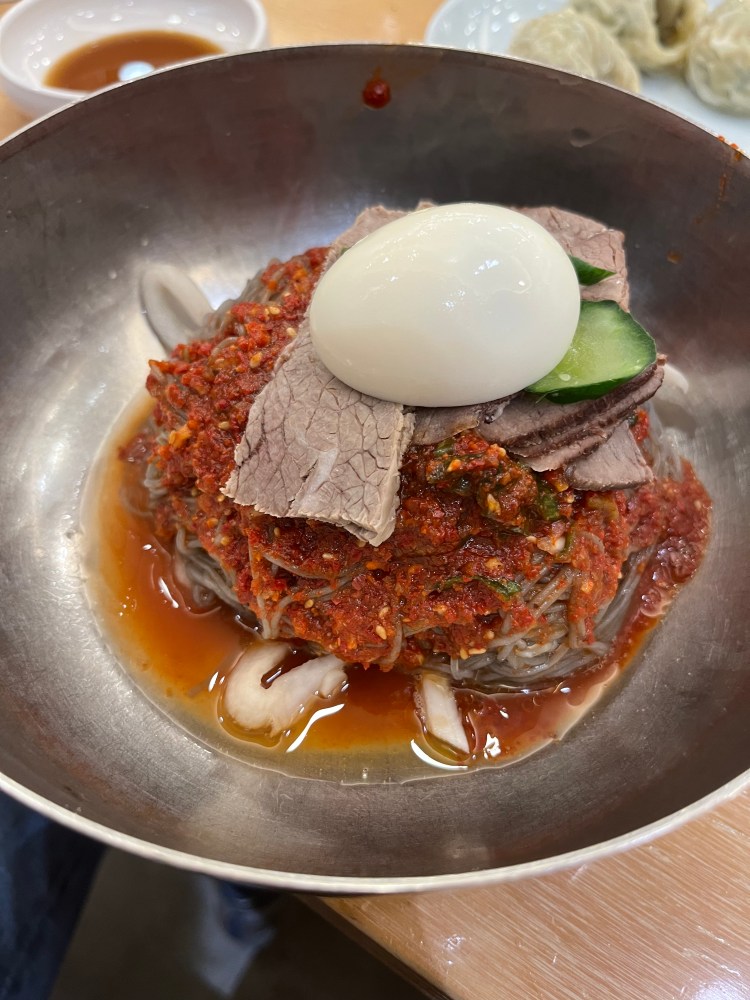
Cold noodles in hot sauce
Cold beef in hot noodles

After another flight across the city, we arrived at Gwangjang market.  From the outside, it looks almost deserted, but inside it was buzzing.  There were basically two long paths at right angles to each other, with shops on the outside and stalls down the middle.

Gwangjang market

After a wander down looking at all the delicacies on sale – and wondering what most of them were – we sat down at a communal table for some rice wine.  It came in a 250ml bottle and was almost clear at the top but milky at the bottom. Henry poured some into three little paper cups and we had a taste.  It was actually much nicer than it looked.  He told us you had to pour some out before shaking it up, otherwise it will go everywhere!

To go with this, we had bindaettok, mung bean pancakes.  They are more like an omelette than a pancake, filled with … mung beans.  Again, a very good choice.  We then tried the shaken up version of the rice wine, which gave it a much richer flavour.

Henry then told us we were going to try a hotdog.  It wasn’t until we saw them that we found out they are actually called hotteok!  They were fritters being cooked on a griddle.  We tried the ones filled with honey, but they also had red bean paste and cheese fillings.  The vendor folds them in half and stuffs them into a small paper cup, so getting a photo was impossible.

And that was it for the tour.  Henry dropped us off at the hotel and we’re looking forward to a free day tomorrow.
The royal palace and other photo opportunities

After not enough sleep, we found our way to the dining room for breakfast.  One of my favourite things when we’re away is trying the local breakfasts.  This morning I decided to try chicken curry, rice, hash brown and deep fried kiwi fruit, followed by salad and a pastry.  Because I can.  After that, I felt like I had the legs to keep going all day.

Our guide for the next few days is Henry.  He met us in the lobby, gave us our T- money cards, and then whisked us off on our tour of all the unpronounceable places in Seoul.

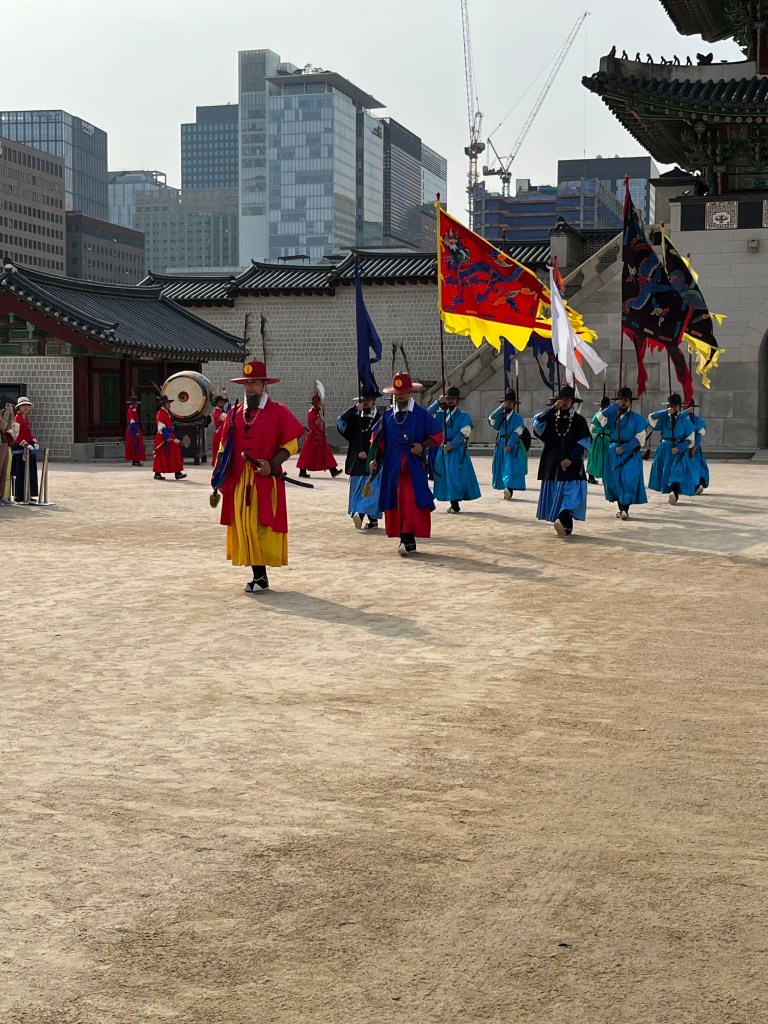
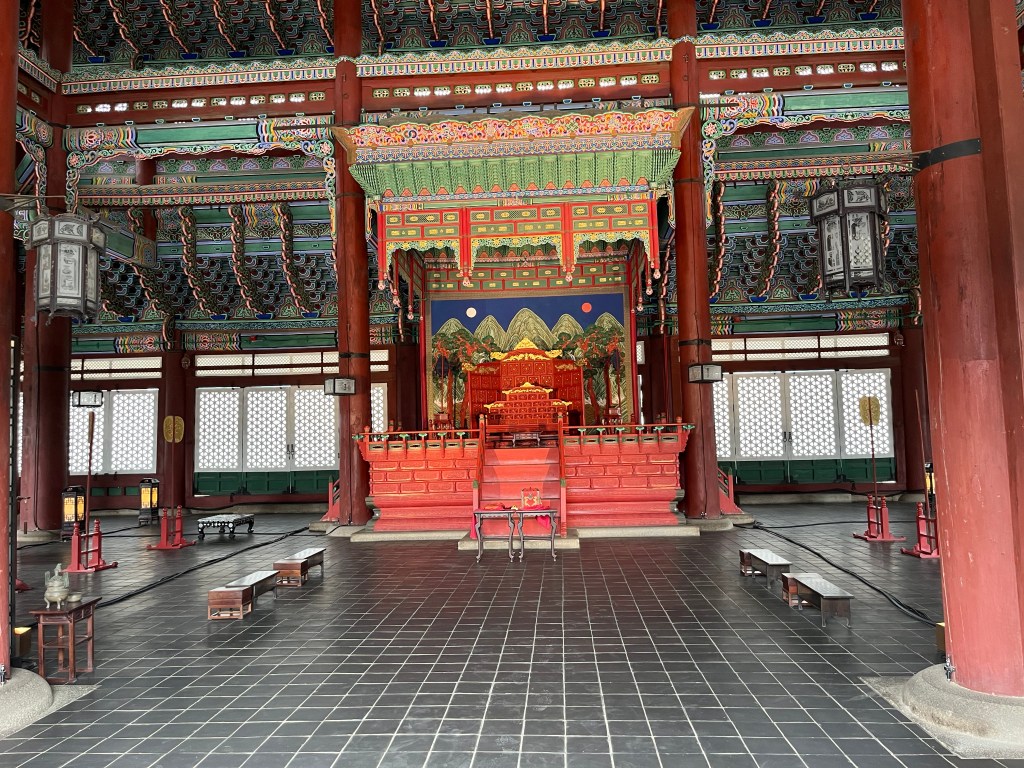
 We started with Gyeongbok palace, aka the Northern Palace.  We arrived in time to see the changing of the guard ceremony – along with a vast number of other tourists.  It is a lot more colourful than the one in London; Henry explained that there is one colour for each of the four city gates plus a fifth colour for the king.  Feng Shuey is quite big around here, and everything has to be in balance.

What he didn’t explain is why they have guards around a royal palace when there’s no longer a king.

After the ceremony, we went over to the National Palace Museum, where Henry gave us a 10 minute summary of the last 600 years of Korean history.  The Joseon dynasty established Seoul as Korea’s capital and built Gyeongbok palace along with the four other palaces in the city.  It burned down in the 1500s, was rebuilt in the 1800s and then destroyed during the Japanese occupation.  A restoration programme was started in the 1990s, but only the main buildings of the original 500 have been restored.

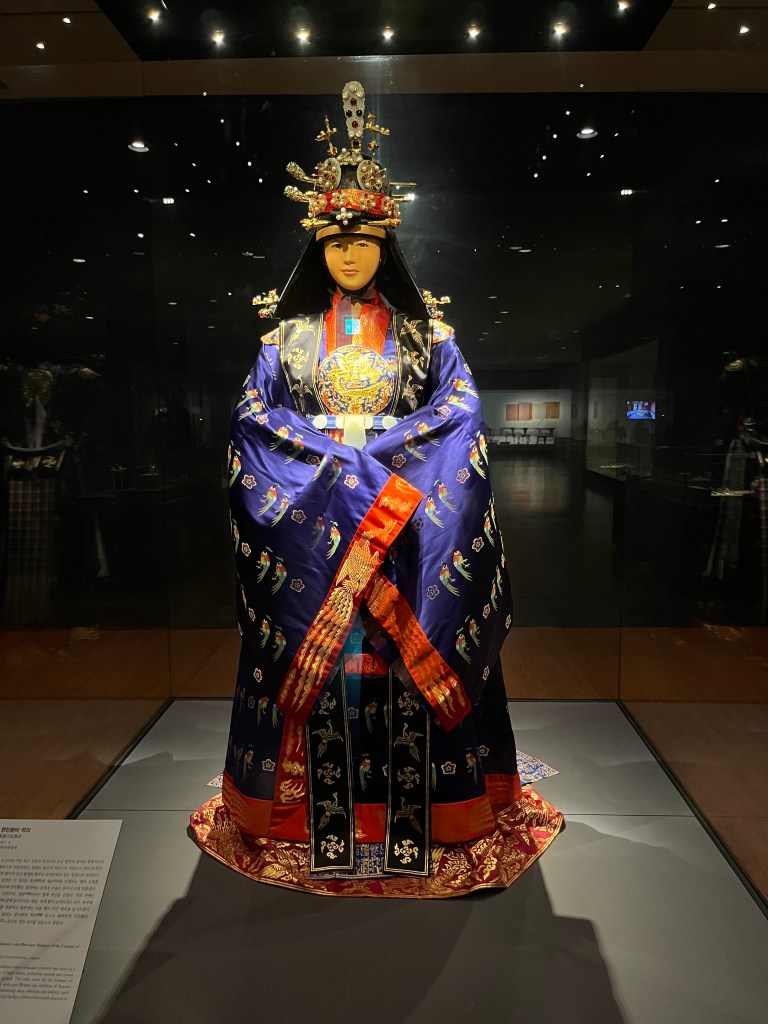
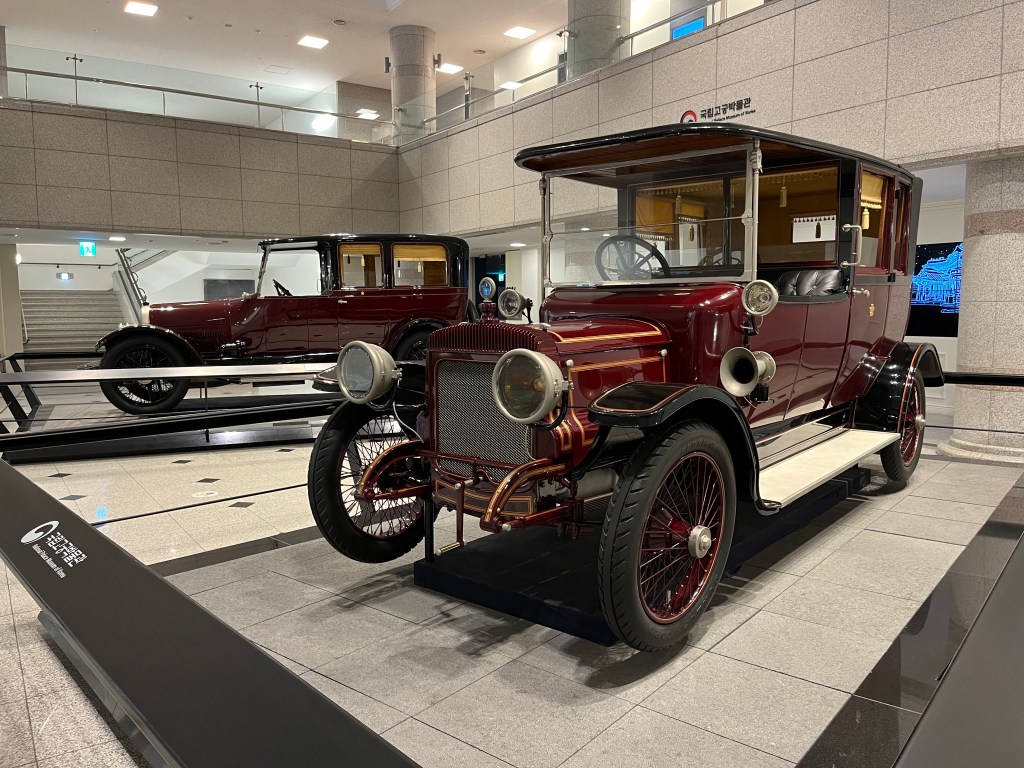
The museum houses all sorts of artefacts from the Joseon period, including costumes, maps, very detailed drawings and the last King and Queen’s cars, built by Ford and Daimler.

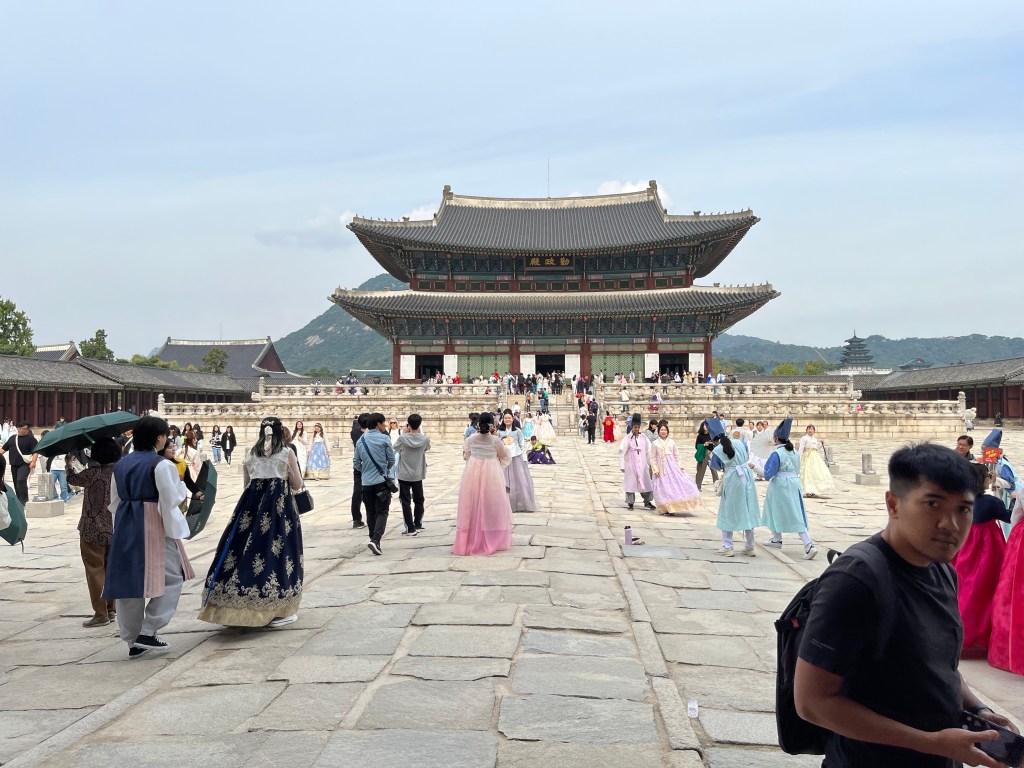
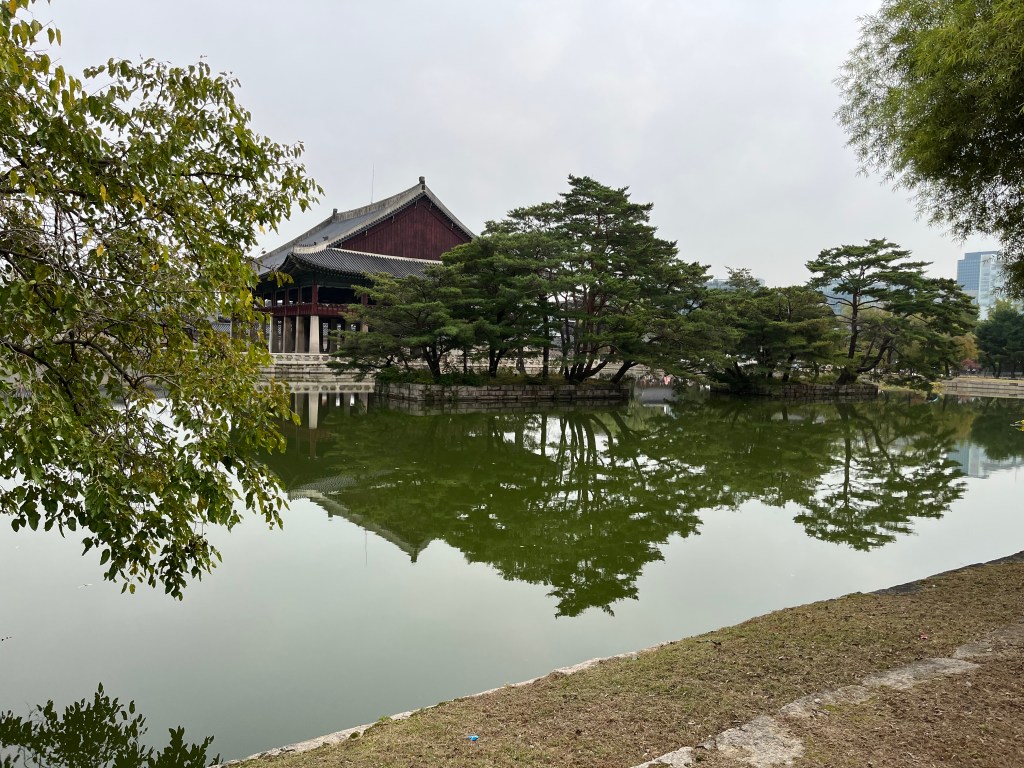
After a stop for coffee, we then went to see the palace itself.  It is in five sections, each of which is entered by a gate.  There’s a path all the way from the first gate to the King’s residence beyond the fifth gate.  Only the king is allowed to walk down the centre of the path, mere mortals have to use the outer section, which is built with very uneven stones to make users look down to avoid falling over, thus being subservient.

The king’s bedroom is behind the fifth gate, and it contains very little furniture.  Assassins have nowhere to hide.  The king and queen can only spend the night together on the full moon to ensure healthy sons.  But there is a door to the queen’s domain.  If the king knocks and she doesn’t want to let him in, it’s concubine time!

Actually that’s the only advantage of being the queen.  Once she marries, she can never leave her rooms, not even to go out to the secret garden behind them.  I’m not sure quite why she needs her own car though.

A lot of the visitors were wearing traditional Korean dress, but clearly a lot of them weren’t Korean.  The reason for this is that you can get into the palace for free if you dress up; although I suspect that the hire of the outfit is more than the ticket price.

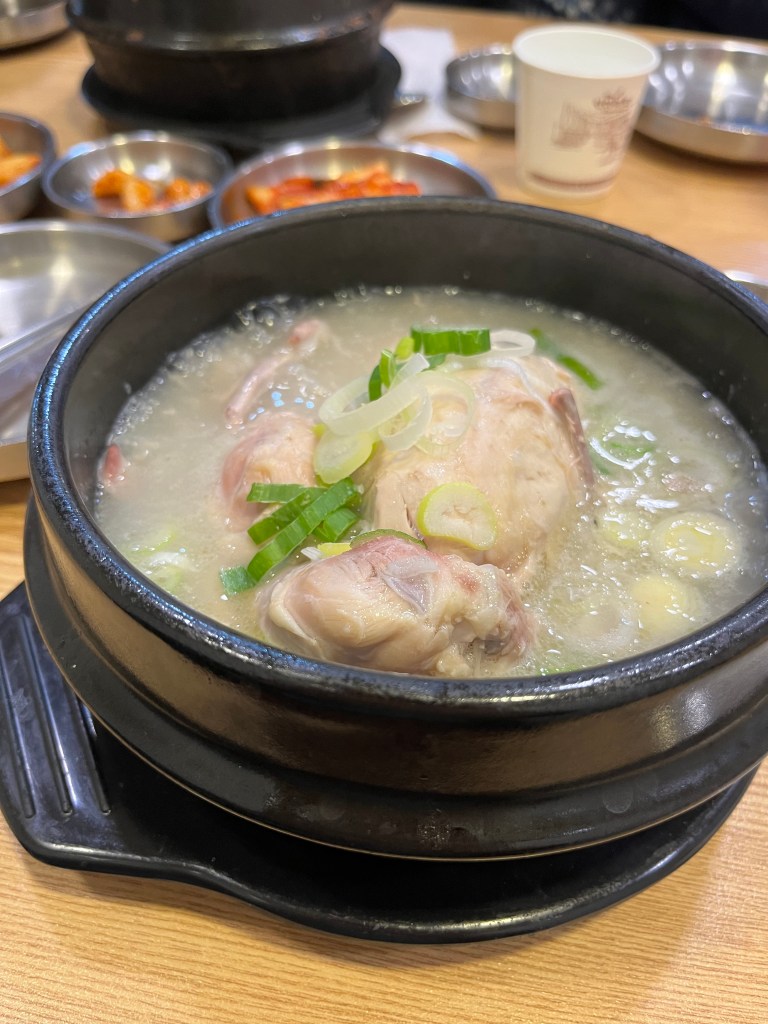
For lunch, Henry suggested a bowl of chicken ginseng soup.  This sounded ideal for a light lunch.  What we weren’t expecting was a bowl of soup with a whole chicken in it!  Each!  Or to have to dismember and eat it with chopsticks!

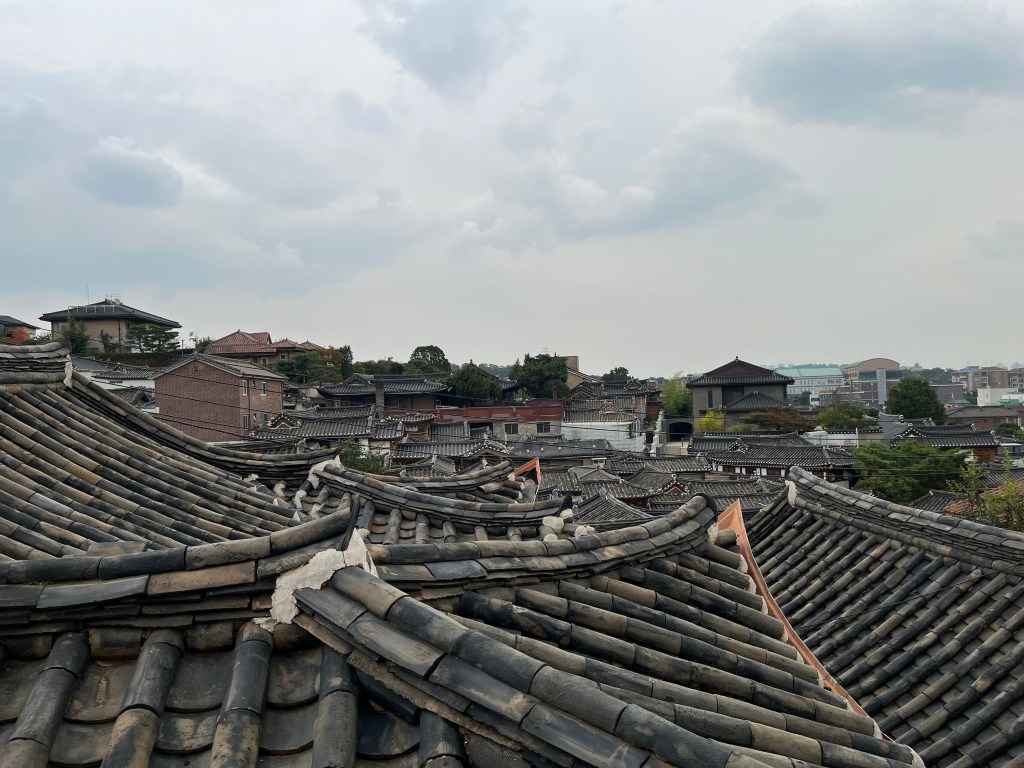
Next up was a visit to the Bukchon Hanok village.  This is a small hilly area with about 900 traditional Korean houses, i.e. Hanoks.  It was popular during the Joseon period because it was between two palaces; kind of like a commuter town.  These days, many of the Hanoks are owned by wealthy families, a bit like the gentrification of Whitechapel.

We paid a quick visit to Insadong, another “historical centre”, with art galleries, coffee shops and antique sellers.  To me it was just a busy tourist trap, selling mass produced rubbish.  We decided we’d had enough at this point and Henry took us back to the hotel.

Who stole a day?

Here we are in Seoul.

Pete from JPD picked us up after lunch and we had a very smooth journey to Heathrow. Except that on the way we got a text to say our flight was delayed by 40 minutes.  And we arrived before check-in had started.  But we were soon ensconced in the lounge, grazing on their buffet.

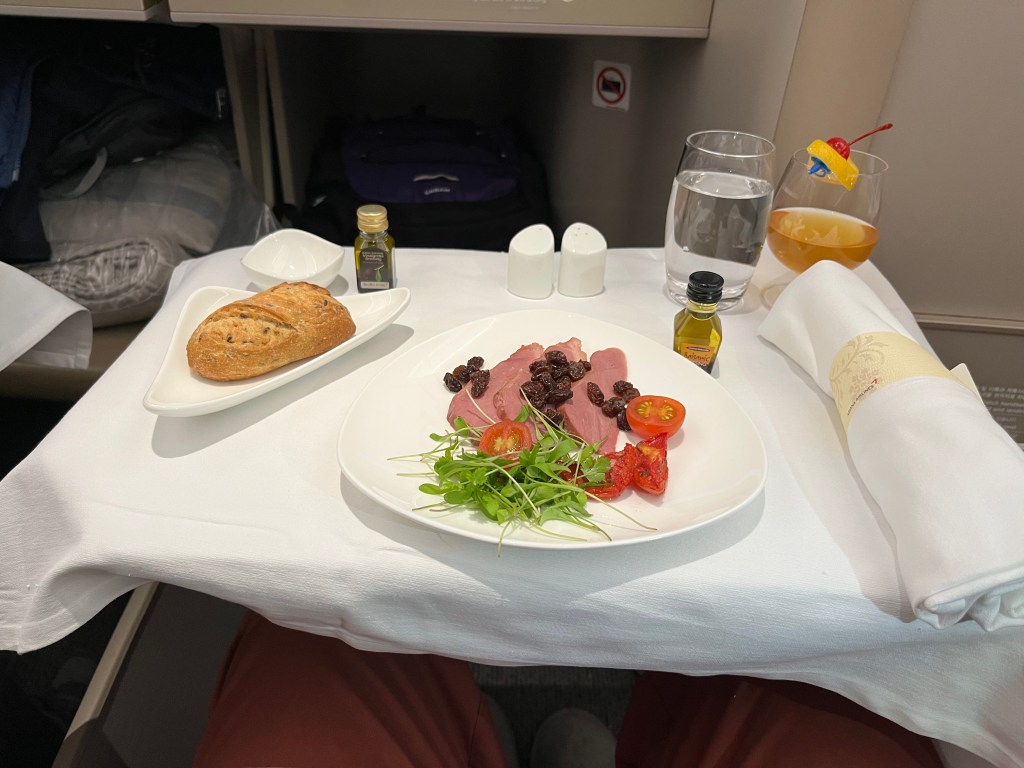
The seating on our Asiana aircraft was pretty good, and they take a lot more care over meals than some airlines do.  

Korean porridge really isn’t porridge though.  More a kind of vegetable soup with rice instead of oats and side dishes.  But it was tasty.

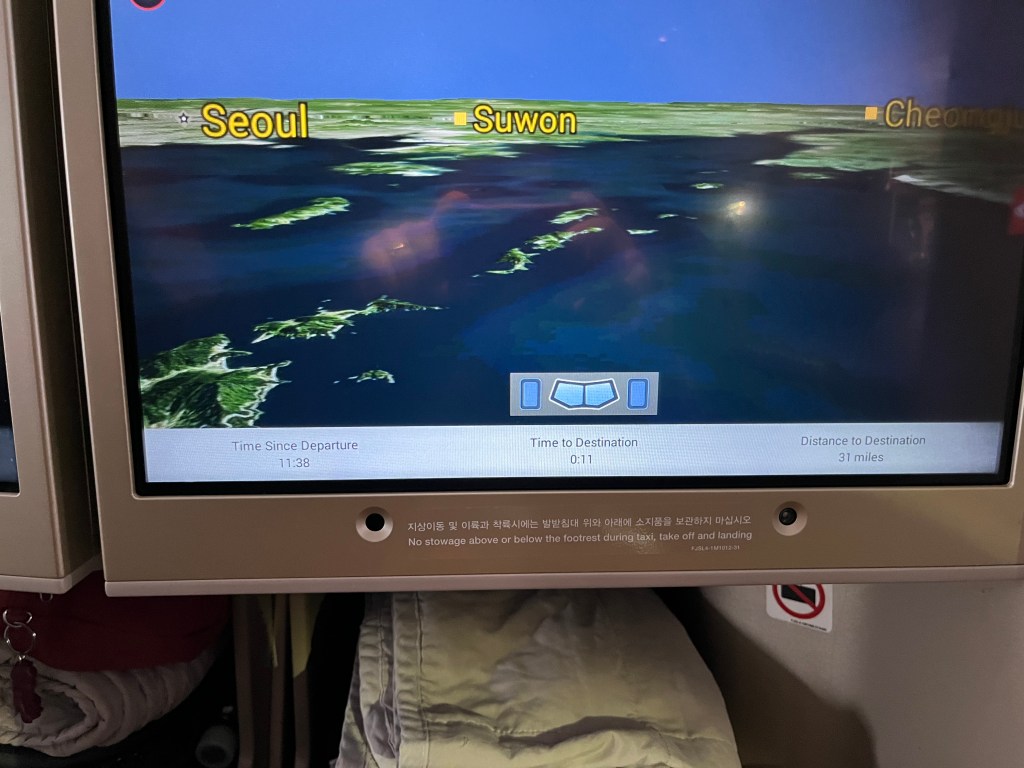
I was a bit confused by the icon of a pair of y-fronts on the map display though.

We made up 20 of the forty minutes and managed to get off the plane and through immigration quickly by actually taking notice of how long the different queues were.  Then our baggage was among the first out.

When we passed into the arrivals hall we discovered that drivers meeting people do it differently in Korea.  Instead of holding up a board with the name of the person being collected, they stick it to the barrier opposite the exit door and get back to their surfing.  One of the other drivers went and found ours.

While we were there, we also had to go and pick up a wi-fi box to stay connected, again a very straightforward task.

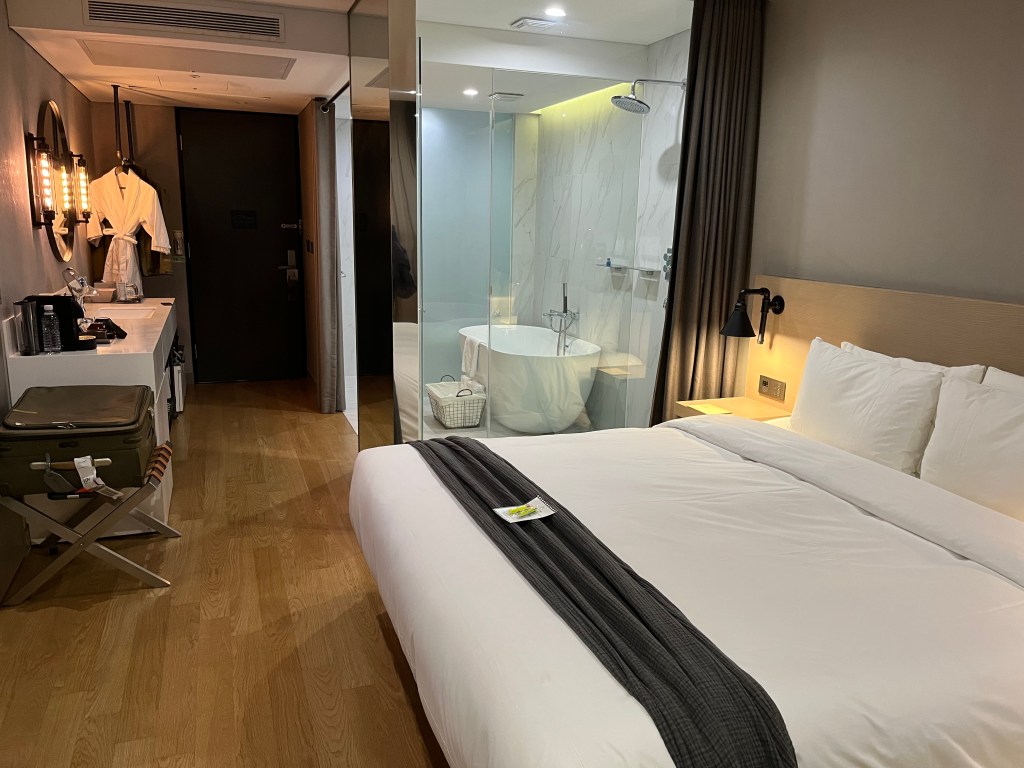
That ended the quick activities, because it was about 6:30 by this time and rush hour in Seoul.  It took another two hours to get to our hotel, which is in a very vibrant, i.e. noisy, area of Seoul.  Hotel 28 was founded by a Korean film director and has a cinematic theme running through it.

What it doesn’t have is a restaurant serving dinner, so after the receptionist marked a few places on the map we set off to find some food.  We couldn’t find any of the places she’d marked, so we settled for somewhere with pictures on the menu.

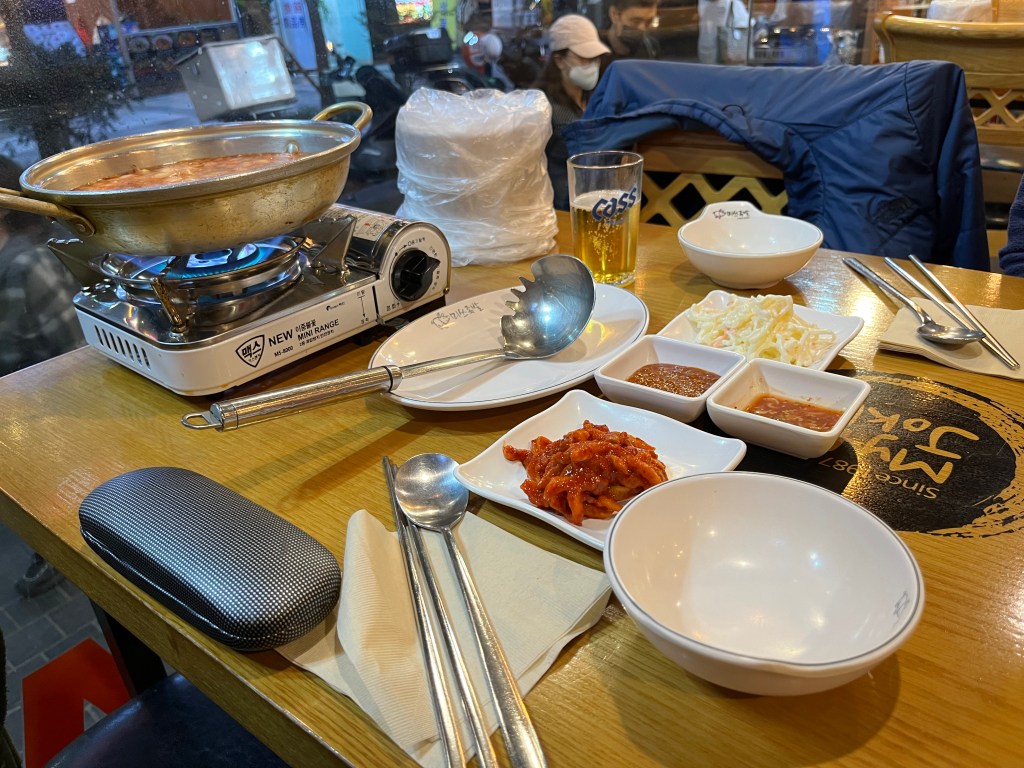
We chose the half and half Jokbal.  This came with a bowl of soup, a plate of noodles to cook in the soup, several types of kimchi, a salad and a huge platter of pork.  One half was plain, the other half was coated in more chilli that I ever thought possible.  The table came with a little drawer on the end containing napkins and disposable gloves, although we didn’t know we were going to need them at first.  If you’ve ever tried eating slippery noodles with skinny chopsticks you’ll know how much we did.

We stopped off for an ice cream before heading back to the hotel where we looked up Jokbal.  It was probably just as well that we didn’t know we were ordering pig’s trotters.

So, tomorrow we’re off to explore, but first I want to know who stole a day from us.  We left home on a Wednesday after lunch, we arrived at the hotel at dinner time on Thursday.  Were did the rest of Thursday go?