After breakfast, we were picked up by a new driver and deposited at Busan airport. There was a huge queue to check in, but there were plenty of desks open and we were soon checked in, through security and sitting with a couple of lattes people watching.
We might have been a bit complacent, because as we walked towards our gate we decided to buy a sandwich. We came out of the shop with 5 minutes to spare! There was a guy near the gate asking everyone of they were on the Osaka flight; it made his day when we said yes! He hurried us on and they closed the door behind us!
The flight landed early at Osaka, but the place was heaving. We had to be fingerprinted and get a mug shot before immigration. I was processed in a couple of minutes, but Diane couldn’t get her fingers to work! The operator got her to wipe her fingers, and she was eventually able to donate her unique pattern to Japan.
At immigration, I was straight through, but Diane gave them a hard time. In the end the immigration guy asked to see her fingers. He took one look at them and let her through. All this technology and he can decode her fingers with just a glance!
Eventually, we got our bags, completed all the formalities and entered Japan.
We eventually found the guy who was meeting us – he was at the other exit! He gave us a shopping bag full of tickets and vouchers then led us out to our car and driver. The driver wore white gloves! However, he was quite charming, apologising in his limited English that the drive was going to be about an hour and a half and saying he’d do his best for us.
It was quite obvious that we were in a different country. There were no high rise buildings, the countryside was green and wooded and what houses we could see were quite utilitarian. And we were driving on the left!
After about an hour the driver again apologised because we were still 20 minutes from our hotel! We arrived about ten minutes later. The driver took us inside, spoke to reception, waved his white-gloved hand and left us to it.
The equally charming receptionist took our details and then told us we didn’t have a reservation! They called the agency and after about 20 minutes on the phone, told us we could stay there after all.

By this time it was about 5pm and all we’d had to eat since breakfast was half a sandwich each, so we went down to find the restaurant. The hotel doesn’t have a restaurant! We went outside looking for pictures of food. We found some on the opposite side of the road from the hotel, found a couple that we liked and went in.
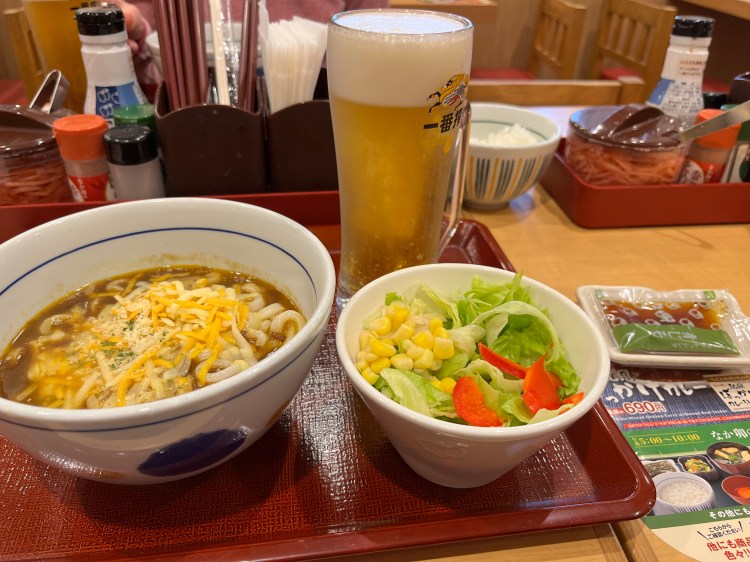
It was a bit like a canteen inside, with a serving hatch. We had to order on a monitor, which, fortunately, had English descriptions to go with the pictures. We ordered Udon noodles with chicken, rice and some salad to make it healthy. And a beer to make up for the salad.
Back at the hotel, we tried out their self-service Nespresso machines and then went up to our room to try and work out what was in our shopping bag from the agency.
Next morning we had a half day “Orientation” scheduled. We met Miwa (which in Chinese characters means beautiful and peace) armed with our shopping bag and got orientated in record time, thanks to our study the night before.
Our next task was to learn how to use our IC cards on the subway. Miwa showed us how to load money onto them and then how to use them to go through the barrier. Which is pretty much the same as using contactless on the tube! The difference is that there is no barrier on the gate. I asked what would happen if someone didn’t tap in or out. She said it doesn’t happen!
Our first port of call was Heian Jingu, a Shinto shrine. We happened to be here on the same day as Jidai Matsuri, one of three festivals in Kyoto that celebrate Japan’s emperors. It involves a procession from the Imperial Palace to Heian Jingu, which is why we got here early.
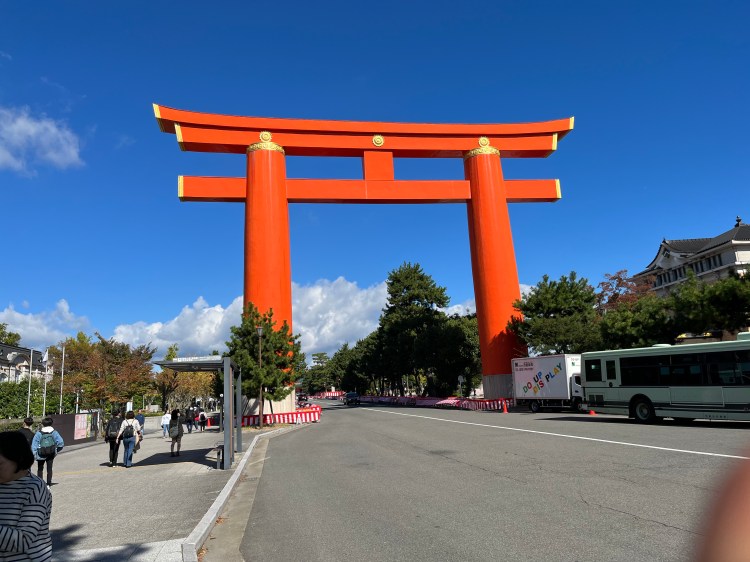
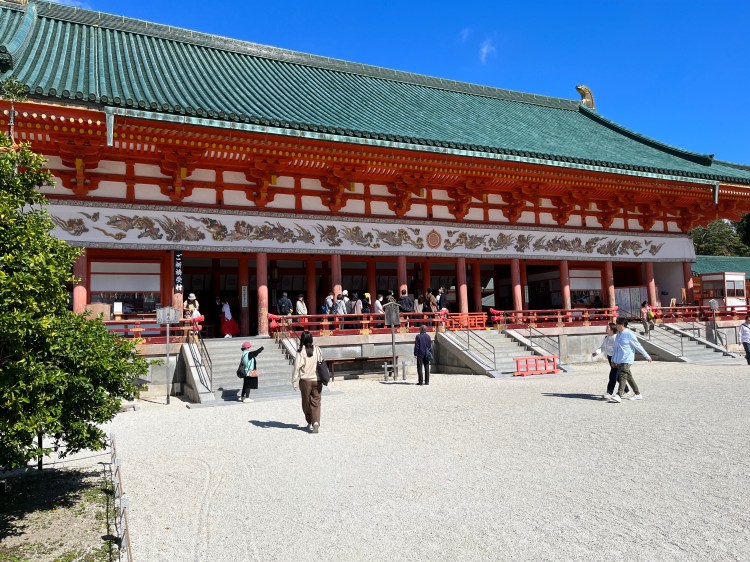
While not particularly old, the shrine is listed as a top ranking shrine and an important cultural property. Unfortunately, you aren’t allowed to take photos of the inside of the main building, something that we found is common in temples and shrines.
From there we walked up to the Shoren-in, or Blue Lotus, temple, via the museum of photography.
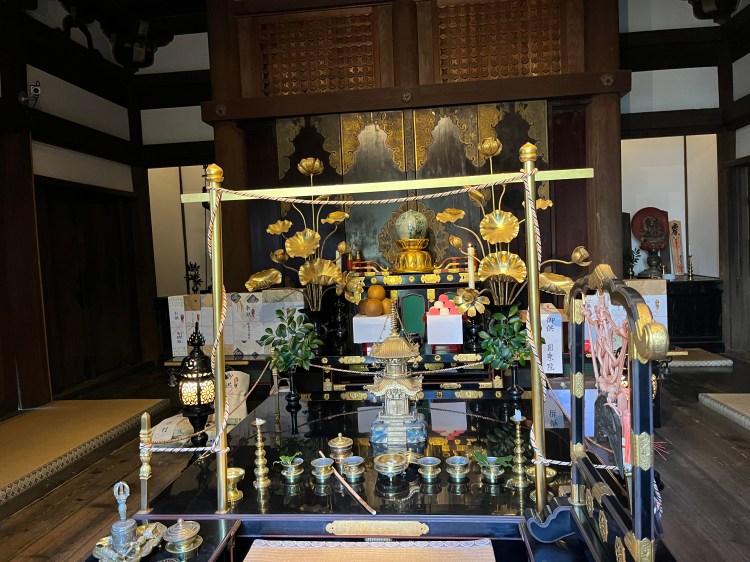
The temple dates back to the 12th century and is known for it’s beautiful gardens. It was built by the imperial family as a place of study and was also the Emperor’s residence for a while in the 18th century. Although it was a fairly hot day, it was very cool inside the temple. Among the artefacts inside are the Emperor’s personal palanquin and travelling luggage, all hand carried. There’s also a shrine to the fire deity, where they light a huge fire, somewhat dangerous in a wooden building.

You have to take your shoes off to enter, but then collect them again to go into the garden, which is noted for it’s camphor trees and moss lawns. There’s also a Buddhist dharma bell, which I got to ring.
While walking around the gardens we saw a group of well dressed women leaving one of the buildings after having had a tea ceremony. Miwa told us that this isn’t the everyday occurrence that we think it is. The tea ceremony was originally for Emperors and the nobility, rather than the common people, and is reserved for special occasions. And tourists!
After that, back to the subway to visit the Higashi Honganji temple or Eastern Temple of the First Vow. This and the western one are the head temples of Pure Land Buddhism, the most popular version of Buddhism in Japan. (Esoteric Buddhism was for the emperor and nobility and Zen for the Samurai!)
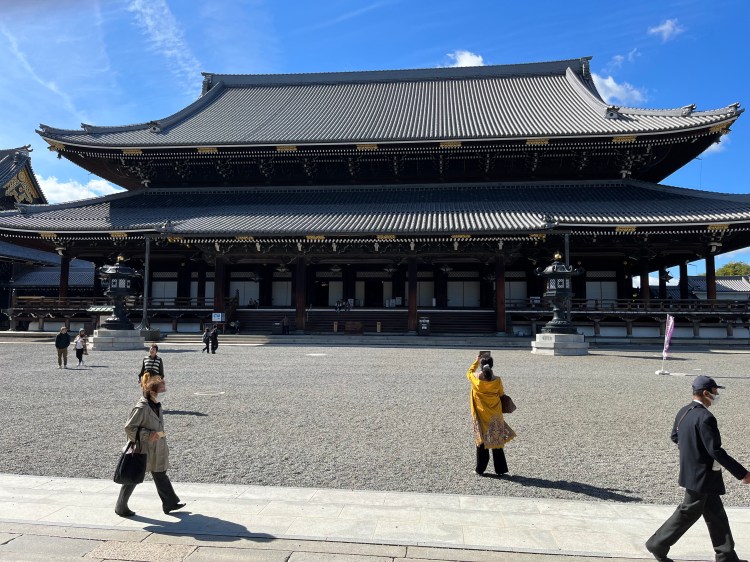
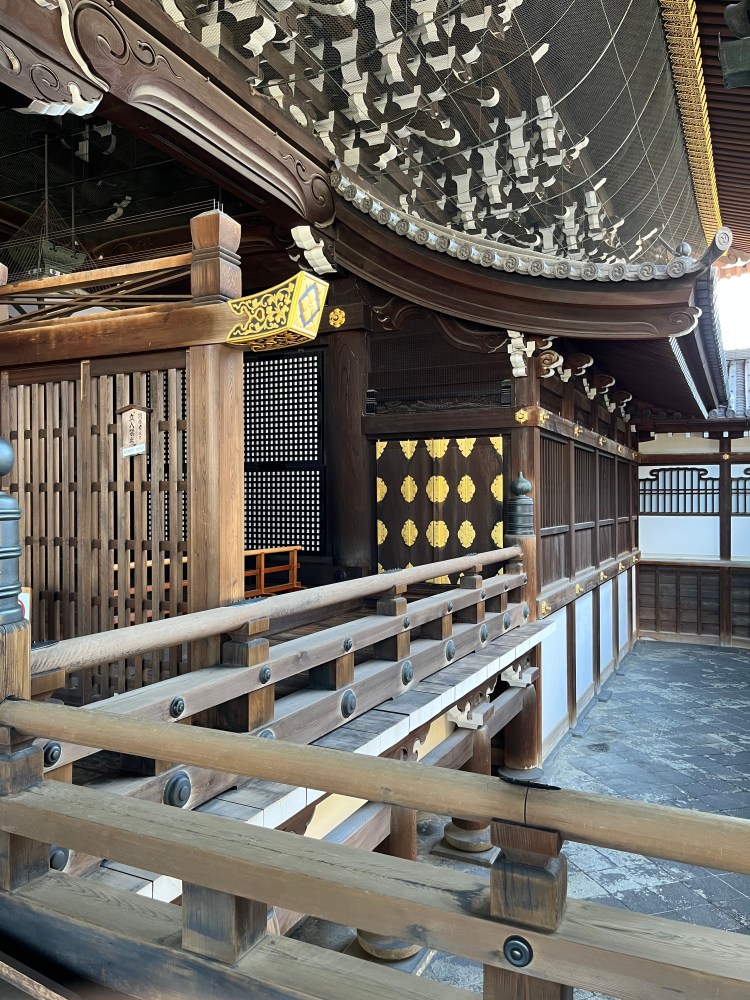
The temple dates from 1602, although it contains a mausoleum dating from 1270. The two main buildings, Founders Hall and Amida hall are off limits to cameras, but they are very ornate and feature a lot of gilded statues and woodwork. It is one of the largest wooden buildings in the world and has burned down and been restored four times.
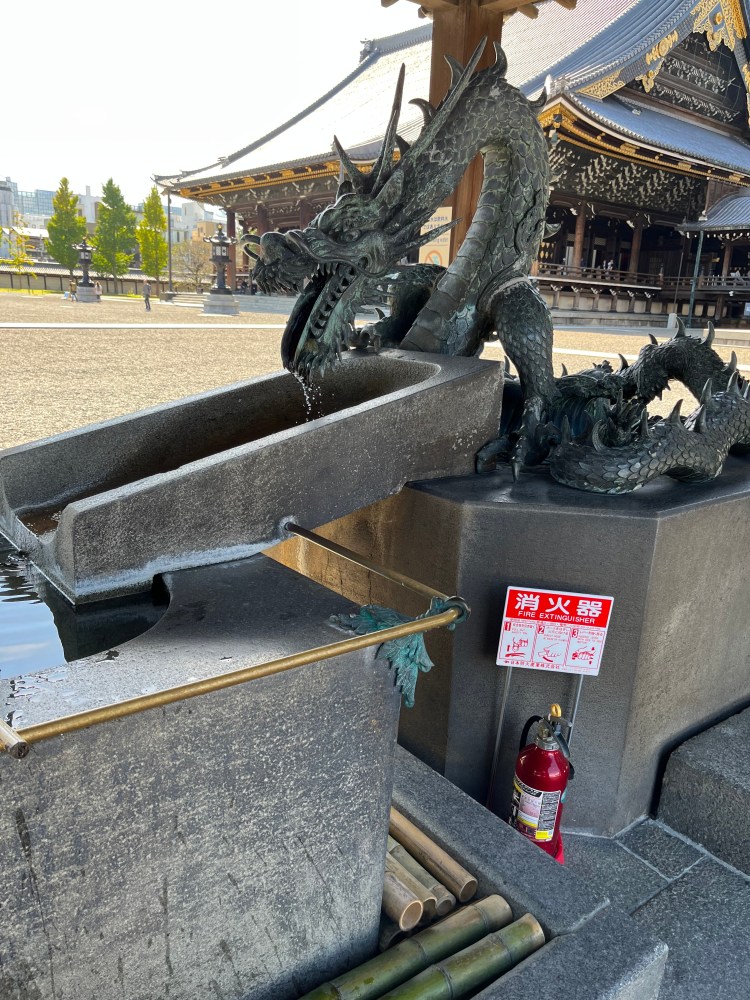
Unlike dragons elsewhere that breath fire, the one in this temple breathes water. Which hasn’t prevented the fires.
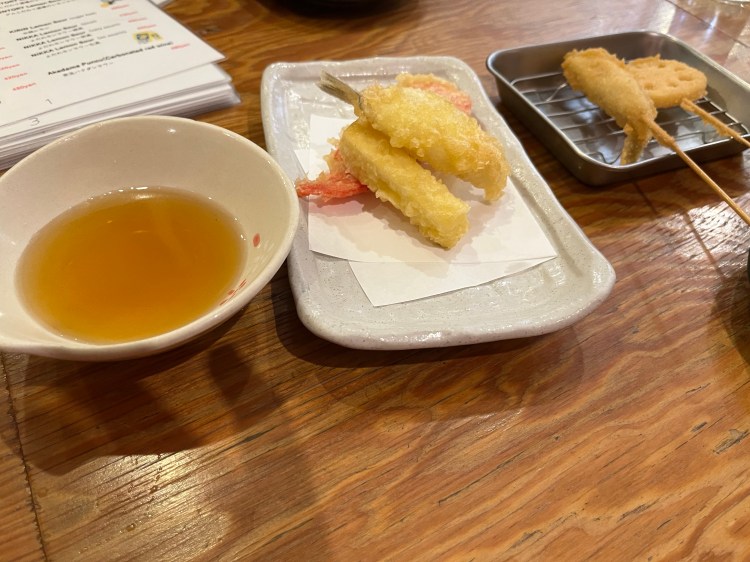
By now it was half past lunchtime, so Miwa took us to a “non tourist” restaurant to try some local specialities. We tried tempura, kushi katsu, omelette and dumplings.
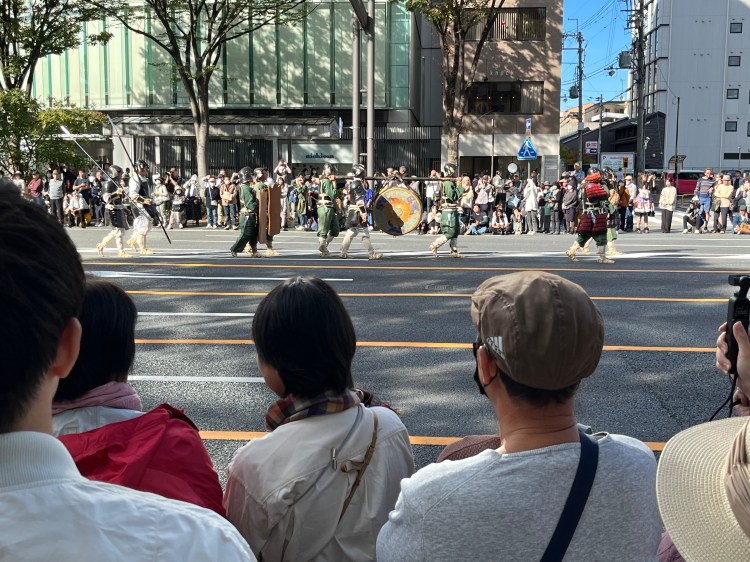
Walking back to the hotel, we discovered that the festival parade was still in progress. There were people in traditional costumes from all the different periods of Kyoto. When I say in progress, they were standing still more than they were walking. It was a long parade and it would be a long time before they made it to the end.
 Steve and Diane on Tour
Hi Steve and Diane
I’ve just realised, thanks to this post of yours, that I’ve had a Japanese lawn for some time without realising it! (ie lots of moss!!!)
I’m dying to find out what your view is on the various meals you’ve had – I’m afraid that if it was me out there, I’d be gagging for a Sunday Roast!!
Have fun – Dee xx
LikeLike
It’s all been good so far!
LikeLike