We went down to check out this morning and found Joan and Elias both waiting for us. Quite impressive at 7:30 on a Monday morning! Juan Carlos turned up shortly afterwards, we piled in, said goodbye to Joan and hit the Monday morning rush hour.
It always feels like you’re going round in circles when you drive in Cuzco, and today was no exception. We eventually circled up above the town and kept climbing. The views were magnificent, with the occasional glacier and mountain lake.
Eventually, we turned onto a gravel road and, after a lot of bouncing around, arrived at the entrance to Salineras de Maras, or the Maras salt pans. You’d think that having paid to go in the road would be better, but it became worse. We wound our way downwards through a series of hairpin bends on a narrow dirt road. With the odd bus coming the other way!
As you descend, the salt pans suddenly appear down below, stark white against the countryside. When you get close up, you can see that they are a patchwork of squarish pans, separated by stone retaining walls, ranging in colour from pure white to reddish brown.
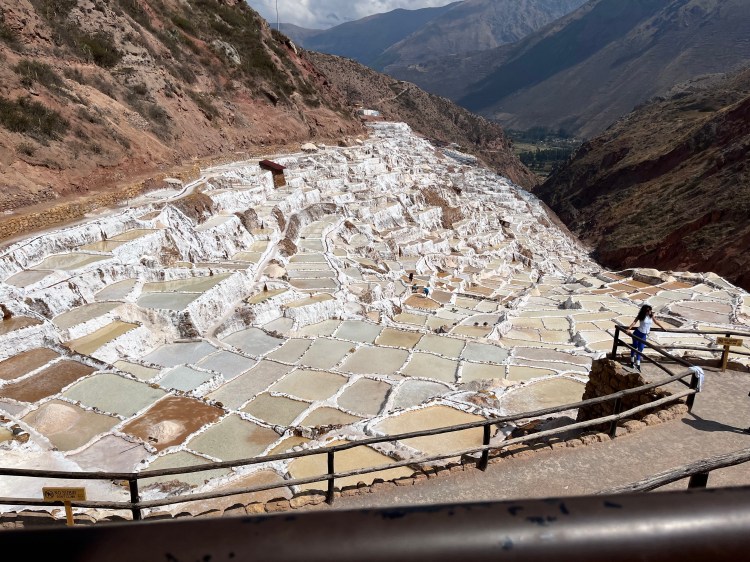
These pans are fed by a stream of salt-rich water. The workers let water into a pan until it is 5cm deep, then block it off again. The sun evaporates the water, leaving behind the salt, which is white, pink or black, depending on the quality. The salt is raked around until it is dried and then bagged and taken away. There are three “harvests” a year, which alternate with the workers’ agricultural activities.
Overall ownership of the area is with the local council, but local families have owned their sections for generations. The salt is sold to a cooperative, which also happens to be owned by the same local families!
By this time, the place was getting busy, so we retraced our path up to the main road and moved on to Moray, notable for its circular terraces. It was via a fairly short and winding gravel road, but in this case upwards.
The Spanish named Moray Temple of Mother Earth because it looks like it might have been a temple at one time. However, according to Elias, it was more likely to have been another example of Incan agricultural experiments. The temperature from the bottom to the top varies by 1 degree, and there are also storage huts that were likely used to adapt varieties of crops to different climates.

We didn’t take the winding road away from Moray. We took one going in the opposite direction, right down to the valley floor. It took 30 minutes!
We eventually came out onto a main road and continued on until we reached Ollantaytambo, from where the train to Machu Picchu starts. It was a very slow meander through the packed village streets until we came to the station, which also happens to be our hotel for the next two nights. Step out of reception and you’re literally on the platform.
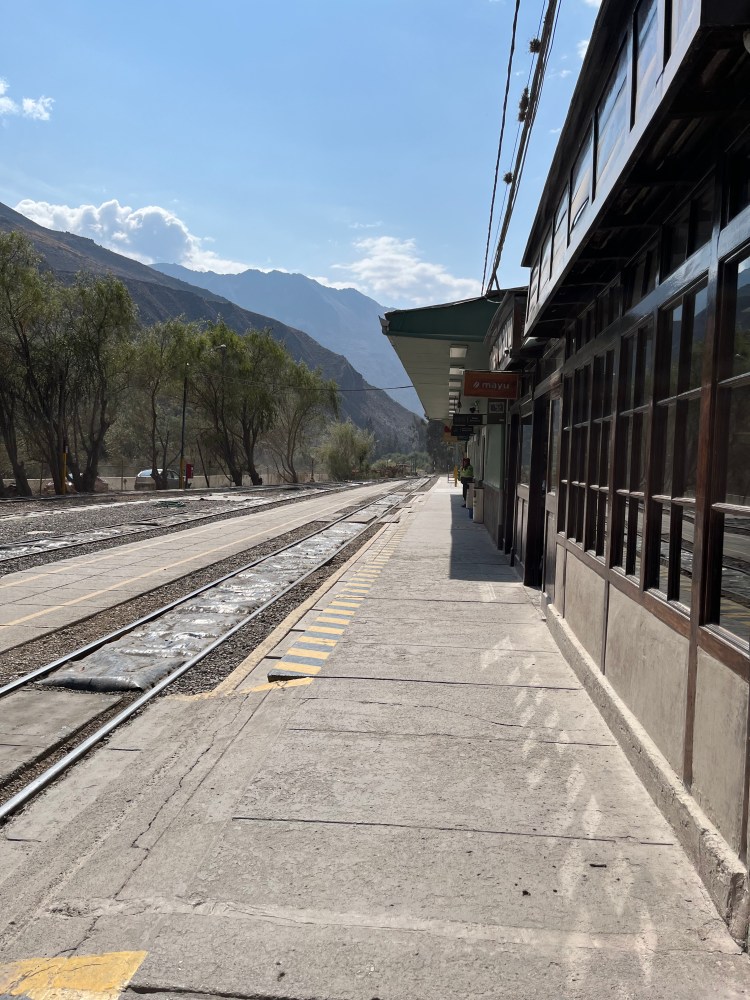
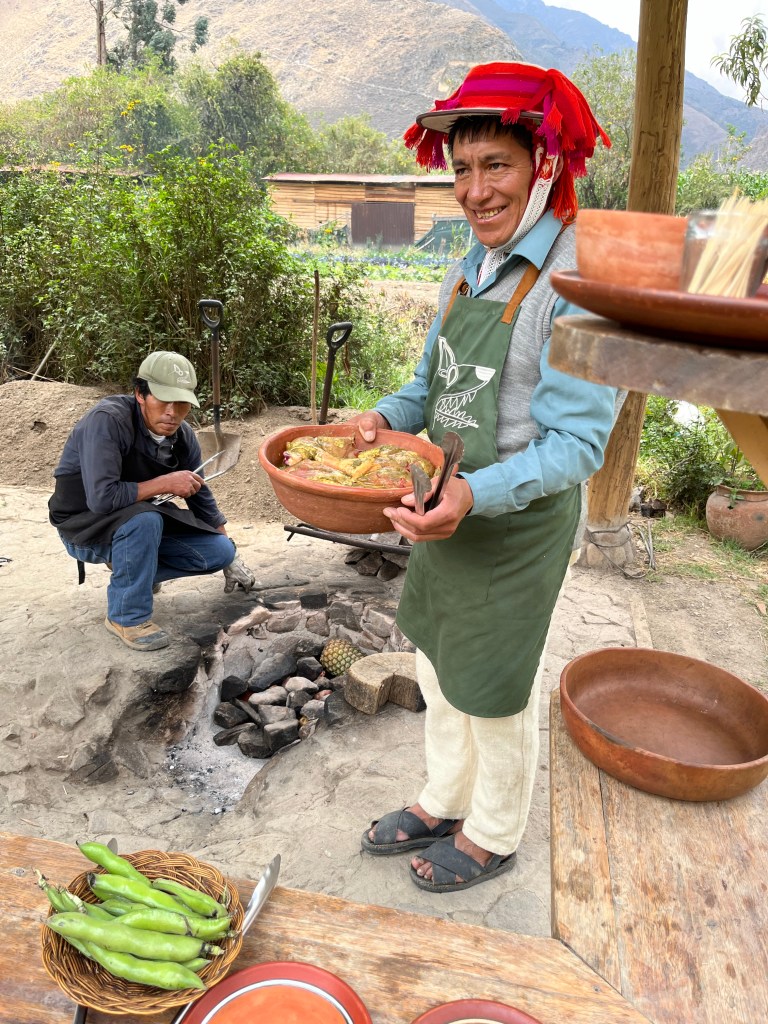
We said goodbye to Juan Carlos, as he’s heading back to Cusco, and Elias handed us into the tender care of Raoul for our Pachamanca lunch experience. This is a traditional method of cooking a whole meal in the Andes, or so they tell tourists!
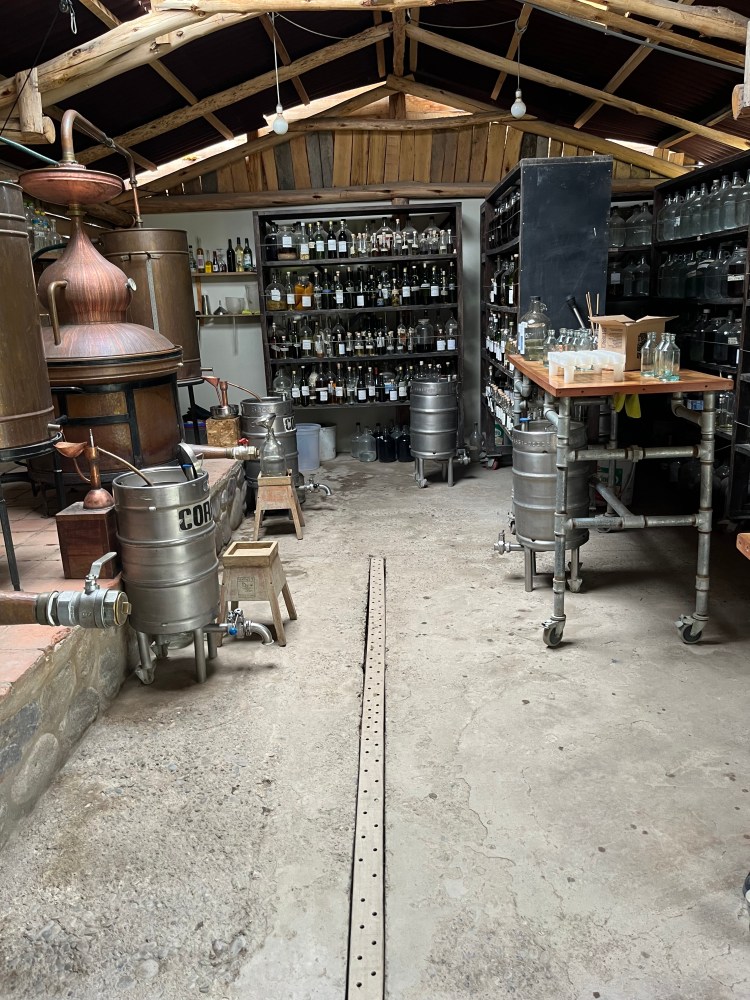
We were taken out to the hotel’s farm, which is completely organic, where “we” were going to cook and eat this gastronomic feast. But first, we had to have a welcome cocktail, using ingredients from the farm and their distillery. Before drinking, we had to offer a drop to Pachamama, or Mother Earth.
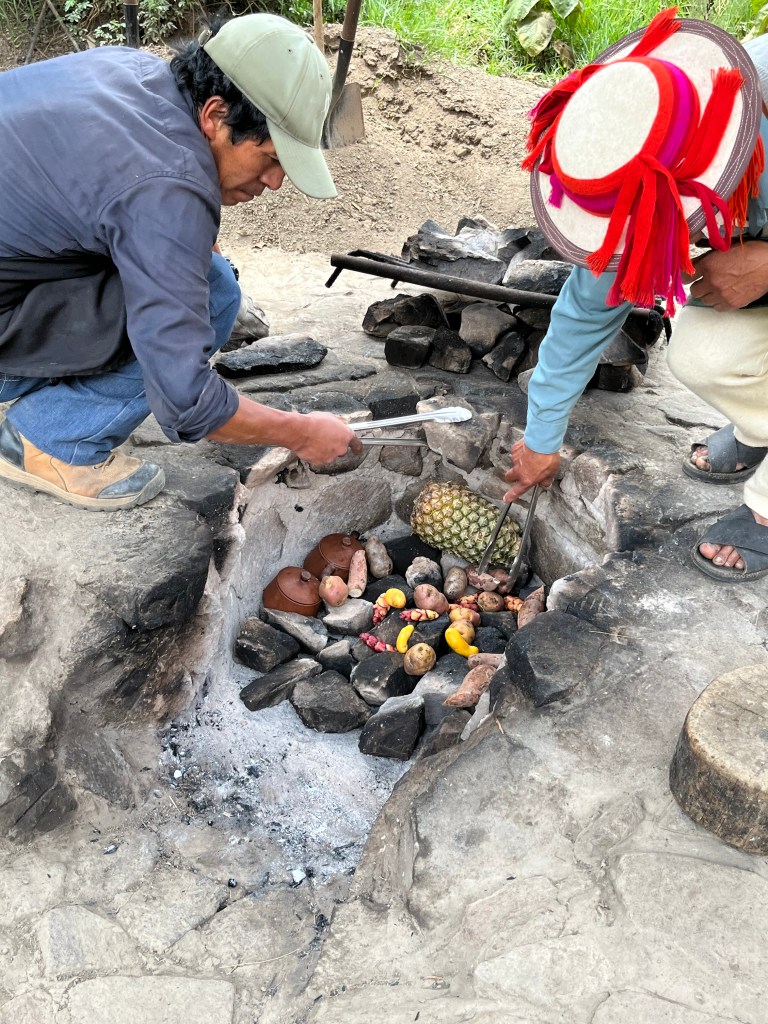
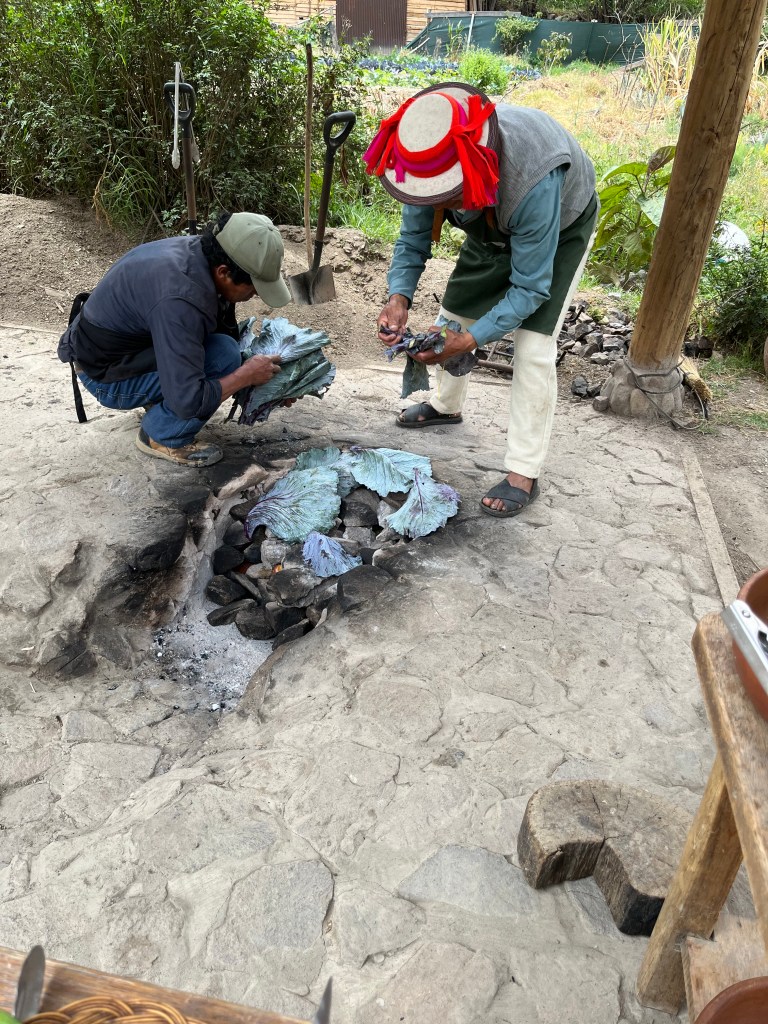
They start by lighting a wood fire in a pit and resting granite rocks over it to heat them up to 200C. They then rake out the embers and put a layer the hot stones into the bottom of the pit. Fortunately, we arrived at this point, so didn’t have to wait two hours!
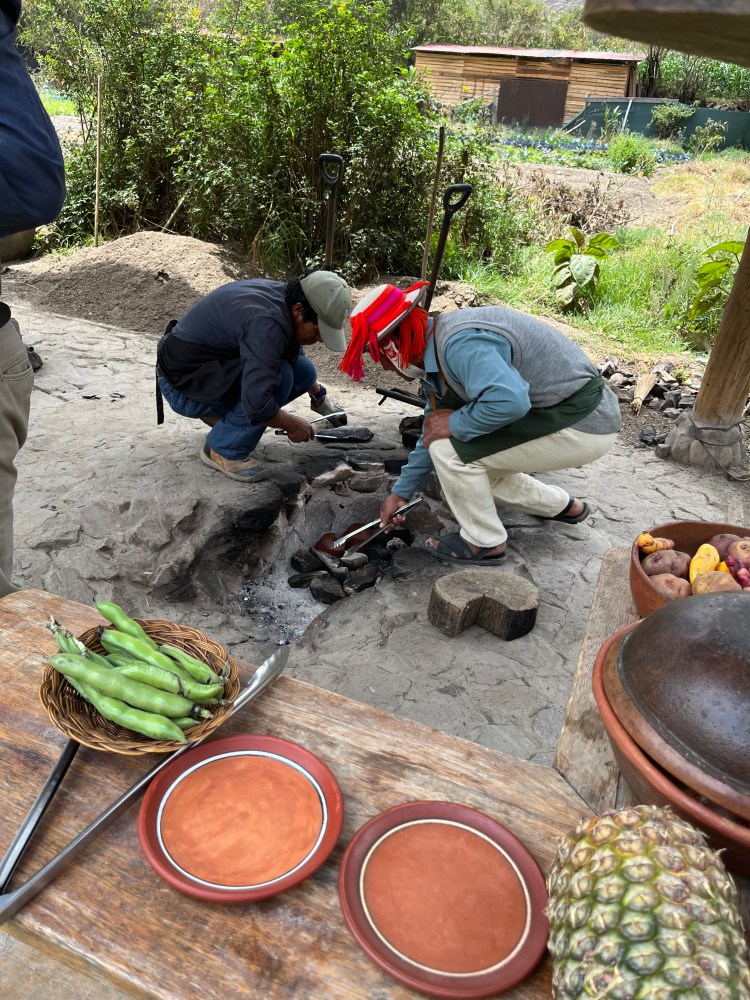
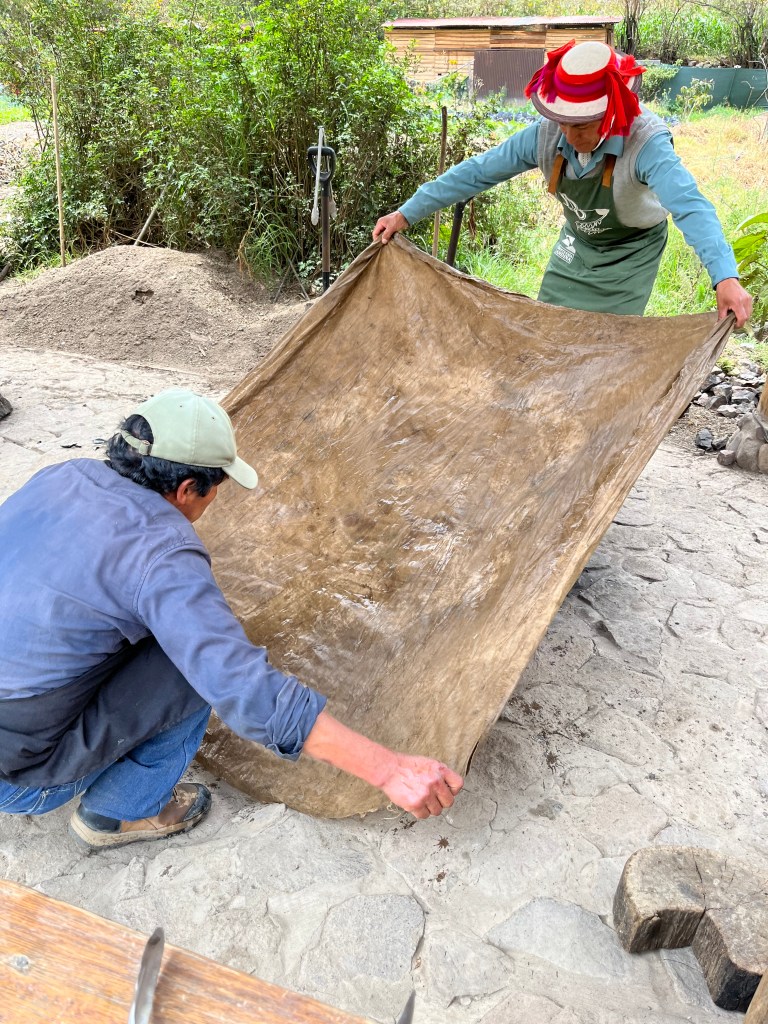
They then added: a couple of little pots of quinoa, a pineapple, several varieties of potatoes and tubers, beans and marinated chicken, pork and lamb. The remaining hot rocks went on top, followed by a layer of what looked like giant kale leaves. Next, came a couple of layers of wet fabric to retain the moisture, followed by a layer of soil to seal it all off.
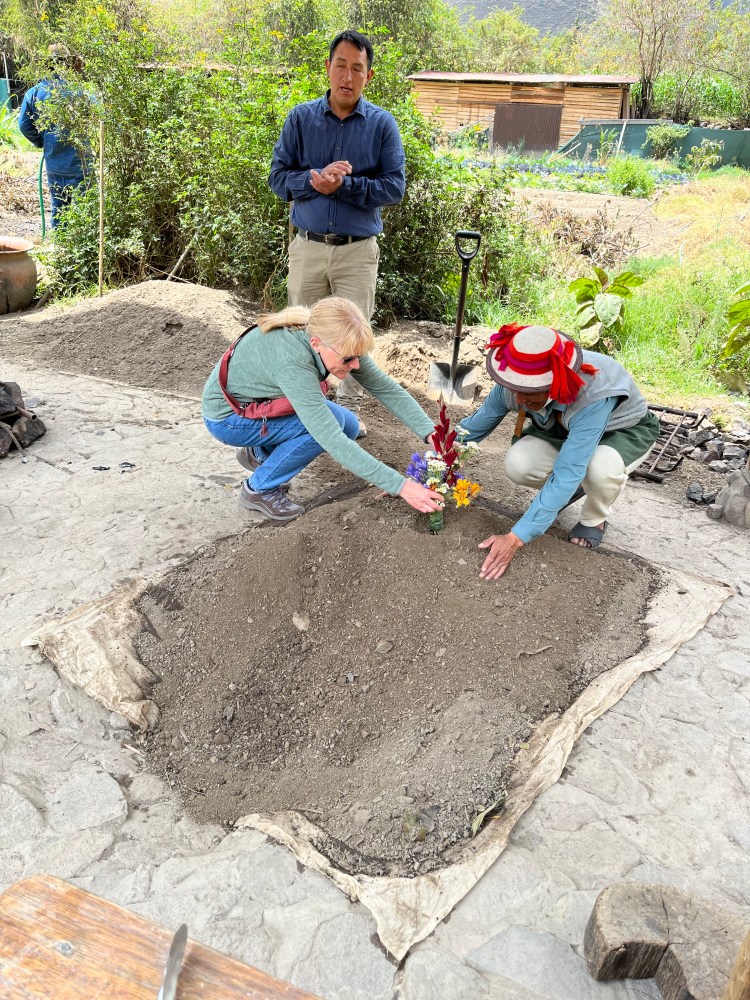
Finally, Diane planted a bouquet of flowers as an offering to Pachamama.
Since it was going to take 14 minutes for the meal to cook, we then went over to have a tasting from the distillery. Made from sugar cane and local ingredients, there were several different flavours, starting at 42% alcohol and rising. My favourite was called Matacuy, or kill guinea pig – it’s a digestif, a bit like chartreuse.
By coincidence, 14 minutes had elapsed, so we rushed back to the fire pit to see the layers coming out in reverse. When we got to our table, they’d put out salads, salsas and drinks, followed shortly by the hot meats and vegetables. We then enjoyed our leisurely lunch in the sunshine with some coffee from their own roastery to finish it off.
 Steve and Diane on Tour
Fascinating re the salt harvesting – I had no idea there were different qualities of salt.
Also had no idea that the Incas were such a clever and inquiring people – sounds like it was a great shame that the Spanish discovered them! I’m thoroughly enjoying your adventure from the comfort of my sofa, Steve! Have fun, you two! xx
LikeLiked by 1 person