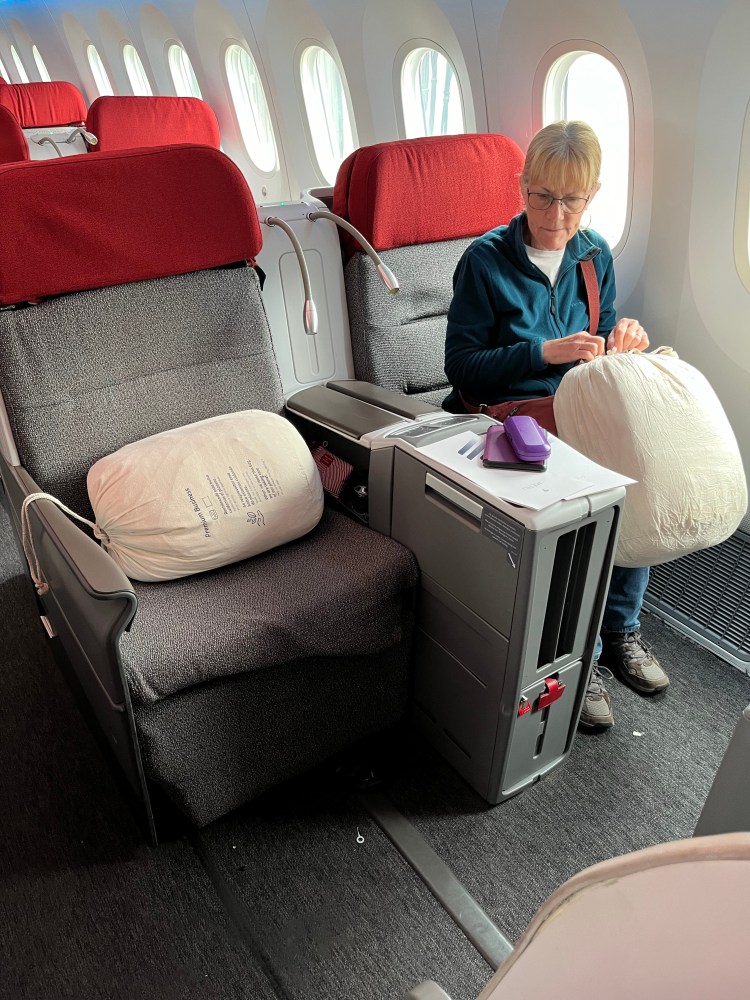
We were surprised how smoothly our transfer to Chile went. Unlike our last experience at Lima, we got our bags checked in and dropped without a problem. Getting through security was chaotic but fairly quick. Our flight was more or less on time and we landed early, which was good because we only had two hours between flights.
Immigration wasn’t too bad and we got to the baggage claim just as our bags came out. Straight through customs, found the transit desk and dropped our bags again and within 40 minutes of landing we were in the domestic departure terminal.
I managed to blag our way into the VIP lounge for a quick snack and then we were off again to Calama, where Jose met us and transferred us to San Pedro de Atacama. He also answered something we’d been wondering about on the flight – why almost all the passengers were men. Just outside of Calama is the world’s largest open pit copper mine. The guys on the flight are all workers coming back for their 7-day shift.
If Chile weren’t two hours ahead of Peru we’d have had quite a nice evening.
Next morning, Maurice picked us up and drove us to Mars valley for breakfast. This involved a couple of minutes on a nice tarmac road before swinging onto the desert and up a dirt track to a mountain ridge. There he laid out a buffet for us and we sat and had breakfast watching the sun rise above the ring of volcanoes opposite. And it was freezing!
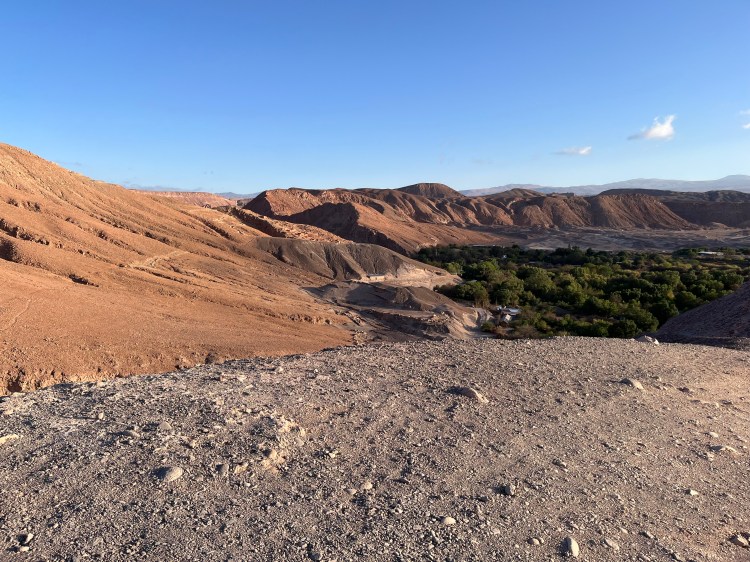
However, the scenery was beyond spectacular. We are at the start of the salt mountain range, formed 26 million years ago. This isn’t salt like we saw in Maras. It contains arsenic, so is used only for mining lithium, which is big in this area where Chile, Bolivia and Argentina meet.
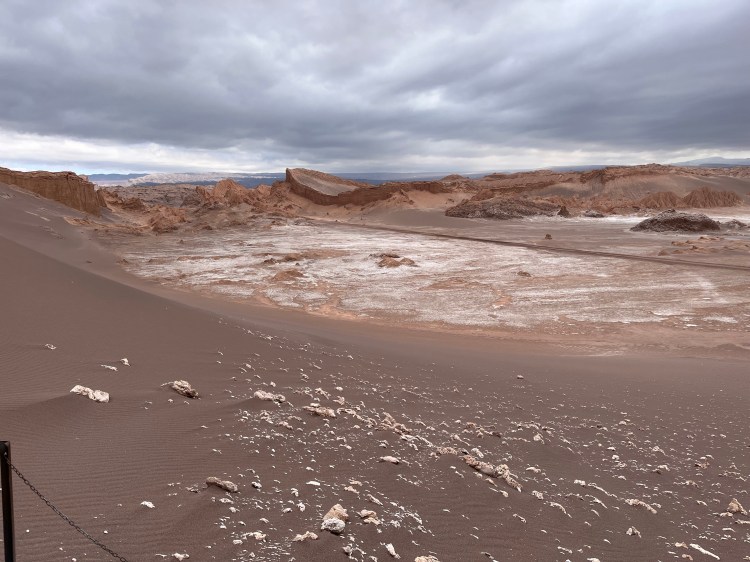
As always, it’s hard to capture the majesty of the landscape in a photo.
From there we drove to the Moon Valley where we could get up close and personal with the rocks. Maurice seemed to be fascinated by gypsum; we saw it in powder form, clear and in crystalline veins snaking through the rocks. I’m afraid there’s only so much I can take in about geology.
And finally, we drove to an Ayllus, or traditional Andean community, to taste some typical Atacameñan food. We walked around the garden looking at the various vegetables they grow. We also saw turkeys, ducks, goats, sheep and a llama. However, we didn’t feel comfortable with the conditions that the animals are kept in, so we didn’t stay long.